
The construction industry must find immediate ways to attract and train a new workforce to prevent planned AI developments from becoming financially unfeasible. This necessity stems from a radical transformation in the Australia and New Zealand landscapes, driven by a widening gap between booming
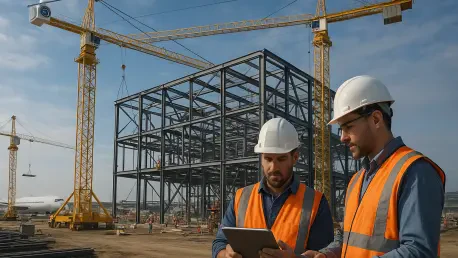
The $40 million '100 Mag' AI studio at Suffolk’s headquarters serves as the innovation hub for tools being deployed at the Southwest Florida International Airport. This $1.1 billion project in Fort Myers is transforming from a traditional construction site into a sophisticated laboratory where data

The global economy stands at a crossroads where traditional growth models must be reconciled with the finite limits of the natural world through systemic change. Modern resource management relies on the identification of ecological risks through the real-time processing of data sourced from ground

Mandatory national standards are being established to manage the environmental consequences of large-scale data centers as they become central to the economy. This policy shift reflects the growing realization that the digital backbone supporting modern artificial intelligence is not an invisible

Milestone-based billing and running account methods require a high degree of financial rigor to ensure that payments are accurately tied to verified work. For many years, the construction industry has struggled with fragmented workflows and manual data entry, which often led to significant

Traditional fire detection technology has remained largely stagnant for decades, relying on binary triggers like smoke density that frequently result in disruptive false alarms for homeowners. This "crying wolf" phenomenon has become more than a mere nuisance; it represents a significant public