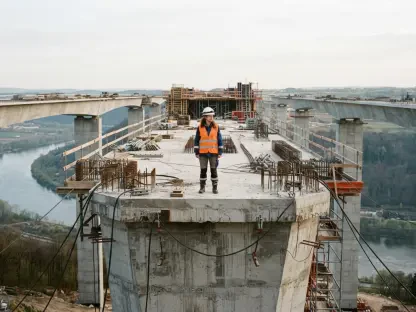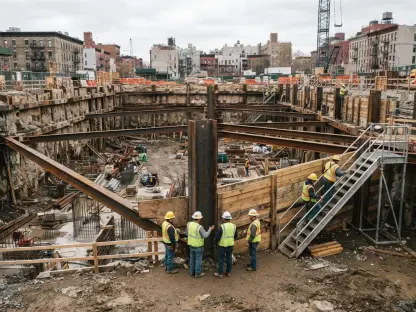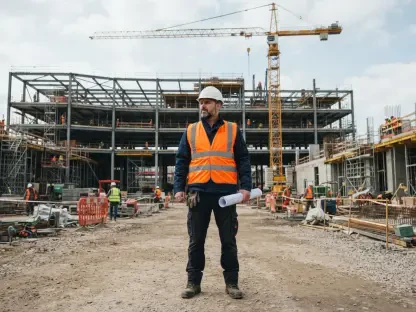

The rapid transformation of the Singaporean skyline serves as a living laboratory for the integration of advanced robotics and sustainable architectural practices that define the current era of urban development. This evolution reflects a deep-rooted partnership between the Japanese construction giant Kajima and the city-state, a relationship that began with industrial milestones in the late 1950s and has since matured into a sophisticated technological alliance. Landmarks like the OUB Center once showcased the limits of vertical engineering, but the focus has now pivoted toward solving the complex problems of labor shortages and high carbon footprints. By treating Singapore as a strategic hub, the industry is moving beyond mere building construction to focus on the long-term viability of the built environment. This shift is essential for a nation with limited physical space and a high demand for efficiency, as it bridges the gap between traditional craftsmanship and the digital demands of a modern economy through consistent collaborative efforts.
Smart Yard: Scaling Autonomous Systems
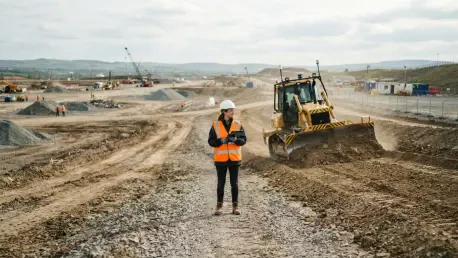
At the heart of this drive for efficiency lies the Bulim Autonomous Yard, a specialized facility developed in collaboration with JTC Corporation to test heavy machinery under rigorous conditions. This sandbox environment allows engineers to refine the A4CSEL system, which represents a significant breakthrough in how large-scale projects are managed and executed. The system allows a single remote operator to supervise a fleet of multiple autonomous machines simultaneously, effectively multiplying the productivity of a single worker. One of the most practical aspects of this technology is its ability to be retrofitted onto existing construction equipment, providing a cost-effective path to automation without requiring the total replacement of current fleets. As the industry looks toward the horizon from 2026 to 2028, the scalability of this system offers a clear solution to rising equipment and labor costs. This transition toward decentralized operation centers also improves site safety by removing personnel from hazardous zones.
The implementation of these autonomous platforms signals a shift from manual supervision to a data-driven oversight model that prioritizes precision and consistency across all phases of the building process. By validating these systems in a controlled yet realistic setting, developers have successfully bridged the gap between experimental theory and practical application. This approach ensures that when technology moves to live construction sites, it is already optimized for the specific logistical constraints of the region. Furthermore, this initiative demonstrates how public-private partnerships can accelerate the adoption of high-tech solutions that might otherwise be too risky for individual companies to undertake alone. The integration of high-precision sensors and real-time data analytics allows for a level of coordination that was previously impossible. This technological foundation is essential for maintaining a competitive edge in an industry where margins are increasingly tight and project requirements are becoming significantly more complex.
Green Research: Advancing Sustainable Design
The pursuit of carbon neutrality is anchored by the Kajima Technical Research Institute Singapore, which operates out of the regional headquarters named The Gear. This facility serves as a testing ground for innovations in artificial intelligence and robotics specifically tailored to the tropical climate of Southeast Asia. A tangible result of this research was the development of the National University of Singapore’s School of Design and Environment 4, which stands as a landmark of net-zero energy design. This project utilized advanced hybrid cooling strategies and sophisticated solar grids refined through technical expertise. The success of this building proves that aggressive environmental goals are achievable even in high-density urban settings when integrated from the design phase. By combining natural ventilation with high-efficiency mechanical systems, the project achieved a balance between occupant comfort and minimal energy use, setting a new benchmark for sustainable tropical architecture and future developments.
The collaborative efforts between these entities established a blueprint for the future of the global construction industry by prioritizing shared intelligence over isolated competition. Observation showed that the successful implementation of net-zero standards depended on early-stage collaboration among architects, researchers, and government regulators. Stakeholders recognized that the path to a resilient built environment required a fundamental move toward the standardization of data across various robotics platforms. Planning teams from healthcare and aviation sectors engaged in bilateral exchanges to study infrastructure upgrades, ensuring that local execution was paired with international innovation. Industry leaders identified that investing in human capital through digital upskilling was as important as the hardware itself. Looking ahead, the focus shifted toward creating open-source frameworks for autonomous machinery to ensure that diverse equipment could communicate on a single construction site.