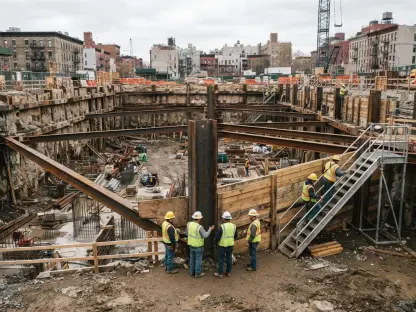

Market observers are focusing on the $500 million cash cost of legacy work as a critical headwind against AECOM’s otherwise strong quarterly financial performance. Despite a jump in stock price following the recent disclosure, the infrastructure giant remains entangled in the financial remnants of past construction commitments. These specific legacy projects, which are essentially being phased out of the core business model, continue to drain liquidity even as the broader consulting and design segments show robust health. The market reacted positively to the headline earnings figures, yet a deeper dive into the balance sheet reveals a complex struggle between accounting success and tangible cash reserves. This tension defines the current fiscal period, as leadership attempts to pivot toward a high-margin professional services model while still paying for the capital-intensive risks of previous years. The outcome of this transition will likely determine if the company can sustain its recent gains or if it will remain hindered by these persistent outflows.
Financial Growth: Navigating Operational Transitions
Revenue Performance and Shareholder Return Strategies
In the latest fiscal reporting cycle, AECOM demonstrated a significant ability to grow its bottom line despite a contraction in top-line revenue. The company reported an adjusted profit of $1.63 per share, marking a 20% increase compared to the previous year, which highlights the success of its internal margin expansion initiatives. However, overall revenue saw a 7% decline, settling at approximately $3.878 billion. This contraction is largely attributed to the deliberate strategy of exiting lower-margin, high-risk construction activities in favor of specialized consulting and design roles. Management underscored its confidence in this shift by authorizing a 10% increase in the quarterly dividend to $0.34 per share. Furthermore, the guidance for fiscal 2027 remains aggressive, with adjusted earnings per share projected to reach between $6.15 and $6.35. These figures suggest that the operational core is functioning efficiently, yet they also place immense pressure on the organization to maintain this trajectory while managing legacy baggage.
The Legacy Project: Impact on Liquidity
The most significant point of friction remains the estimated $500 million required to finalize two specific legacy construction management projects. These projects act as a literal drain on the company’s ability to convert paper profits into usable liquidity. For fiscal 2027, management has set free cash flow guidance of $300 million, a figure that appears surprisingly modest when compared to the projected earnings of over $6 per share. This discrepancy is a direct result of the cash being diverted to satisfy the completion requirements of these older contractual obligations. Investors are keeping a close eye on these cash costs because they represent capital that could otherwise be used for share buybacks, further debt reduction, or strategic acquisitions. The persistent nature of these outflows creates a bridge that AECOM must cross before it can truly claim the valuation of a pure-play professional services firm. Until these two projects are fully off the books and the associated costs are paid, the disconnect between reported earnings and actual cash generation will remain a primary focus for skeptical financial analysts.
Market Realities: Valuation and Future Outlook
Valuation Gaps and Industry Peer Comparisons
Currently, AECOM is trading at a forward earnings multiple of approximately 12.3x, which represents a noticeable execution discount compared to its industry peers. For instance, Jacobs Solutions maintains a valuation closer to 20x, illustrating a gap that AECOM has yet to close. This valuation disparity suggests that while the market appreciates the rising adjusted profits, it remains wary of the risks associated with project completion and potential cost escalations in the legacy portfolio. Major financial institutions like Citi, RBC, and UBS have maintained positive ratings, such as Buy or Outperform, yet many of these same firms have subtly lowered their price targets in the months leading up to this report. This softening of expectations reflects a broader caution regarding the timing of cash recoveries and the potential for further unforeseen expenses. To bridge this valuation gap, the company must prove that it can consistently hit its project milestones without additional financial surprises. The market is effectively waiting for proof that the risk profile has permanently shifted toward the lower-volatility consulting sector.
Strategic Pathways: Ensuring Long-Term Stability
To move forward effectively, the organization prioritized the acceleration of project timelines to minimize the duration of capital drains. Analysts recommended that the firm provide more transparent, granular data regarding the specific milestones of the remaining legacy work to rebuild investor trust. By focusing on high-growth sectors like digital engineering and sustainable infrastructure, the company successfully positioned itself to capture larger margins in the coming years. Stakeholders looked for evidence that the pivot toward a professional services model was yielding higher cash conversion rates, which eventually served as the ultimate metric for success. Management stayed committed to disciplined capital allocation, ensuring that dividend increases did not compromise the liquidity needed for operational stability. As the legacy projects reached their conclusion, the focus shifted toward aggressive debt management and strategic reinvestment into proprietary technology platforms. These actions collectively ensured that the firm could finally shed its construction-heavy reputation and emerge as a more agile, high-valuation entity.