
The global construction industry stands at a crossroads where traditional building methods are no longer sufficient to meet the urgent demands of a warming planet. The COP31 conference in Turkey highlighted nine buildings as global benchmarks for architectural decarbonization through a collaboration between the GlobalABC and the Turkish presidency. This recognition signals a transformative era where sustainability is no longer a peripheral concern but a core metric of architectural success. Central to this movement is the Antalya Compact for Energy-Efficient Buildings, which outlines a rigorous roadmap for stakeholders to achieve a 25% reduction in operational energy intensity. By focusing on critical pillars such as deep renovations, rapid electrification, and enhanced building performance standards, the initiative provides a clear path forward for both public and private sectors. These nine winners serve as practical proof that the transition to a low-carbon built environment is not only possible but also economically viable and socially beneficial.
Strategic Innovations in Sustainable Building Design
Highlighting Passive Solutions and Smart Management
Design excellence in the current climate requires a shift toward passive solutions that harmonize with local environments rather than fighting against them. For instance, Okayama City Hall in Japan has set a high standard by integrating natural ventilation systems and sophisticated shading that cut energy consumption by over 50% compared to national benchmarks. This approach is mirrored in Monaco’s Villa Carmelha, which utilizes the thermal properties of seawater for its heating and cooling needs. By leveraging regional natural resources, these projects demonstrate that high-density urban structures can maintain comfort without relying on energy-intensive mechanical systems. Furthermore, the commitment to performance monitoring for several years after completion ensures that these buildings continue to operate at peak efficiency. These case studies prove that when architects prioritize site-specific variables, they create resilient structures capable of thriving in diverse conditions while minimizing their overall footprint.
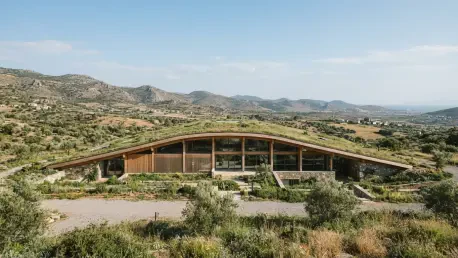
Sustainability is also finding a firm foothold in the hospitality and religious sectors, where large-scale operations often lead to significant energy waste. The Voyage Kundu Hotel in Turkey has effectively countered extreme heat through the implementation of extensive green roofs and strategic shading, resulting in a 30% reduction in energy savings. Similarly, the Cambridge Central Mosque in the United Kingdom uses sustainably sourced timber and natural ventilation to create a space that is both environmentally responsible and spiritually significant. These examples illustrate that the principles of climate resilience are universally applicable, regardless of a building’s primary function. By adopting high-efficiency equipment and heat pump technology, these diverse facilities are redefining what it means to be a modern community hub. The success of these projects emphasizes that the integration of traditional materials with modern technology is a powerful strategy for reducing emissions and fostering environmental stewardship globally.
Retrofitting Residential Spaces and Corporate Ambition
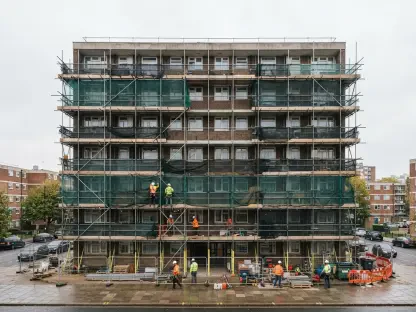
Residential energy use remains one of the most difficult challenges to address, yet the Tavros Project in Greece has provided a viable solution through socially responsible retrofitting. By transforming an existing apartment block to meet the EnerPHit Plus standard, the project achieved superior insulation and airtightness while residents remained in their homes. This approach addresses the urgent need for deep renovations of the aging building stock across Europe and beyond. The project utilized heat-recovery ventilation and high-performance windows to ensure year-round comfort, proving that older structures can be brought up to modern efficiency levels without displacement. This model is essential for urban centers looking to decarbonize their housing sectors while maintaining social cohesion. The Tavros Project serves as a reminder that the most sustainable building is often the one that already exists, provided it is retrofitted with precision and care for its inhabitants.
In the corporate world, the Al Shera’a building in the United Arab Emirates represents the pinnacle of net-positive ambition in an arid climate. As the headquarters for the Dubai Electricity and Water Authority, this LEED Platinum-certified structure was designed to generate more energy on-site via solar technology than it consumes annually. This feat is achieved through a combination of cutting-edge photovoltaic integration and advanced cooling technologies that are tailored to the intense desert sun. The building acts as a living laboratory for urban sustainability, showcasing how large-scale office complexes can move beyond mere efficiency to become active contributors to the local energy grid. By setting such a high bar for corporate architecture, Al Shera’a has challenged other global entities to rethink their environmental impact. This project highlights that even in the harshest environments, architectural innovation can turn climatic challenges into opportunities for clean energy production.
Proving Performance Through Verified Energy Data
Measuring Success in Institutional and Research Hubs
The focus of global climate action is increasingly moving away from theoretical models toward the collection of verified, real-world data to drive investment. The Royal College of Surgeons in Ireland has demonstrated the power of this shift through its facility in Dublin, which achieved a verified 40.5% energy saving in a single year. What makes this project particularly noteworthy is its financial structure, where the energy service provider is compensated directly from the savings generated, creating a self-sustaining loop of efficiency and investment. This energy performance contracting model provides a blueprint for institutions that may lack the initial capital for large-scale upgrades. By linking financial returns to actual performance, the project ensures that efficiency remains a priority throughout the building’s lifecycle. Such models are vital for scaling decarbonization efforts across the global education and healthcare sectors where budgets are often constrained.
In a similar vein, the CCFED Sci-Tech Innovation Building in China has proven that even in humid and high-demand environments, large-scale innovation hubs can remain within strict energy budgets. By utilizing passive ventilation alongside high-efficiency mechanical systems, the project showcases the scalability of these solutions in some of the world’s most challenging climates. The success of the Guangzhou-based facility was verified through rigorous data monitoring, which confirmed that normalized energy consumption stayed well below national targets. This achievement is particularly significant for rapidly developing regions where the demand for new commercial space is high. By prioritizing data-driven design, the project team provided clear evidence that industrial growth does not have to come at the expense of environmental integrity. These data-backed successes provide the evidence necessary for governments to enact more stringent and effective regulations for the commercial building sector.
Operational Excellence and the Role of Human Engagement
Operational efficiency often depends as much on human engagement as it does on advanced technology or architectural design. HAMS Garments Ltd in Bangladesh achieved a remarkable 78% reduction in carbon emissions by combining solar power with intensive staff training programs designed to eliminate waste. This highlights a critical lesson for the industry: technology alone is not a silver bullet, and the people who manage and occupy these spaces must be active participants in the decarbonization process. By adjusting operational procedures and fostering a culture of energy awareness, the factory maintained high production levels while drastically lowering its energy intensity. This holistic approach is especially relevant for the global manufacturing sector, where operational habits can often overshadow the benefits of green technology. The HAMS case study proves that empowering workers with the knowledge to manage energy leads to significant and lasting environmental gains.
Looking ahead, the focus must shift toward scaling these proven models through the mobilization of finance and the enhancement of national building codes. The findings from COP31 established that the tools for a sustainable future are already at our disposal, but their implementation must be accelerated. Stakeholders should now prioritize deep renovations and the development of energy-system flexibility to ensure that the global building stock meets the ambitious targets of the Antalya Compact. This involves not only technical upgrades but also the creation of supportive policy frameworks that reward verified performance. By treating these nine buildings as functional blueprints, the international community moves closer to a resilient and low-carbon future for all. The transition requires a departure from traditional practices, yet the results confirm that architectural integrity and climate responsibility are two sides of the same coin, paving the way for a more sustainable world.