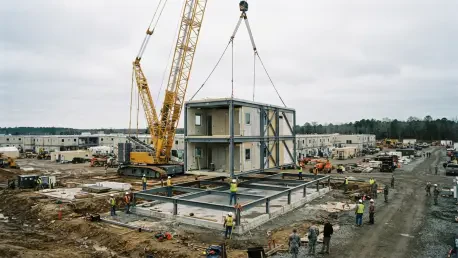

The use of accelerated design-build methods at locations like Base Kodiak signals a permanent departure from the government-provided design standards of the past. As the military moves toward a leaner and more agile posture in 2026, the traditional safeguards of the Department of Defense are being re-evaluated to prioritize speed above all else. This shift creates a complex environment for private contractors who must now navigate a procurement landscape that is as volatile as it is lucrative. The urgency of modern defense needs necessitates a radical rethinking of how we build barracks, hangars, and command centers, moving away from slow, multi-year planning cycles. For the construction industry, this means adapting to a reality where the government provides only the broadest requirements, leaving the intricate details of design and engineering in the hands of the private sector. While this offers unprecedented freedom to innovate, it also demands a level of sophistication and risk tolerance that few firms were prepared for just a few years ago.
Procurement Evolution: Speed and Legislative Flexibility
Adapting to New Speed and Efficiency Mandates
The U.S. Army recently launched a sweeping reform initiative aimed at delivering critical infrastructure projects 50% faster and at a 30% lower cost than previous benchmarks. This ambitious target is not merely a suggestion but a directive that reshapes every interaction between the Department of Defense and its construction partners. By abandoning the long-standing “design-bid-build” model, the military is effectively forcing contractors to become integral partners in the conceptualization phase of every project. In the past, builders received finalized blueprints from government agencies, which allowed for a clear separation of design responsibility and execution duties. Today, the focus has shifted toward integrated delivery methods where the builder is also the designer, creating a streamlined workflow that eliminates the time-consuming handoff between separate entities. This prioritization of agility is designed to meet defense needs quickly, yet it forces companies to operate within much tighter margins.
Industry experts have expressed growing concern that this rapid pace could eventually lead to a breakdown in contractual clarity. When speed becomes the primary mandate, the nuanced details of a project’s scope can often be overlooked during the early stages of procurement. Contractors are now finding themselves in a position where they must bid on projects with significantly less data than they were accustomed to in the previous decade. This environment necessitates a heightened reliance on integrated construction technologies and data-driven modeling to anticipate problems before they manifest on the job site. The move toward “industrialized construction” is a key part of this strategy, as it allows for standardized components to be used across multiple military installations, potentially saving time. However, the lack of traditional documentation during the initial bidding phase means that builders are often operating on assumptions that may not hold up as a project matures. This pressure to perform under uncertainty is the new normal.
Expanding Other Transaction Agreements Under the NDAA
A pivotal development in the 2026 procurement landscape is the expansion of Other Transaction Agreements (OTAs) authorized by the National Defense Authorization Act. Historically, these legal vehicles were reserved for specialized technology prototyping and small-scale research projects. Now, the military is applying this authority to general facility repairs and large-scale construction projects across the globe. The appeal for the Department of Defense is clear: OTAs allow agencies to bypass the cumbersome Federal Acquisition Regulation (FAR) that usually dictates the terms of government work. For contractors, this creates a “wild west” environment where the standard rules of engagement are no longer guaranteed. Without the FAR as a safety net, every agreement becomes a custom negotiation where familiar protections regarding payments and dispute resolution are absent. This flexibility allows for rapid mobilization but requires a level of legal scrutiny much higher than what was necessary under more standardized contracts.
Because OTAs exist outside the traditional federal regulatory framework, the risk of misinterpretation during the lifecycle of a contract is significantly heightened. Many private builders have relied for decades on the predictability of standard government clauses that address unforeseen site conditions or unexpected delays. In the current reformed market, those protections must be manually negotiated into every contract, putting a heavier burden on a firm’s legal and administrative teams. This shift favors larger, more sophisticated organizations that possess the resources to engage in complex, one-off negotiations with military contracting officers. Smaller firms may find themselves at a disadvantage, as they lack the bargaining power to demand favorable terms in an environment that prioritizes the government’s speed over the contractor’s financial safety. The loss of standardized oversight also means that transparency in the selection process is diminished, making it harder for builders to anticipate the competitive landscape effectively.
Operational Realities: Innovation and Financial Risk
Embracing Design-Build and Modular Construction Models
The cornerstone of modern military construction reform is the “design-build” model, which has become the preferred method for most high-priority projects. In this structure, contractors and designers collaborate from the beginning, allowing for a process known as “value engineering.” This collaborative approach is not just about saving money; it is about optimizing the project’s features to ensure that every dollar spent directly supports the mission of the installation. By involving the builder in the design phase, the Department of Defense is attempting to eliminate the costly “re-work” that often occurs when a contractor discovers that a government-provided design is physically impossible to construct in the field. This integration allows teams to identify potential supply chain bottlenecks or labor shortages early in the process, providing a clearer path to completion. It also encourages the use of advanced materials and sustainable building practices that were previously sidelined due to rigid, outdated government specifications.
Parallel to the rise of design-build is the military’s aggressive push toward modular construction and off-site manufacturing. This “industrialized construction” approach involves building large sections of a structure in a controlled factory environment before transporting them to the final site for assembly. For contractors, this represents a significant shift in how labor is managed and how projects are sequenced. Modular methods allow for site preparation and building fabrication to occur simultaneously, which is essential for meeting the Army’s 50% faster delivery goal. Major industry players like Granite Construction have recognized that firms with in-house modular capabilities or exclusive manufacturing partnerships will have a significant competitive edge in the coming years. This evolution creates a specialized niche for contractors who can successfully integrate high-tech manufacturing logistics with traditional on-site assembly. The ability to control more of the supply chain through modularity reduces the volatility of the construction site and provides more predictable outcomes.
Managing Design Liability and Increased Financial Burdens
The transfer of design liability from the government to the private sector represents one of the most significant financial shifts in the history of federal contracting. In the traditional “design-bid-build” scenario, the government was generally responsible for any errors or omissions in the blueprints they provided to the contractor. Under the new reformed frameworks, that liability rests almost entirely on the builder’s shoulders. If a project is rushed into the construction phase with an incomplete or flawed design, the contractor is often legally obligated to correct those errors at their own expense. This financial exposure is particularly acute in fixed-price contracts where there is little room for adjustment once the work has begun. Consequently, builders are being forced to adopt much more rigorous internal review processes to ensure that designs are sound before they commit to a price. This heightened level of responsibility requires a fundamental change in how firms estimate their costs and allocate their contingency funds for potential design-related issues.
The successful firms of 2026 recognized that navigating this reformed market required a total overhaul of their traditional risk management protocols. They prioritized formalizing early partnerships with specialized engineering firms to ensure that design responsibilities were handled with extreme precision. These organizations also invested heavily in modular construction technology to meet the military’s demand for speed while maintaining control over their labor costs. Legal teams were expanded to scrutinize the nuances of Other Transaction Agreements, ensuring that custom protections were integrated into every contract to replace the missing federal safety nets. Builders conducted more honest capacity assessments of their supply chains before bidding on accelerated projects, which prevented them from overextending their resources. By focusing on deep collaboration and technical innovation, these contractors transformed the challenges of procurement reform into a strategic advantage. They moved away from a reactive mindset and embraced a proactive role in the development of the nation’s defense infrastructure.