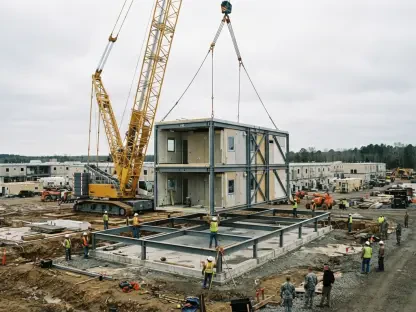

Landowners merging separate parcels into plots exceeding one thousand square meters stand to gain a full additional point in their allowable Floor Area Ratio under the new guidelines. This radical shift, introduced through the BDA (Planning and Building Standards) Second Amendment Regulations, marks a departure from the fragmented development patterns that have historically characterized the city. By updating the regulatory framework established in previous years, the Bhubaneswar Development Authority aims to modernize the urban landscape through a sophisticated system of incentives. This legislative change is not merely a technical adjustment but a strategic move to overhaul how land is utilized in one of India’s fastest-growing urban hubs. The focus remains squarely on incentivizing land consolidation and creating a self-sustaining financial model for infrastructure through new impact fees. These measures ensure that the city can accommodate its growing population while maintaining a high standard of living and efficient public services for all residents.
Streamlining Development: Land Incentives and Consolidation
Strategic Scaling: The Floor Area Ratio Enhancements
Under the current framework, the primary mechanism for driving efficiency is the strategic enhancement of the Floor Area Ratio for those who participate in Town Planning Schemes. The BDA recognizes that larger, unified plots allow for better placement of roads, utilities, and green spaces, which are often impossible to integrate into tiny, individual parcels. After a standard forty percent area deduction—a requirement for public infrastructure and roads—the scale of the additional FAR is tiered to reward larger mergers. Owners of consolidated plots between five hundred and one thousand square meters are now eligible for an extra zero-point-five points in their allowable density. For those who surpass the one thousand square meter threshold, the incentive doubles to a full point. This systematic approach ensures that consolidation is not just an administrative preference but a financially lucrative opportunity for landowners who choose to modernize their assets through the consolidation process.
Economic Advantages: Large-Scale Property Consolidation
The practical application of these density bonuses translates into a significant increase in the total permissible built-up area for a project. For instance, a developer managing a four-thousand-square-meter consolidated parcel could potentially see an additional four thousand square meters of allowable construction space under these specific guidelines. Such scalability provides the necessary economic buffer for developers to invest in higher-quality materials and more robust site facilities. By allowing the built-up area to grow in proportion to the total size of the consolidated plot, the BDA is effectively steering the market toward high-density, multi-use developments. This approach reduces urban sprawl and preserves the surrounding landscape by focusing growth in areas where infrastructure is already planned or under construction. It represents a paradigm shift from traditional horizontal expansion to a more sustainable vertical growth model that benefits both the city and the environment.
Oversight and Sustainability: Managing Urban Modernization
Technical Management: The FAR Incentive Certificate System
To maintain a high level of transparency and oversight, the authority has introduced the FAR Incentive Certificate (FIC) as the primary tool for managing these new development rights. This certificate acts as a formal, legal record of the extra entitlements awarded to landowners upon the completion of a plot consolidation. Once the possession order is issued within a Town Planning Scheme, the FIC meticulously details the total additional FAR granted, the amount utilized for current building permits, and the remaining entitlement balance. This ensures that both the BDA and the developers have a clear, auditable trail of development rights, preventing any ambiguity in land use or density limits. The implementation of a standardized certificate system also simplifies the process for secondary developers or partners who may join a project later, providing them with a clear understanding of the property’s development potential without navigating complex historical records or manual logs.
Funding Infrastructure: Implementing the City Impact Fee
The second major pillar of the legislative update is the introduction of the City Infrastructure Impact Fee (CIIF), designed to fund the infrastructure that powers urban expansion. This fee targets developments located outside formal Town Planning Schemes that nonetheless benefit from the road networks and utilities created by those schemes. The BDA seeks to eliminate the free-rider effect, where projects see increased property values due to public roads without contributing to their construction costs. The fee structure is categorized by project type, with residential plotted developments charged at fifty rupees per square meter, while commercial and industrial projects face a rate of seventy-five rupees. For subdivision layouts, the fee is calculated at one percent of the plot’s benchmark value. This revenue stream is critical for maintaining high-quality public infrastructure, ensuring that the cost of urban growth is shared equitably among those who profit from the city’s expansion.
Regulatory Resilience: Looking Back at Successful Planning
The BDA draft regulations established a clear path toward a more structured and financially resilient urban environment for Bhubaneswar. Stakeholders successfully transitioned from fragmented land ownership models to consolidated, large-scale developments that maximized land-use efficiency. By integrating the City Infrastructure Impact Fee, the city secured a sustainable revenue stream that directly funded the modernization of the expansive road network. Developers who prioritized land consolidation early in the process gained a distinct competitive advantage by leveraging the enhanced Floor Area Ratio benefits. The authorities maintained strict oversight through the FAR Incentive Certificate, ensuring that density increases were managed with total transparency and long-term sustainability in mind. This strategic overhaul not only streamlined the approval process but also contributed to a more cohesive and aesthetically pleasing city skyline, setting a high standard for future urban planning initiatives.