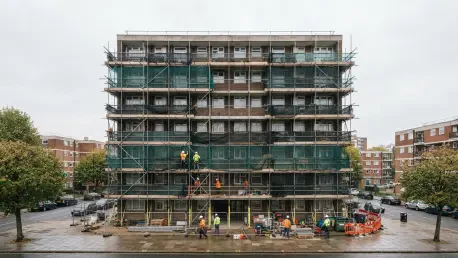

Internal safety failures like faulty compartmentation remain a significant secondary crisis that receives little financial support under the current government cladding schemes. This stark reality framed the high-stakes parliamentary review held on November 12, 2026, which aimed to dissect the Building Safety (Remediation of Unsafe Cladding etc.) Bill. The session convened a diverse assembly of industry experts, regulatory authorities, and resident advocates to determine if the proposed legislation truly offers a roadmap for remediation or merely creates a bureaucratic facade. With the English housing market still reeling from historic failures, the scrutiny focused on whether this Bill provides the necessary teeth to compel developers to act or if it ignores the fundamental rot within the system. The stakes are incredibly high for millions of residents who find themselves trapped in unsafe buildings, waiting for a definitive legal framework that prioritizes their physical safety over corporate balance sheets and administrative convenience.
Evaluating Regulatory Efficiency and Workforce Limitations
Administrative Progress: Examining Recent Gains and Hurdles
Lord Andy Roe, the Chair of the Building Safety Regulator, presented a perspective that balanced optimism with a heavy dose of realism regarding the current state of the industry. He highlighted that while the Bill serves as a vital legislative instrument, it is far from a complete cure for the systemic vulnerabilities that have plagued construction for years. The administrative machinery of the regulator showed marked improvement, achieving a 92% rolling approval rate for remediation projects as the system matured throughout the current year. The median time for determination has successfully dropped to 20 weeks, signaling that the procedural bottlenecks that once stalled safety applications are beginning to clear. However, this statistical success only tells part of the story, as the physical labor of making buildings safe requires more than just efficient paperwork and timely approvals. The transition from regulatory clearance to actual construction remains a hazardous path filled with logistical hurdles.
Personnel Shortages: Addressing the Lack of Specialized Experts
This administrative efficiency is directly threatened by a chronic shortage of specialized professionals, specifically trained fire engineers and safety inspectors who are essential for the physical oversight of remediation. Lord Roe cautioned that these critical roles require a decade of specific education and practical experience, meaning that a sudden surge in funding or legislative power cannot instantly conjure a qualified workforce. The local government sector echoed these concerns, noting that environmental health officers are already pushed to their limits by existing regulatory demands, leaving little capacity for the new oversight responsibilities mandated by the Bill. This human resource gap creates a scenario where legal processes might move forward while the actual safety inspections and certifications remain in a state of paralysis. Without a robust strategy to recruit and train a new generation of safety experts, the Bill risks becoming a collection of unenforceable mandates that lack the technical hands necessary.
The Technical Standards and Risk Management Debate
Assessment Frameworks: Evaluating the Impact of Subjectivity
The debate over technical standards reached a boiling point when discussing the PAS 9980 methodology, which serves as the primary framework for assessing the fire risk of external wall systems. Dame Judith Hackitt, a central figure in the push for safety reform, argued that the current reliance on subjective risk assessments continues to leave millions of residents in a state of perpetual limbo. She pointed out that the lack of a centrally agreed-upon, prescriptive risk framework allows for wide variations in how different assessors interpret building safety, leading to inconsistent outcomes that undermine public trust. Hackitt suggested that a mandatory audit system is necessary to bring standardization to these assessments, ensuring that safety is not a matter of opinion but a matter of verifiable fact. Without such a standard, the market will likely remain fragmented, and the insurance industry will continue to view these properties as high-risk liabilities, complicating recovery.
Tolerable Risk: Navigating the Philosophical Divide in Safety
In direct response to these concerns, technical authors like Dr. David Crowder emphasized that the PAS 9980 methodology was designed to manage risk proportionately rather than acting as a rigid set of binary rules. However, the use of the term “tolerable risk” within the Bill has sparked intense philosophical disagreement among stakeholders regarding what constitutes an acceptable level of safety. Critics and leaseholder campaigners argued that this terminology is dangerously vague and provides a loophole for developers to sidestep their original obligations to build to regulation-compliant standards. They contend that residents were promised safe homes, not homes that are merely “tolerably risky” according to a developer’s hand-picked assessor. This divide highlights a fundamental conflict: the government seeks a proportionate response to avoid astronomical costs, while the people living in these buildings demand the absolute removal of all fire safety defects to ensure their long-term security.
Financial Disparities and the Burden on Residents
Funding Voids: Addressing Internal Defect Remediation Repairs
Financial disparities represent perhaps the most daunting obstacle to the successful implementation of the Bill, as highlighted by representatives from the National Housing Federation. While the Cladding Safety Scheme provides a lifeline for addressing external wall issues, it leaves a cavernous funding gap for internal safety problems, including faulty fire doors and inadequate compartmentation. Social housing providers have found themselves in a precarious position, often forced to divert billions of dollars away from the construction of new affordable housing and the maintenance of existing properties to cover these remediation costs. This shift in capital has wider social implications, as the focus on fixing old mistakes comes at the expense of addressing the current housing shortage. The government’s current funding models are perceived as being too narrow, failing to acknowledge that a building is a single ecosystem where internal and external fire safety measures must work in tandem.
Leaseholder Impact: Mitigating Rising Costs and Legal Struggles
For individual leaseholders, the financial reality is even more grim, with resident management companies often lacking the deep pockets required to engage in protracted legal battles against well-funded developers. Jaclyn Mangaroo of The Property Institute testified that service charges have skyrocketed by nearly 50% over the last two years as a direct result of interim safety measures and administrative costs associated with the new safety regime. These residents find themselves as the unintentional financiers of a crisis they did not create, often paying for “fire watches” and increased insurance premiums while the actual remediation work remains stalled. Campaigners from organizations focused on the cladding scandal argued that the Bill’s current structure fails to protect these “innocent victims” from the broader reality of building defects. They emphasized that focusing almost exclusively on external cladding ignores the systemic failure of building quality that encompasses hazardous construction.
Ensuring Accountability and Future Implementation
Agency Mandates: Enforcing Cooperation Among Regulators
The Bill’s introduction of a “duty to cooperate” among various state agencies and private actors was intended to foster a more collaborative environment for safety work, yet its practical enforcement remains highly questionable. Sam Dumitriu noted that cooperation is a difficult concept to mandate when agencies like Homes England and the Building Safety Regulator possess differing priorities, budgets, and internal cultures. There is a tangible fear among observers that without a clearly defined hierarchy of decision-making, the same inter-agency stalemates that have characterized the past several years will continue to delay progress. Stakeholders suggested that the lack of a “final say” authority means that disagreements over technical details or funding responsibility can lead to administrative gridlock. To avoid this, many advocates are calling for a more centralized power structure that can override local or agency-level disputes to ensure safety projects are not held hostage.
Global Models: Adopting International Successes for Remediation
Looking toward international solutions, many experts at the review pointed to the model currently employed in Victoria, Australia, as a potential blueprint for breaking the U.K.’s remediation deadlock. In that jurisdiction, the government provides the necessary funds for safety repairs upfront and utilizes its considerable legal resources to recover those costs from the responsible developers and insurers later. This “act first, litigate later” strategy shifts the burden of proof and the financial strain away from the residents, ensuring that buildings are made safe as quickly as possible. While the U.K. government has historically been hesitant to adopt such a direct interventionist role, the persistent failure of the current market-led approach is forcing a reconsideration of these more aggressive financial strategies. Adopting this model would require a significant shift in the Treasury’s perspective, but it is increasingly viewed as the only way to bypass the endless cycles of litigation that currently exist.
Strategic Evolution: Moving Toward Comprehensive Safety Reform
The parliamentary scrutiny of the Building Safety Bill concluded with the recognition that while the legislation offers new enforcement tools, it must be paired with comprehensive reform of the fire risk assessment industry. Lawmakers identified the need for a national accreditation body for fire risk assessors to eliminate the subjectivity that currently hampers the PAS 9980 methodology. They also recommended that the government expand the scope of financial support to include internal safety defects, ensuring that remediation is holistic rather than piecemeal. Future considerations should include the establishment of a centralized remediation fund modeled on international successes to prioritize safety over litigation. As the Bill moves to the next stage of legislative consideration, the focus must shift toward providing the technical workforce and the financial certainty required to actually complete the work. The session demonstrated that while the administrative foundations are being laid, the ultimate success depends on closing the funding gaps.