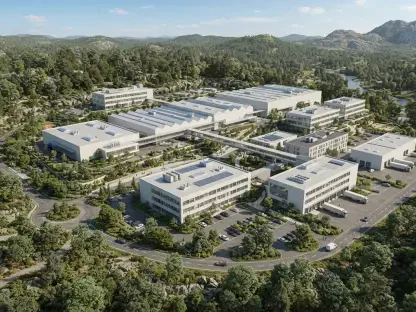

Rising interest rates and skepticism about the immediate profitability of artificial intelligence have created a bottleneck for smaller neocloud providers seeking to build new data centers. As the physical infrastructure required for high-end computing becomes increasingly capital-intensive, the industry is witnessing a fundamental shift in how these projects are financed. Nvidia, traditionally focused on the design and manufacture of high-performance GPUs, is reportedly exploring a role as a cosigner for a substantial loan intended to fund Nscale’s massive AI facility in West Virginia. This move is a departure from the established vendor-client relationship, suggesting that the semiconductor giant is now prepared to leverage its own balance sheet to ensure its hardware reaches the market. By acting as a financial guarantor, Nvidia is essentially bypassing the traditional hurdles of the credit market, allowing smaller infrastructure specialists to secure the billions necessary for expansion while shielding them from the cooling sentiment of global lenders.
Navigating the Financial Bottlenecks of AI Infrastructure
Economic Headwinds: The Direct Intervention Strategy
The current economic climate has introduced a period of significant skepticism among traditional lenders, who are increasingly wary of the massive capital expenditures required for AI buildouts. Concerns regarding the long-term profitability of AI services and the high cost of borrowing have made banks skittish about financing smaller providers. By intervening in the credit market, Nvidia is essentially attempting to “unstick” the financial pipes, ensuring that its latest Blackwell and Hopper chips have a destination and a functional “factory” in which to operate. This strategic intervention highlights a growing “capital crunch” within the sector, where the technical demand for hardware is outstripping the availability of conventional financing. For Nvidia, the data center represents the modern industrial plant; if these facilities cannot secure funding, the company’s trajectory—and its trillion-dollar valuation—could face significant headwinds in the coming years.
Capital Constraints: Bridging the Credit Gap
This unconventional financial model, where a manufacturer helps finance its own customers to facilitate sales, carries inherent risks but appears necessary to maintain the industry’s current momentum. Jensen Huang, Nvidia’s CEO, has identified these capital constraints as a primary threat to the expansion of the AI ecosystem. By acting as a guarantor, the company is effectively putting its own balance sheet at risk to bridge the widening gap between the technical demand for AI chips and the availability of traditional financing. Historically, Nvidia has influenced the market through product innovation and equity investments, but this move represents a significant escalation of support strategies. It ensures that neocloud providers can continue to purchase high-cost hardware despite a cooling investment environment. While this creates a feedback loop of credit risk, it also provides a definitive signal that the AI revolution has moved into a phase of physical and financial engineering.
Geographic Strategy and Long-Term Market Risks
Regional Expansion: The Rise of Specialized Data Hubs
The selection of West Virginia for Nscale’s facility reflects a broader trend of seeking low-cost alternatives to saturated tech hubs like Silicon Valley or Northern Virginia. With abundant land and favorable power incentives, the state is positioning itself as a key player in the physical footprint of the AI revolution. However, even these localized advantages are not enough to overcome global credit anxieties, making Nvidia’s potential backing a “lifeline” for the project. This move underscores a reality where technical superiority must be paired with aggressive financial engineering to succeed. The state has emerged as an attractive destination for these “factories of the future,” offering the necessary resources to sustain power-hungry clusters. By supporting development in such regions, Nvidia is helping to decentralize the infrastructure that powers artificial intelligence, ensuring that geographic limitations do not hinder the continued deployment of its most advanced hardware.
Market Concentration: The Risks of Vertical Integration
While this strategy provides a path forward for startups like Nscale, it also raises questions regarding market concentration and the long-term health of the sector. By controlling the design, sale, and now the financing of AI infrastructure, Nvidia is gaining unprecedented leverage over the entire AI “stack.” This vertical integration could eventually draw the attention of antitrust regulators or create a dependency where the survival of infrastructure providers is inextricably linked to the hardware manufacturer’s ecosystem. Such a relationship potentially mandates the exclusive use of Nvidia hardware, limiting future competition and strategic flexibility for operators. The concentration of power in the hands of a single vendor may also discourage the entry of alternative chip designs, as the financial barriers for non-Nvidia backed projects continue to rise. For the industry, the challenge remains balancing the need for immediate capital with the necessity of a competitive and diverse market.
Strategic Outlook: Future Considerations for Infrastructure
The emergence of Nvidia as a debt guarantor signaled a definitive turning point in the maturation of the artificial intelligence market. This shift demonstrated that technical superiority alone was no longer sufficient to sustain growth in a more cautious economic landscape. Stakeholders realized that the physical and financial engineering of data centers had to be integrated with hardware development to overcome the constraints of traditional lending. Moving forward, the industry was encouraged to seek more diverse financing models that did not rely solely on the primary vendor’s support. Future strategies should have prioritized the development of standardized metrics for AI profitability to regain the trust of mainstream banks and institutional investors. By establishing clearer paths to revenue, infrastructure providers could have reduced their dependency on hardware manufacturers, thereby fostering a more resilient ecosystem. These steps were essential to ensuring that the next phase of AI growth remained sustainable.