
A network of construction firms linked to Olalekan Anthony Adebiyi faces scrutiny after receiving substantial advance payments for southwestern road projects that now sit abandoned. Nigeria’s public infrastructure sector is currently grappling with a series of systemic failures involving high-profile road projects and building renovations across the country. Investigations reveal a troubling pattern where a network of companies, all tied to a single influential businessman, receives massive government payouts only to leave the work unfinished or poorly executed. These lapses are particularly evident in the southwestern region, where critical transportation arteries remain in disrepair despite the disbursement of billions of naira from the federal budget. The widening infrastructure gap hampers economic growth and endangers lives, signaling a desperate need for procurement reform. Without more rigorous vetting of contractors and the enforcement of strict delivery timelines, the cycle of payouts followed by stalled projects is likely to continue.
Stalled Progress in Southwestern Corridors
Rapid Payments: A Ten-Day Disbursement Cycle
In late 2025, the Federal Ministry of Works fast-tracked over N3.37 billion to three construction firms—Ottman, Sail Through, and Medalville—for the rehabilitation of the Ilesa-Eti-Oni-Okeigbo road. Within a very brief ten-day window in early December, these companies received substantial advance payments intended to modernize these vital links between Osun and Ondo states. Specifically, Ottman Construction Limited was granted N938.4 million, while Sail Through Construction Limited received N923.1 million for the Eti-Oni Road in Atakunmosa East. Medalville Construction Limited was paid the largest sum of N1.514 billion for related works in the same transport corridor. The swift nature of these disbursements suggested an urgent priority for the government, yet the actual execution on the ground failed to match the financial velocity of the ministry’s payments. This disconnect has raised alarms among fiscal transparency advocates who monitor the efficiency of infrastructure spending.
Despite the infusion of capital, the initial momentum at the construction sites quickly stalled, and by the following spring, the heavy machinery had completely vanished from the area. By April 2026, the projects had entered a state of total dormancy, with no active labor or equipment visible to local residents or independent monitoring teams. This sudden cessation of work occurred shortly after the companies had secured their final tranches of advance funding, leaving the surrounding communities in a state of confusion and economic limbo. The Ministry of Works has yet to provide a definitive explanation for why these contractors were permitted to vacate their sites so soon after receiving billions of naira in public funds. The failure to maintain progress on such a high-priority corridor suggests a significant breakdown in the government’s oversight and contract enforcement mechanisms. This pattern of rapid payment followed by site abandonment highlights the risks inherent in the current procurement model.
Consequences: The Reality of Site Desertion
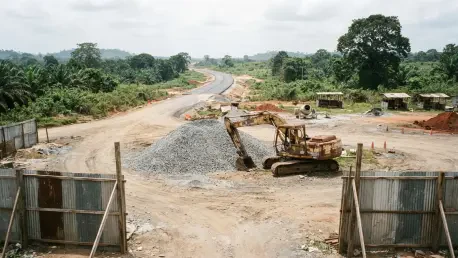
Independent monitoring by the organization Tracka has confirmed that the construction sites are now deserted, with only skeletal remains of drainage systems and piles of unused granite left behind. The physical state of the Ilesa-Eti-Oni-Okeigbo project serves as a stark visual representation of failed administrative promises. While some preliminary grading was conducted in late 2025, the lack of follow-through has left the roadbed exposed to the elements, leading to rapid deterioration. Large mounds of aggregate material sit along the shoulders of the road, becoming obstacles rather than building blocks for progress. In many sections, the unfinished drainage channels have filled with silt and debris, rendering them useless for the upcoming rainy season. These abandoned materials and incomplete structures represent a direct waste of taxpayer resources, as much of the initial work will likely need to be redone once a new contractor is eventually mobilized to the site to finish the project.
This negligence has turned the road into a severe hazard for local commuters, as the uneven grading and incomplete sections have led to a spike in traffic accidents. Residents have reported numerous incidents where motorcycles and vehicles lost control due to the sudden transitions between paved and unpaved sections. The lack of proper signage or safety barriers around the abandoned sites further exacerbates the danger, especially during nighttime travel. Beyond the immediate physical risks, the stalled roadwork has significant economic consequences for the region, as the transport of agricultural goods between Osun and Ondo states is frequently delayed or halted. Farmers and traders face increased vehicle maintenance costs and longer travel times, which erodes their profit margins and stifles local commerce. The failure to complete the work after such a significant financial infusion highlights a breakdown in the government’s ability to protect the interests and safety of its citizens in the southwestern region.
Systemic Influence and Future Accountability
Centralized Control: The Architecture of the Network
A deep dive into corporate filings reveals that the firms involved in these stalled projects are not independent entities but are linked through Olalekan Anthony Adebiyi, also known as Lekan Adebiyi. As the beneficial owner of multiple construction companies, including the well-known Laralek Ultimate Limited, Adebiyi holds a significant share of the regional infrastructure market through several seemingly separate fronts. According to the Corporate Affairs Commission’s Beneficial Owners’ Register, Adebiyi maintains majority shareholding and significant control over Ottman Construction, Sail Through Construction, and Medalville Construction. This concentration of power within a single corporate network raises serious questions about competition and the actual capacity of these interconnected firms to manage multiple multi-billion naira contracts simultaneously. When a single individual controls the majority of the vendors for critical regional projects, the risks of systemic failure increase, as any management issue can ripple through the sites.
This pattern of questionable delivery extends to other major contracts, including a controversial road project in Oyo State and a high-stakes N42 billion renovation of the National Assembly. In the capital, the project faced public criticism from legislative leaders after newly installed audio systems failed during official proceedings, causing significant embarrassment to the government. Another firm under the same corporate umbrella, Visible Construction Limited, was responsible for these renovations, demonstrating that the issues within the network affect both rural roads and prominent federal buildings. The funneling of vast sums of public money to various entities that are actually controlled by a single person suggests a lack of diversity in the procurement process. This centralization limits the opportunities for other qualified indigenous firms and places the nation’s infrastructure development at the mercy of a single corporate hierarchy. Such a model is increasingly viewed as a barrier to transparent and effective project delivery.
Looking Forward: Implementing Robust Procurement Reform
The conclusion of these investigations indicated that the existing oversight frameworks were insufficient to hold high-capacity contractors accountable for their performance. To address these systemic failures, the Federal Ministry of Works should have implemented a more rigorous technical auditing process before authorizing advance payments. In the past, the lack of site-specific milestones meant that firms could walk away with billions after completing only nominal tasks, such as clearing brush or delivering aggregate. Future policy must mandate that second and third tranches of funding are strictly tied to verified physical progress reports rather than calendar dates. The government also needed to establish a blacklist for companies and their beneficial owners who have a documented history of project abandonment or regulatory non-compliance. By shifting the burden of proof to the contractor, the procurement process would have ensured that only firms with proven capacity were permitted to bid on high-value assets.
The investigation concluded that the adoption of digital project tracking tools and real-time reporting was essential for restoring public trust in the infrastructure sector. These platforms were designed to allow local communities to upload photos and status updates directly to a central database, providing an independent check against the reports submitted by construction firms. Furthermore, experts recommended that the National Environmental Standards and Regulations Enforcement Agency be granted expanded powers to halt payments to contractors who violated safety protocols. This multi-agency approach ensured that physical progress was matched by regulatory compliance, protecting both the taxpayer’s investment and the local environment. Legal frameworks also required updates to allow for the recovery of advance payments when a contractor failed to meet specific delivery timelines. Ultimately, the focus shifted from merely awarding contracts to ensuring the completion of high-quality assets that served the people.