
By incorporating standard reversing cameras and optional 360-degree systems, the new JCB flagship loaders offer a significant reduction in blind-spot accidents. This technological leap reflects a broader strategy as the manufacturer enters the heavy-duty sector with its 480 and 490 wheel loaders and the 9T Dual Drive site dumper. These machines are engineered for the high-intensity demands of quarrying and large-scale infrastructure projects where precision and capacity must coexist. The expansion represents a move away from mid-range equipment into a tier where raw power and sophisticated safety systems are mandatory requirements for global contractors. By integrating world-class components with proprietary mechanical innovations, these heavy loaders and dumpers provide a versatile solution for the complex logistics of modern construction environments. This shift ensures that as projects grow in scale, the equipment tasked with moving millions of tons of material remains both manageable and inherently safe for every worker involved on the site.
Engineering Heavy Machinery
Power: Driveline Integration
The heart of the 480 and 490 loaders lies in a departure from smaller in-house engines toward the robust Cummins X12 Stage V diesel unit. This engine provides a formidable 250 kW of power and 1,695 Nm of torque at just 1,600 rpm, allowing the loaders to execute aggressive digging maneuvers with minimal engine strain. Such high torque availability at lower speeds not only enhances the breakout force required for dense material but also significantly improves fuel efficiency over long shifts. In the heavy-duty quarrying sector, where downtime translates to massive financial loss, the reliability of this specialized driveline is a critical factor for operational success. The 480 and 490 models, weighing in at 25 and 27 tons respectively, leverage this power to handle payloads that were previously outside the scope of the brand’s offerings. This transition establishes a new performance baseline for high-capacity material handling and heavy earthmoving tasks.
Complementing the engine is the ZF Constantly Variable Transmission, which offers a seamless transfer of power without the traditional interruptions of gear shifting. While the system operates on a CVT architecture, engineers have programmed virtual gears to provide operators with a familiar tactile response during high-frequency loading cycles. This hybrid approach to transmission technology allows for precise rimpull control, which is essential for managing traction on loose or uneven terrain to prevent unnecessary tire wear and wheel spin. Furthermore, the inclusion of a single-pedal travel system simplifies the operation of these massive machines by using the foot pedal to manage both torque and speed simultaneously. This reduces the cognitive load on the operator, allowing them to focus more on the immediate surroundings and the placement of the bucket rather than the mechanics of the gearbox. This level of control is vital for maintaining safety in high-traffic work zones.
Versatility: Mechanical Design
One of the most notable technical achievements in these new flagship models is the introduction of a patented hybrid loader arm design. In traditional loader engineering, operators often must choose between a Z-bar linkage, which is optimal for breakout force, and a parallel linkage, which is better suited for fork work and tool handling. JCB’s new design attempts to eliminate this compromise entirely. By positioning the bucket linkage closer to the arms and utilizing a single bucket ram, the design provides the high breakout forces associated with Z-bars while maintaining the leveling capabilities of parallel systems. This slimline linkage also facilitates better material retention by allowing the bucket to roll back further during transport. This mechanical versatility means that a single machine can perform multiple roles effectively, which streamlines site logistics and reduces the total number of vehicles required on a busy industrial job site.
Beyond pure strength, the hybrid arm design significantly improves operator visibility toward the front of the machine. The slimline profile ensures that the operator has a clearer view of the bucket edges and the material being handled, which is a critical safety factor when working near other vehicles or ground personnel. Improved material retention also prevents debris from falling during transport, which is a frequent cause of site accidents and tire damage. By merging two distinct mechanical philosophies into one, the manufacturer has created a loader that is as capable of precision pallet handling as it is of heavy-duty rock excavation. This adaptability is increasingly important as modern job sites demand more efficiency from fewer machines. The ability to switch tasks without sacrificing performance or safety marks a significant advancement in the engineering of heavy material handling equipment for the infrastructure and mining industries.
Site Safety Technology
Interface: Digital Operator Experience
Modern site safety is increasingly dependent on the digital environment provided to the operator, and the Command Plus Cab introduces a sophisticated user interface to meet this need. Accessed via a 10-inch touchscreen, this interface allows for an unprecedented level of machine customization, where operators can calibrate the response and resistance of control levers to suit their individual preferences. This personalization helps reduce physical fatigue, which is a leading contributor to operational errors during long shifts. Furthermore, the system includes integrated e-fences, which are programmable height and depth limits that utilize kinematic sensors to prevent the loader arms from striking overhead obstructions. This technology acts as a digital safety net, ensuring that even in moments of operator distraction, the machine will not collide with power lines, bridge decks, or other sensitive site infrastructure.
The digital transition is further supported by a fully electro-hydraulic control system that replaces traditional mechanical or basic servo controls. This shift allows for the integration of advanced automation features, such as automatic bucket leveling and return-to-dig functions, which further simplify the operational cycle. Safety is enhanced by standard high-definition reversing cameras, with optional 360-degree bird’s-eye view systems that eliminate blind spots around the 27-ton frame. By combining these visual aids with joystick steering, the manufacturer has created an environment where the operator maintains total situational awareness without the need for excessive physical movement. The result is a more focused and responsive operation that can react quickly to changing site conditions. These digital innovations represent a move toward intelligent job sites where hardware and software work in tandem to minimize the risk of human-related incidents.
Innovation: Dual Drive Rotation
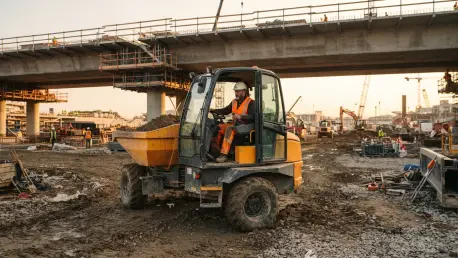
Addressing a long-standing safety challenge in the construction industry, the 9T Dual Drive site dumper introduces a rotating command console that redefines visibility. Traditionally, dumper operators must reverse for long distances when their forward view is obstructed by a full skip, a practice that is notoriously dangerous on congested sites. The Dual Drive technology allows the operator to rotate the entire command center—including the seat, steering wheel, and pedals—by 180 degrees. This allows the driver to always face the direction of travel, whether the skip is in front of or behind them. By eliminating the need to drive in reverse with limited visibility, this innovation significantly reduces the likelihood of collisions with ground workers and other equipment. The controls remain intuitive and consistent in either orientation, ensuring that the machine is as easy to handle when facing the rear as it is when facing the front.
To support this ergonomic shift, the 9T dumper has been upgraded with a Bosch hydrostatic transmission and Dana Spicer axles, providing smoother acceleration and more predictable braking compared to traditional gearboxes. This level of mechanical control is essential when maneuvering a fully loaded 9-ton machine through narrow site corridors. Additionally, the cab is certified to withstand a side impact from a 22-ton excavator, which allows the operator to remain safely inside the cab during the loading process. This is a major departure from industry standards for smaller dumpers, where operators are often required to dismount for safety. By providing a reinforced environment and superior visibility, the machine ensures that the loading and hauling cycle is both faster and safer. Features such as skip-facing cameras and follow-me-home lighting further emphasize the focus on maintaining a secure operational environment throughout the workday.
The expansion into heavy-duty loaders and specialized dumpers provided a clear roadmap for improving industrial safety and operational productivity. Fleet managers who adopted these machines found that the integration of digital e-fences and rotating operator consoles led to a measurable decrease in site incidents and equipment damage. This suggested that the future of heavy machinery lay not just in increased horsepower, but in the intelligent application of technology to mitigate human error. Organizations were encouraged to prioritize equipment that offered superior visibility and customizable control interfaces to protect their workforce. The shift toward hybrid mechanical designs also demonstrated that machine versatility could lead to more efficient site layouts with less traffic congestion. By analyzing the performance of these flagship models, the industry recognized that modern site safety was best achieved through a combination of structural reinforcement and digital oversight. This approach offered a sustainable path forward for large-scale infrastructure projects.