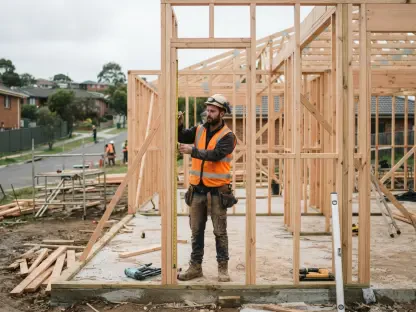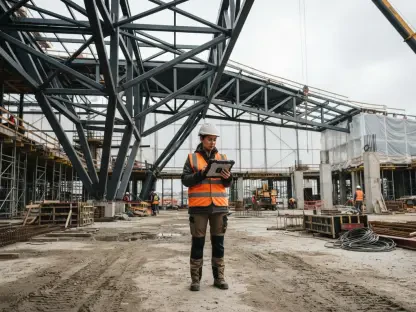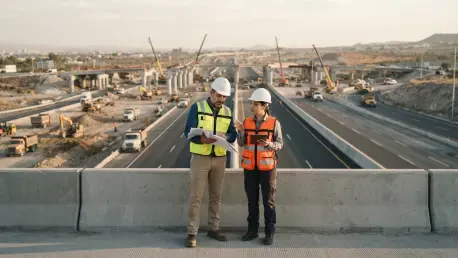

To stabilize the national economy, Banobras is currently managing a highway investment portfolio valued at MX$213.868 billion to modernize arterial trade routes. This massive financial commitment arrives at a pivotal moment, as the country’s heavy construction and industrial sectors have finally broken a nearly two-year period of stagnation with a robust 13.0% year-over-year expansion. This resurgence is largely attributed to the implementation of the Infrastructure Investment Plan for Development with Well-Being, a federal initiative designed to fundamentally upgrade national logistics. As global corporations look to relocate production closer to North American markets—a process commonly known as nearshoring—the demand for modern transport and energy networks has reached an all-time high. The current growth phase signals a departure from previous cycles of contraction, moving toward a period of structural economic reconfiguration that prioritizes long-term industrial capacity over temporary fiscal fixes.
Strategic Investment and Funding Models
Financial Architecture of Plan México
The current revitalization effort is supported by an MX$8.4 trillion investment strategy that fundamentally shifts how large-scale works are financed across the country. Moving away from a reliance on traditional public debt, the government has embraced sophisticated mixed-investment frameworks that combine federal resources with private equity. This hybrid approach allows for the rapid acceleration of hydraulic systems and energy projects without placing undue strain on the national balance sheet or sovereign credit ratings. At the heart of this strategy is the use of Construction, Maintenance, Rehabilitation, and Operation (CMRO) contracts, which ensure that major arterial routes are not only built but maintained to international standards. By establishing specialized state-participation companies, the federal government maintains strict oversight of toll revenues and operational metrics, ensuring that the infrastructure remains self-financing and serves the public interest while providing the reliability required by global manufacturers.
Role of Development Banks and Peso-Denominated Capital
A critical component of this fiscal stability is the role played by Banobras, the state development bank, which manages a vast portfolio focused on domestic resilience. By prioritizing peso-denominated investments, the bank shields the infrastructure market from the inherent volatility of global currency exchange, specifically protecting against the fluctuations of dollar-denominated debt that have plagued previous administrations. This financial strategy provides a layer of economic security for contractors and developers, allowing them to focus on long-term project viability rather than currency hedging. These mechanisms have created a predictable environment for continuous growth, ensuring that the project pipeline remains active and well-funded through the end of the current decade. The emphasis on localized capital also encourages domestic institutional investors to participate in national development, fostering a more self-reliant financial ecosystem that can withstand external shocks while delivering essential logistics upgrades for the industrial heartland.
Logistics and Transportation Expansion
Integration of Railway and Freight Networks
To address persistent supply chain bottlenecks that have hampered regional trade, the federal government is now prioritizing a dual-track approach that integrates passenger and freight rail systems. Major capital injections are being funneled into critical routes, such as the Querétaro-San Luis Potosí and San Luis Potosí-Saltillo lines, to create a seamless link between manufacturing hubs and the northern border. This strategic shift toward rail is intended to alleviate the physical and environmental strain on the national highway system, which has struggled to cope with the increased volume of heavy commercial vehicles. By modernizing these rail corridors, the Ministry of Infrastructure, Communications, and Transport aims to increase the velocity of cargo movement while reducing the overall carbon footprint of the logistics sector. The goal is to provide a multimodal transportation network that offers manufacturers diverse and efficient options for moving goods, thereby enhancing the country’s competitiveness in the global industrial theater.
International Bridges and Regional Connectivity
The government is also fast-tracking several high-impact cross-border projects, including the Nuevo Laredo 4/5 International Bridge and the Puerto Verde initiative in Piedras Negras. These projects are specifically designed to facilitate smoother trade with the United States by diverting heavy commercial traffic away from congested urban centers, which significantly reduces transit times and costs for international freight. Beyond their role in international commerce, these highway expansions serve as powerful regional economic engines, generating tens of thousands of direct jobs and fostering stability in previously isolated areas. By integrating these communities into the national manufacturing grid, the plan creates a more balanced distribution of economic opportunities across the country. The focus on arterial trade routes ensures that the benefits of nearshoring are not confined to traditional industrial hubs but are spread to emerging regions, providing the foundational infrastructure necessary for long-term social and economic development.
Addressing Infrastructure Bottlenecks
Bridging the Utility and Energy Gap
Despite the massive influx of capital into transportation logistics, a significant challenge remains regarding the capacity of regional utilities to keep pace with industrial growth. In high-demand areas such as the Bajío region, manufacturers are increasingly encountering shortages in electricity and water supply, as the Federal Electricity Commission grid struggles to match the rapid development of new industrial parks. This infrastructure-utility gap has emerged as a primary bottleneck for site selection, forcing many industrial real estate developers to implement independent solutions. To ensure operational continuity for their tenants, these developers are now integrating on-site high-voltage substations and sophisticated water management systems directly into their projects. This trend toward self-sufficiency highlights the urgent need for a more synchronized approach to utility planning, where energy and water infrastructure are expanded in tandem with transport corridors to support the sustainable growth of the national industrial sector.
Strategic Implications for Global Investors
For business executives and global investors, the current landscape offers a unique but rapidly closing window of opportunity to secure prime real estate with adequate infrastructure access. Success in this evolving market requires a rigorous due diligence process that goes far beyond traditional site-selection metrics. Corporations must now conduct detailed assessments of utility interconnection capacity and natural gas access before committing to facility investments. Furthermore, companies that align their internal growth strategies with the federal government’s evolving transport timelines will be best positioned to capitalize on new logistics efficiencies. Utilizing digital tools to synchronize production schedules with multimodal transit corridors has become essential for maintaining a competitive edge. As the demand for industrial space continues to rise, those organizations that prioritize infrastructure resilience and proactive energy planning will secure a dominant position in the North American market, navigating the complexities of a transforming national landscape with greater agility.
Forward Outlook for Industrial Integration
The synthesis of recent data from federal agencies and construction industry chambers revealed that the country successfully transitioned from a period of stagnation into a high-growth phase. This shift was largely underpinned by the MX$8.4 trillion investment framework, which stabilized the construction sector and provided a clear roadmap for modernization through the end of the decade. As initial projects reached completion, the emphasis moved toward maintaining the integrity of these new trade corridors through established state-participation models. The integration of international bridges and upgraded rail lines significantly improved the velocity of trade, while the challenges of the utility gap encouraged a new standard of self-sufficiency among industrial developers. By focusing on multimodal connectivity and peso-denominated financial stability, the national strategy created a resilient environment for industrial expansion. Ultimately, these efforts ensured that the national infrastructure was capable of supporting the long-term demands of global nearshoring, securing a significant role for the country in the future of North American manufacturing.