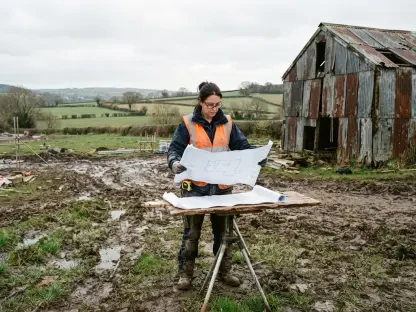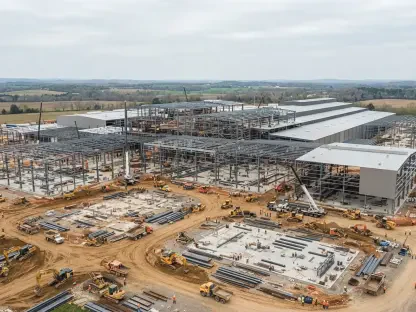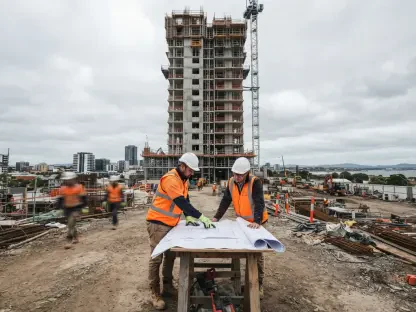

The New Terminal One project at JFK relies on phased demolition and coordinated construction to ensure that old structures are only removed after new gates become fully operational. Across the United States, major transportation hubs are navigating similar high-stakes environments where the margin for error is nonexistent. This massive modernization effort, involving billions of dollars in investment, signifies a shift in how infrastructure is conceived and delivered. The complexity of modernizing airports while they remain active is staggering, requiring a level of precision that traditional blueprints cannot provide. Building Information Modeling has emerged as the central pillar of this effort, providing a digital framework that integrates design, scheduling, and logistics. This technology allows project stakeholders to visualize entire terminals in three dimensions before physical work begins. By creating a collaborative environment, BIM ensures that every phase of the construction process is accounted for, from initial demolition to the final gate opening.
Overcoming Operational Constraints
Navigating Active Airfield Construction
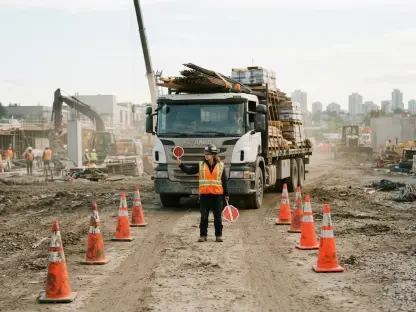
The central challenge of modern airport redevelopment is the necessity of maintaining full operational capacity during intensive construction activities. Unlike other sectors where a facility might be closed for renovation, international hubs like those in New York or San Francisco must continue to process millions of passengers and manage thousands of flight arrivals and departures daily. BIM services offer a critical advantage by simulating the construction environment within a virtual space, allowing project managers to identify potential disruptions to passenger traffic or airfield operations. For instance, temporary walls, rerouted corridors, and construction equipment placements are modeled to ensure that the airport’s rhythm remains undisturbed. This proactive approach minimizes the need for sudden, expensive field changes that could ripple through global flight schedules. By visualizing the logistics of material delivery and workforce movement, contractors can execute complex tasks without encroaching on sensitive zones.
Strategic Logistics for Passenger Flow
Beyond basic spatial awareness, digital modeling allows for the integration of safety protocols directly into the construction workflow. By analyzing the flow of travelers alongside the movement of heavy machinery, airport authorities can designate secure zones that prevent any unauthorized access to the airfield. These virtual rehearsals enable teams to identify potential hazards, such as line-of-sight obstructions for air traffic controllers or interference with emergency response routes, before they manifest in the real world. As these projects move forward from 2026, the reliance on data-driven planning ensures that the safety of the flying public is never compromised by the complexity of the job site. Furthermore, the ability to share these models with local fire and police departments enhances the airport’s overall emergency preparedness. This collaborative approach creates a unified vision of the construction site, where every stakeholder is aware of the current project state and the associated safety requirements.
Integrating Complex Terminal Systems
Terminal buildings represent some of the most intricate engineering environments in the world, filled with highly specialized systems that must work in perfect harmony. These structures house expansive baggage handling systems, sophisticated mechanical infrastructure, and sensitive security networks that must be woven through dense structural skeletons. BIM facilitates a process known as clash detection, where software identifies spatial conflicts between different building components before they are installed. For example, a massive ventilation duct might be slated for the same physical space as a structural steel beam or a high-voltage electrical conduit. By resolving these conflicts during the digital design phase, project teams avoid the catastrophic delays and massive cost overruns that occur when these issues are discovered in the field. This level of technical coordination ensures that complex systems, such as gate-side preconditioned air and specialized power feeds, are integrated seamlessly into the building layout.
Technical Coordination and Efficiency
The precision afforded by these digital tools extends to the procurement and fabrication stages of construction. When every component is modeled with extreme accuracy, contractors can prefabricate large sections of mechanical or electrical systems off-site in a controlled environment. This not only improves the quality of the work but also significantly reduces the amount of time required for on-site installation, which is a critical factor in a busy airport setting. By the time materials arrive at the terminal, they are ready to be installed with minimal adjustment, reducing the footprint of the construction crew and the noise levels experienced by passengers. This efficiency is particularly valuable when upgrading specialized baggage handling systems, which must be integrated into existing structural footprints with precision down to the millimeter. The result is a more streamlined construction process that respects the operational needs of airline partners and the comfort of the modern traveler during the expansion.
Real-World Applications and Modeling
Phased Transitions at New York Hubs
The multibillion-dollar transformation at John F. Kennedy International Airport serves as a premier example of how digital modeling manages the logistical nightmare of phased transitions. Projects such as the $9.5 billion New Terminal One and the $4.2 billion Terminal 6 expansion require a surgical approach to demolition, where existing structures are dismantled in stages to maintain gate capacity. BIM provides a precise digital record of every temporary utility line, security boundary, and passenger walkway, allowing engineers to manage the transition between aging facilities and new, high-tech environments. This ensures that essential services, including baggage sorting and Customs checkpoints, remain fully functional throughout the construction period. As the project advances from 2026 toward its completion, the digital model serves as the single source of truth, coordinating the efforts of architects, engineers, and government agencies to ensure that safety and operational efficiency are never compromised.
Digital Records for Continuous Capacity
Maintaining continuity during a massive reconstruction requires more than just a map of the new building; it requires a deep understanding of the legacy infrastructure that still serves the site. BIM allows engineers to overlay new designs onto existing underground utility surveys, preventing accidental strikes on high-voltage lines or fuel hydrants that could cripple airport operations. This is especially vital in New York, where decades of incremental expansions have created a complex web of subterranean assets. By maintaining a live digital record of these utilities, construction teams can proceed with confidence, knowing that their excavation plans are based on accurate, real-time data. This level of oversight extends to the coordination of airline operations, as gates are decommissioned and new ones are brought online. The digital model allows for a seamless handover between construction teams and airport operations, ensuring that the transition to modern facilities is invisible to the passengers moving through the hub.
Precise Scheduling with 4D Simulations
In the Pacific Northwest, Seattle-Tacoma International Airport utilized the advanced power of 4D modeling to achieve one of the most impressive feats in recent aviation history. This technology integrates the element of time into the three-dimensional model, allowing teams to simulate the entire construction schedule visually. During the installation of a massive pedestrian walkway span, which weighed three million pounds, engineers used 4D simulations to rehearse the lift dozens of times in a virtual environment. This careful planning allowed the team to execute the lift over an active taxi lane with extreme precision, ensuring that aircraft could continue to move underneath the new bridge almost immediately after the physical work was completed. Such data-driven scheduling is essential for minimizing downtime in high-stakes environments where even a few hours of delay can cost airlines and passengers significant amounts of money. The success of this project highlights how the marriage of 3D design and time data creates a safe environment.
Record-Breaking Engineering and Delivery
The use of time-integrated modeling allowed the Seattle project to meet aggressive deadlines while maintaining the highest safety standards. By simulating the movement of the heavy-lift cranes and the positioning of the bridge span, the project team could identify potential bottlenecks in the schedule before they occurred. This allowed for the optimization of labor and equipment, ensuring that every minute of the construction window was utilized effectively. The pedestrian walkway, now a landmark feature of the airport, stands as a testament to the power of virtual rehearsal in complex engineering. Beyond the physical structure, the project delivered a comprehensive data set that airport operators can use for future maintenance. This ensures that the bridge, along with the rest of the facility, can be managed with the same level of precision that was used during its construction. The ability to visualize the entire lifecycle of a project, from the first crane movement to the final bolt tightening, is what sets modern aviation projects apart.
Future-Proofing Aviation Infrastructure
Operational Management with Digital Twins
The utility of Building Information Modeling extends far beyond the final inspection of a construction project, evolving into what is known as a digital twin for ongoing facility management. San Francisco International Airport exemplifies this trend by maintaining a high-fidelity digital record of over 18 million square feet of terminal and airfield space. This enterprise-level approach allows airport operators to manage daily maintenance, security protocols, and minor renovations with unparalleled accuracy. When a repair is required or a new retail tenant moves into a terminal, staff can consult the digital twin to locate underground utilities or understand the complex airflow dynamics of the soaring halls. This reduces the risk of accidental service interruptions and allows for more efficient energy management. By having a comprehensive digital asset that reflects the physical reality of the building, the airport can adapt to evolving needs while reducing long-term costs of ownership and ensuring infrastructure remains resilient.
High-Fidelity Records and Security
In addition to maintenance, the digital twin serves as a critical tool for airport security and emergency response. By providing a three-dimensional view of every corridor, mechanical room, and service tunnel, the model allows security teams to plan for various scenarios with a high degree of realism. This includes optimizing the placement of cameras and sensors to eliminate blind spots or simulating evacuation routes to ensure passenger safety during an emergency. The digital record also simplifies the management of complex airport systems, such as the thousands of electronic locks and access control points found in a modern terminal. As the technology continues to mature from 2026, the integration of real-time sensor data into the digital twin will provide even greater insights into the performance of the building. This shift toward data-driven operations ensures that the airport can respond quickly to changing conditions, whether it is a sudden surge in passenger traffic or a technical failure in a remote part of the facility.
Lifecycle Data and Predictive Maintenance
Current modernization efforts at Pittsburgh International Airport further illustrate the shift toward a data-rich lifecycle approach in aviation design. By transitioning from a traditional hub-centric model to one focused on origin-and-destination travelers, the airport used BIM to integrate a new terminal and parking complex into a single, cohesive site plan. This forward-thinking strategy ensures that the record model delivered at the end of construction is not just a collection of drawings, but a living asset populated with specific data for every pump, motor, and light fixture in the facility. Moving forward from 2026, these digital assets will allow the airport to implement predictive maintenance schedules, replacing components before they fail and minimizing disruptions to the traveler experience. The focus on data quality during the design and construction phases translates into decades of improved performance. Ultimately, the integration of BIM services ensures that American airports are prepared for the next generation.
Advancing Global Aviation Infrastructure
The massive terminal rebuilds across the United States are no longer just feats of civil engineering; they have become triumphs of sophisticated data management and digital precision. By utilizing BIM services, the aviation industry has established a reliable bridge between visionary architecture and the harsh logistical realities of active-site construction. These software-driven rehearsals allowed for record-breaking structural lifts, seamless gate transitions, and the successful completion of massive terminal modernizations that define the landscape of travel. Airport authorities recognize that the future of physical infrastructure depends entirely on the quality of its digital predecessor, leading to a new industry standard where the record model is the most valuable deliverable of any contract. This proactive approach to data management mitigates risks, reduces environmental impact, and ensures that the traveler experience remains a priority. The lessons learned from these projects provide a roadmap for future infrastructure development.