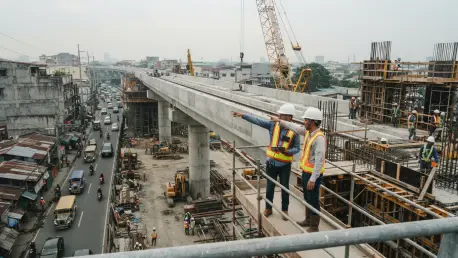

Flagship railway projects managed by the Department of Transportation remained instrumental in sustaining disbursement activity during the height of the flood control project audits, and this persistence has become a cornerstone of the Philippine fiscal landscape as the nation moves through the latter half of 2026. After a grueling fourteen-month period characterized by shrinking public investment, the latest figures from the Department of Budget and Management suggest a revitalized momentum. In September, infrastructure spending surged by 14 percent compared to the same month last year, reaching a total of 89.7 billion pesos. This uptick is not merely a statistical anomaly but represents a critical pivot point for an economy that has struggled with administrative bottlenecks and stringent oversight measures. By breaking the cycle of contraction that began in mid-2025, the government is now attempting to demonstrate that it can harmonize rigorous anti-corruption audits with the urgent need for physical development. This shift is essential for restoring investor confidence and ensuring that the country’s long-term developmental goals remain on track despite the temporary slowdown in the construction sector.
Rebounding from a Prolonged Fiscal Contraction
The fourteen-month slump that defined the public works sector since the middle of 2025 was largely a self-imposed period of cooling. Following a direct order to investigate substandard construction and potential corruption in flood control initiatives, the government implemented a systemic overhaul of its disbursement protocols. This led to an environment where every payment claim underwent exhaustive validation, creating a massive backlog in the pipeline managed by the Department of Public Works and Highways. While these measures were essential for ensuring that taxpayer funds were used effectively, they undeniably slowed the pace of national development. Contractors faced significant delays in payment for completed segments of road networks, which in turn forced many projects to a standstill. However, the data from September 2026 indicates that the administrative machinery has finally begun to adapt to these stricter standards, allowing for a much-needed acceleration in the flow of capital to vital infrastructure sites across the various provinces.
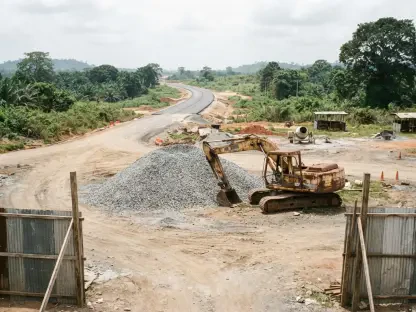
Clearing this administrative backlog resulted in a 27.3 percent month-on-month increase in spending when excluding subsidies and local government transfers. The 89.7 billion pesos disbursed in September stands in sharp contrast to the 70.5 billion pesos recorded in August, illustrating a rapid normalization of financial operations. This recovery is primarily attributed to the successful processing of long-overdue payments for massive road infrastructure projects that had been stalled during the audit phase. By completing the rigorous documentation and financial control procedures, the Department of Budget and Management has signaled that the period of stagnation is ending. This surge is critical because it restores confidence among private sector partners and construction firms who had become wary of government contracts. As the fiscal year enters its final stages, the ability to maintain this pace will determine whether the current recovery is a temporary spike or a sustainable return to the ambitious infrastructure goals that were initially envisioned for the country’s growth.
Assessing Performance and Strategic Diversification
When looking at the broader trajectory of the current year, the cumulative data for the first nine months reveals the true depth of the earlier fiscal challenges. Total infrastructure spending from January to September 2026 experienced a dramatic 30.3 percent decline compared to the same period in 2025. This contraction highlights how deeply the audit-related slowdown permeated the national economy, effectively removing hundreds of billions of pesos from the circulation of goods and services. The total disbursement of 611.7 billion pesos for the first three quarters reflects a cautious approach to governance that prioritized integrity over raw speed. However, this level of spending represents a significant gap in the physical assets that were supposed to be delivered during this timeframe. The ripple effects of this reduction were seen in the construction supply chain, where demand for materials like cement and steel dropped in accordance with the slowing pace of site developments nationwide.
While the Department of Public Works and Highways has been the primary focus of the audit-related delays, other sectors provided a stable foundation for capital outlays. The Department of National Defense, for instance, has continued its modernization efforts, ensuring that strategic investments in security infrastructure proceed without the same level of interruption seen in civil works. These defense projects contribute significantly to the overall disbursement total, providing a steady stream of economic activity that is less susceptible to the specific bottlenecks affecting flood control and road building. Furthermore, the Department of Education has maintained its focus on school-building initiatives, recognizing that human capital depends on the physical capacity of learning institutions. By diversifying the types of infrastructure projects receiving funding, the government managed to prevent a total collapse in public investment, even as its largest construction agency navigated a complex period of institutional reform and performance validation.
Measuring Impact and Identifying Future Solutions
The tangible consequences of the infrastructure bottleneck were most visible in the macroeconomic indicators for the first three quarters of 2026. National GDP growth remained at a lackluster 2.5 percent, failing to reach the government’s original target range of 3.5 to 4.5 percent. This shortfall was directly linked to the 4.4 percent contraction in gross capital formation, a metric that tracks the investment in fixed assets like buildings, machinery, and public works. Economic analysts pointed out that the slowdown in public construction acted as a significant drag on the economy, shaving off approximately 1.6 percentage points from the potential growth rate. Without these administrative delays, the nation could have seen an expansion exceeding 4 percent, which would have positioned it better against regional competitors. The loss of momentum also had a cooling effect on household consumption, as thousands of workers typically employed in these projects saw reduced incomes or faced job insecurity.
The administration recognized that the successful conclusion of the current fiscal cycle required a focus on high-impact projects that provided immediate relief to the national economy. This transition prioritized the fast-tracking of disaster rehabilitation programs and the finalization of key transport links that neared completion during the final months. Moving toward the 2027 budget, policymakers identified the need for a more balanced approach that integrated oversight into the project lifecycle without paralyzing activity. Authorities suggested that the digitalization of the procurement and payment pipeline allowed for real-time auditing while maintaining the velocity of spending. By adopting these technological solutions, the state ensured that every peso was accounted for while stimulating growth. This transition from 2026 provided an opportunity to institutionalize lessons that allowed the recent rise in infrastructure spending to become a foundation for a more resilient and efficient national economy.