
Modern construction sites are becoming data-rich environments where every completed robotic task contributes to a broader intelligence layer for future project scaling. As the global transition toward renewable energy accelerates, the demand for utility-scale solar installations has outpaced the available human workforce. This disparity is creating a significant bottleneck in the construction pipeline, threatening the ambitious targets set for grid modernization. In the United States alone, industry forecasts suggest a looming shortfall of approximately 450,000 workers by 2027. Traditional manual labor simply cannot scale quickly enough to meet the current installation requirements, especially in remote regions where recruitment remains a persistent challenge. Amidst this pressure, physical AI and autonomous systems are emerging as critical infrastructure tools. These technologies are no longer speculative experiments; they are active components on job sites across the country, fundamentally changing how solar panels are deployed.
The Evolution of Robotic Labor in Renewable Energy
Bridging the Talent Gap: The Rise of Physical AI
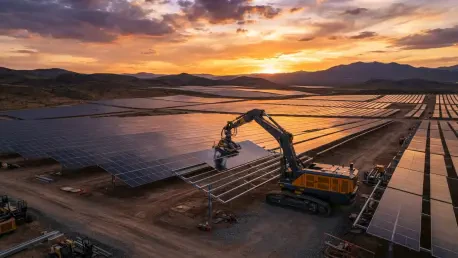
Maximo Robotics reached a significant milestone by completing over 300,000 construction tasks across various solar projects, demonstrating that robotic intervention is now a mature solution. By deploying systems like the Max 4.0, companies were able to maintain momentum in regions like Texas, California, and New York, where labor availability often fluctuates. The presence of these robots does not replace human skill but rather amplifies it, allowing crews to focus on complex oversight while machines handle repetitive, physically demanding actions. Field data indicates that teams working alongside these autonomous units can install solar modules up to 2.5 times faster than teams relying solely on traditional manual methods. This surge in productivity is vital for hitting the deployment milestones necessary for a decarbonized power grid. The transition from manual-heavy workflows to hybrid human-machine operations represents a fundamental shift in the economics of utility-scale energy projects.
The Robotics-as-a-Service Model: Efficiency and Accountability
To lower the barrier for adoption, the solar industry has embraced a performance-based Robotics-as-a-Service (RaaS) model. Under this arrangement, Engineering, Procurement, and Construction firms are not required to purchase expensive machinery outright; instead, they pay based on the number of completed tasks. This model aligns the incentives of the technology provider with the goals of the project developer, ensuring that revenue is strictly tied to tangible productivity gains. By shifting from a capital expenditure model to an operational expenditure model, firms can integrate advanced AI systems without the burden of long-term maintenance or hardware obsolescence. This approach allows for the rapid scaling of robotic fleets across multiple sites simultaneously. It also creates a framework for continuous improvement, as the service provider is motivated to keep the equipment running at peak efficiency. The accountability inherent in this model has been a primary driver for the adoption of automation among major industry players like Primoris Services Corporation.
Technological Foundations of Precision Solar Assembly
The Core Architecture: Integrating Vision and Hardware
The technical backbone of modern solar robotics is a multi-layered architecture often described as a combination of Cortex, Form, and IQ. The intelligence layer, or “Cortex,” utilizes sophisticated vision models and planning algorithms to interpret the surrounding environment in real time. This allows the robot to identify and interact with solar modules with millimeter precision, even when conditions on the construction site are less than ideal. Unlike static factory environments, outdoor construction sites are dynamic and unpredictable, requiring a high degree of situational awareness. The AI must account for uneven terrain, shifting lighting conditions, and the movement of other equipment and personnel. By processing these variables instantaneously, the system can execute tasks with a level of consistency that is difficult to maintain through manual labor over an eight-hour shift. This precision is particularly critical when placing heavy solar modules, where minor misalignments can lead to structural issues or reduced energy efficiency once the system is fully operational.
Data-Driven Performance: Expanding Infrastructure Intelligence
The performance management platform, or IQ, acted as the nervous system for these robotic fleets, utilizing data from every completed task to create a continuous training loop. This intelligence layer allowed the robots to learn from diverse environmental conditions across seven states, transforming raw field experience into digital insights that improved system accuracy over time. Stakeholders in the renewable energy sector recognized that traditional labor models were insufficient for the scale of the energy transition, prompting a shift toward these data-rich construction environments. Industry experts recommended that firms continue to invest in hybrid workflows that prioritized the synergy between human expertise and machine precision. This strategy allowed companies to maintain high safety standards while achieving unprecedented installation rates. The evolution of solar robotics proved that the key to solving the labor crisis was not simply replacing workers, but equipping the industry with more intelligent tools. Those who adopted these systems early captured significant market share and helped build a resilient energy network.