
The launch of 100MAG in Boston represents a $50 million commitment to bridging the gap between experimental construction technology and real-world field implementation. This facility serves as a vital response to a complex economic environment where the total expenditure of building often exceeds the final appraised value of the completed structure. By establishing this centralized nerve center at its headquarters campus, Suffolk is moving beyond the fragmented nature of traditional contracting to create a cohesive, data-driven ecosystem. The industry currently faces persistent challenges, including a dwindling supply of skilled labor and productivity rates that have remained stagnant compared to the rapid advancements seen in the manufacturing or software sectors. To navigate these headwinds, Suffolk is leveraging its $13 billion annual revenue to fund a space where innovation is not just discussed but rigorously tested. This transition marks a fundamental shift from reactive project management to a proactive, technology-heavy business model that treats construction as a holistic lifecycle.
Strategic Integration: The Master Builder Model
Central to the mission of 100MAG is the revival of the Master Builder concept, which emphasizes consolidated responsibility and a unified vision for every project. In a typical construction environment, architects, engineers, and suppliers often work in silos, leading to miscommunications that cause costly delays and resource waste. Suffolk’s new hub dismantles these barriers by housing multidisciplinary teams under one roof, ensuring that design insights and material sourcing strategies are integrated from the earliest stages of planning. This model allows for a seamless flow of high-quality data across the organization, reducing the friction that traditionally plagues large-scale infrastructure developments. By controlling the entire lifecycle—from initial architectural rendering to long-term facility management—the company can apply a manufacturing-style mindset to the built environment. This approach ensures that every stakeholder is aligned with the project’s financial goals, fostering a culture of accountability that is often missing in construction.
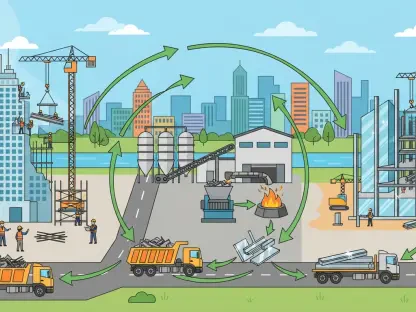
The facility operates as a sophisticated research and development pipeline designed to convert theoretical breakthroughs into standardized field practices. The process begins at the Jobsite of the Future, where on-site engineers identify specific operational bottlenecks and test experimental tools in real-world conditions. These findings are then funneled into 100MAG, where innovations are scrutinized against rigorous performance metrics, including cost reduction, safety enhancements, and schedule optimization. If a technology proves effective, it is refined through the company’s venture capital arm and accelerator programs before being deployed across national projects. This structured validation process ensures that a successful pilot program in one region can be rapidly scaled to benefit the entire enterprise, spanning seventeen offices and four thousand employees. By creating a pathway from ideation to implementation, Suffolk transforms localized success into a permanent competitive advantage that enhances predictability for its clients.
Frontier Technology: Implementing Data-Centric Standards
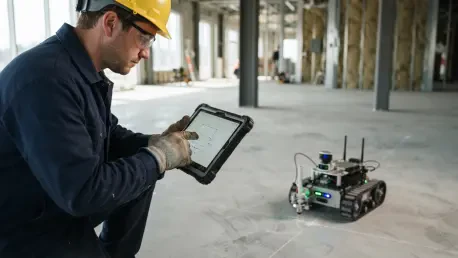
A substantial portion of the capital investment is dedicated to the integration of frontier technologies like artificial intelligence and robotics to enhance project outcomes. AI systems are currently being utilized to mine decades of historical project data, allowing for predictive modeling that can identify potential risks before they manifest on the jobsite. This capability is particularly crucial in high-stakes sectors such as healthcare and aviation, where even minor scheduling errors can have massive financial consequences. In tandem with these digital tools, robotics are being deployed to handle repetitive or high-risk manual tasks, effectively addressing the chronic labor shortages that have hampered industry growth. By automating activities like layout marking or heavy material handling, the hub allows human workers to focus on more complex problem-solving roles that require expert judgment. This synergy between machine precision and human expertise creates a more resilient workforce capable of meeting the demands of increasingly intricate modern designs.
Beyond current applications, 100MAG is investigating the long-term potential of quantum computing to manage logistical complexities for the 2026-2028 development cycle. As structural simulations become more data-intensive, traditional computing limits often slow down decision-making for large-scale urban projects. The hub serves as an incubator for these advanced computational theories, positioning the company to lead the industry when quantum solutions become commercially viable for structural analysis and supply chain optimization. This forward-thinking strategy allows the organization to influence national industry standards by proving that a data-centric approach can stabilize costs and improve building quality. With a portfolio including mission-critical infrastructure, the ability to utilize these tools provides a level of certainty rare in a volatile market. The focus remains on turning experimental breakthroughs into repeatable processes that can be exported to every project site, regardless of geographic location or specific engineering challenges.
The establishment of the 100MAG facility demonstrated that the path to industry resilience required a fundamental departure from legacy construction practices. Decision-makers recognized that technological adoption was no longer an optional upgrade but a core requirement for surviving economic volatility. This initiative provided a blueprint for how private enterprises could drive sector-wide change by investing in research and development and centralized data management. Industry leaders who observed this rollout gained insights into the necessity of bridging the gap between digital innovation and physical labor on the jobsite. Moving forward, the focus shifted toward creating open-source data standards and fostering collaborations that could further reduce fragmentation across the supply chain. By prioritizing actionable metrics and scalable solutions, the project successfully transitioned construction from a reactive trade into a precise manufacturing discipline. This evolution ensured that projects were built on a foundation of predictive intelligence.