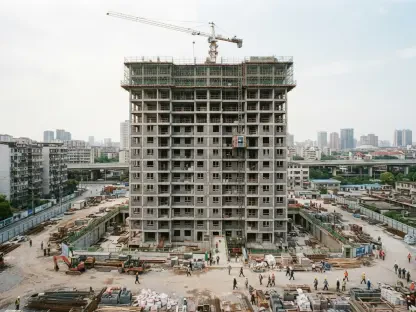

The operational expertise export model allows state-owned enterprises to generate revenue through management fees and brand royalties without taking on direct property ownership risks. As of 2026, the Chinese commercial real estate market has firmly established itself within a “stock era,” where the breakneck speed of new construction has slowed to a crawl. In this environment, the growth of centralized commercial space has moderated significantly, with a heavy emphasis now placed on the renovation and repurposing of existing assets rather than greenfield developments. While many private developers have scaled back their operations or entered restructuring phases, State-Owned Enterprises (SOEs) are filling the vacuum by aggressively expanding their operational footprints. This transition represents more than just a change in market share; it is a fundamental reconfiguration of how commercial value is extracted from urban environments. The traditional reliance on rapid turnover and massive debt-fueled expansion is being replaced by a tripartite strategic framework that focuses on asset creation, operational expertise, and the integration of broader urban functions. This new reality demands a higher level of institutional maturity, where the ability to manage complexity and provide long-term stability becomes the ultimate competitive advantage in a maturing economic landscape.
Structural Fractures in Traditional Commercial Models
For decades, the success of state-owned commercial management was built on three structural pillars that ensured growth regardless of internal operational efficiency. These pillars included the acquisition of low-cost land through established government relations, the assumption that assets would passively appreciate as urban boundaries expanded, and the ability to secure massive financing based on the sheer scale of property portfolios. However, by 2026, these foundations have largely fractured. Land prices have reached a plateau in most major metropolitan areas, and the assumption that time alone would inflate property values has been proven false by a market that now demands tangible performance. Modern capital markets have shifted their valuation logic away from gross asset value and toward more precise metrics such as Net Operating Income (NOI), actual occupancy rates, and sustainable foot traffic. Consequently, the old formula of relying on scale and land dividends is now obsolete, forcing state-backed institutions to find new ways to manifest value in a transparent and performance-driven environment.
The collapse of these legacy pillars has necessitated a move toward professionalized asset management that treats commercial properties as dynamic financial instruments. In the past, state-owned firms could afford to hold underperforming assets because their borrowing costs were low and their time horizons were indefinite. Today, the introduction of more sophisticated financial exit channels, specifically Real Estate Investment Trusts (REITs), has introduced a level of scrutiny previously unknown to the sector. These instruments require assets to be managed with a level of precision that maximizes yield and ensures long-term viability for institutional investors. As a result, the industry is witnessing a “survival of the fittest” scenario where the ability to optimize existing properties is far more important than the ability to build new ones. State-owned enterprises that have failed to adapt their internal management cultures are finding themselves burdened by “zombie” assets, while those that have embraced modern operational standards are consolidating their lead in the urban core.
Competitive Moats and the Certainty Premium
Despite the broader market cooling, state-owned enterprises possess significant competitive moats that private entities find increasingly difficult to replicate. The most prominent advantage is access to low-cost, long-term capital, which provides a massive buffer against market volatility. For example, leading firms like China Resources Land have maintained weighted average financing costs well below the industry average, supported by robust cash reserves and conservative debt-to-equity ratios. This financial stability allows SOEs to undertake large-scale renovations and urban renewal projects that require substantial upfront investment and offer longer payback periods. In an era where private capital is hesitant and risk-averse, the steady hand of state capital provides a “certainty premium” that attracts both high-quality tenants and long-term institutional partners. This credit endorsement from the state ensures that their projects remain the preferred destinations for global brands seeking stability in the Chinese market.
Beyond financial strength, the synergy between state enterprises and local governments creates unique opportunities for projects that are not purely commercial. SOEs are the natural choice for complex initiatives that involve public venue operation, cultural-tourism integration, and the preservation of historic urban districts. These projects often involve navigating intricate regulatory environments and balancing social welfare with commercial viability—tasks that require a level of public trust and coordination that private developers often lack. By positioning themselves as long-term partners in city building, state-owned firms are able to secure prime locations and unique asset classes that are shielded from standard market competition. This strategic positioning as “urban operators” allows them to capture comprehensive returns that go beyond simple rental income, including the long-term appreciation of surrounding areas and the enhancement of municipal brand equity.
Strategic Pivot Toward Active Asset Creation
The first major strategic shift for state-owned enterprises involves a transition from a “heavy asset” holding model to an “asset manufacturing” approach. This path treats commercial properties as high-performance financial products rather than static physical spaces. The goal is no longer simply to own buildings but to master the full lifecycle of investment, financing, management, and exit. By focusing on active asset creation, SOEs aim to improve a property’s NOI through aggressive leasing strategies, facility upgrades, and digital integration. Once an asset has reached a stable and optimized state, it is then prepared for exit through capital markets, often via REITs. This cycle allows for the recycling of capital, enabling the institution to reinvest in new renovation projects without bloating its balance sheet with stagnant debt. It is a sophisticated form of financial engineering that requires a deep understanding of both real estate operations and capital market dynamics.
However, this “asset manufacturing” model carries high thresholds for success and significant risks. Because REITs and other securitized instruments require extreme transparency and verifiable data, every aspect of a property’s operation is subjected to intense market scrutiny. Any failure in maintaining occupancy or managing operating expenses can immediately impact the valuation of the financial product. Furthermore, if the exit channel becomes blocked due to regulatory changes or shifts in investor sentiment, the institution risks becoming trapped in a “heavy asset” quagmire with its capital frozen. Successful SOEs have addressed these risks by developing specialized asset management divisions that operate independently from their traditional development arms. These divisions focus exclusively on the technical aspects of yield optimization, ensuring that every square foot of the portfolio contributes to the overall financial health of the “asset machine.”
Brand Exportation through Light-Asset Operational Strategies
The second strategic path is the operational expertise export model, which represents a decisive shift toward light-asset transformation. In this scenario, state-owned enterprises leverage their established brand names and operational expertise to manage properties owned by third parties. This model has seen rapid adoption as of 2026, with major state-backed operators now managing a significant percentage of their total portfolios on behalf of private owners or local government platforms. By exporting their management systems, leasing networks, and standardized operation manuals, SOEs can generate steady revenue through management fees and brand royalties without the risks associated with property ownership. This allows for rapid geographic expansion and the ability to scale their influence across different market tiers without the need for massive capital outlays. The focus shifts from property risk to “accounts receivable” risk, making the business more resilient to fluctuations in real estate prices.
To succeed in light-asset management, an operator must possess a brand premium that actually drives foot traffic and attracts premier tenants. It is not enough to simply provide management services; the operator must offer a “turnkey” solution that includes everything from initial investment promotion to daily facility maintenance and marketing. The primary challenge in this model is ensuring that operational systems are replicable across diverse geographies while maintaining the quality standards that the brand represents. There is also the danger of being unable to collect management fees if the underlying property owner faces financial distress, which could turn a low-risk strategy into a liability of uncompensated labor. Leading SOEs have mitigated these issues by being highly selective about their partners and focusing on projects that have the potential to become regional anchors, thereby ensuring a reliable stream of fee-based income.
Expansion of the Comprehensive Urban Operator Role
The third strategic path involves the integration of commercial operations with broader municipal and social goals, positioning the SOE as a comprehensive “urban operator.” In this role, the objective is to generate “urban comprehensive returns” rather than focusing solely on high-margin commercial profit from a single site. This strategy is particularly relevant for the management of urban renewal projects, public sports venues, convention centers, and specialized industrial parks. By undertaking these contracted construction and management projects, SOEs serve as the bridge between government planning and market-driven execution. These projects often feature a complex mix of hospitality, retail, and public service areas that require a nuanced approach to management. Success is not measured by sales-per-square-foot alone but by the project’s impact on local employment, tax revenue, and the overall quality of the urban environment.
Undertaking the role of an urban operator requires immense capital patience and a long-term strategic vision. These projects typically have long development cycles and low initial returns, making them unattractive to private developers who are focused on short-term IRR. For state-owned firms, however, the social and economic stability provided by these projects aligns perfectly with their mission to support national and municipal development goals. High levels of coordination with government bodies are mandatory, and management teams must be adept at balancing public welfare obligations with the need for commercial viability. This path cements the SOE’s role as a vital component of the city’s infrastructure, creating a virtuous cycle where successful urban operation leads to further opportunities for development and management. It is a model that prioritizes stability and comprehensive impact over the volatile pursuit of peak commercial returns.
Management Precision through Internal Triple-Entry Accounting
A critical evolution in the internal governance of state-owned enterprises is the move toward a “three-ledger” accounting system. As firms pursue asset creation, operational expertise export, and urban operation simultaneously, they have recognized that these different business lines cannot be managed under a single assessment framework. Because each path has a unique risk profile, capital structure, and expected rate of return, mixing their accounts leads to strategic confusion and financial opacity. The asset creation ledger is now evaluated on the efficiency of capital exits and asset value appreciation, while the operational expertise export ledger focuses on profit margins and cash flow collection. Meanwhile, the urban operation ledger is judged on service stability and its broader social-economic impact. This separation allows management to identify which business units are truly profitable and which are being subsidized by other parts of the organization.
The adoption of this triple-entry mindset has been essential for maintaining transparency in a market that is increasingly scrutinized by institutional investors. By separating these ledgers, SOEs can provide clear data to capital markets regarding the performance of their securitized assets while still fulfilling their social responsibilities through their urban operation divisions. Failure to maintain this accounting discipline often results in internal cross-subsidization, where the high margins of management services mask the deep inefficiencies of holding underperforming heavy assets. For the most advanced state-owned firms, this financial clarity has become a strategic tool, allowing them to allocate resources more effectively and respond more quickly to market shifts. It ensures that the institution remains a lean and efficient operator, capable of delivering value across its diverse portfolio without succumbing to the “scale trap” that plagued the industry in previous decades.
Market Signals and the Emergence of a New Equilibrium
The dominance of state-owned enterprises is creating a new competitive equilibrium that signals a permanent shift in China’s commercial landscape. As SOEs consolidate their hold on top-tier assets in major cities, they are effectively setting the benchmark for property quality and management fees. By “cherry-picking” the best stock assets that meet the rigorous standards for REITs, state firms have created a high-barrier market for premium commercial space. Private developers and smaller operators are increasingly pushed toward niche or “sub-prime” assets—properties that may have complex title issues or smaller scales that do not fit the standardized SOE model. This divergence has led to a two-tiered market where SOEs dominate the large-scale, standardized commercial infrastructure, while private firms are forced to compete on the basis of extreme creativity and specialized service.
This new equilibrium has also redefined the relationship between state and private entities from one of pure competition to one of strategic cooperation. In the modern commercial ecosystem, SOEs often provide the “hardware,” which includes the financial credit, physical infrastructure, and long-term land rights. Private firms, in contrast, provide the “software” in the form of specialized retail concepts, art exhibitions, and trendy content that requires rapid adaptation to consumer preferences. This partnership model leverages the strengths of both sides: the stability and scale of the state and the agility and niche creativity of the private sector. By acting as the primary contractors for urban renewal and public space, SOEs create a platform upon which a diverse range of private service providers can thrive. This shift has resulted in a more resilient and multi-faceted commercial environment that is better equipped to handle the complexities of modern urban life.
Actionable Frameworks for Navigating the Commercial Shift
The transformation of state-owned commercial management was a structural response to a matured economic environment where the pursuit of scale for its own sake was no longer rewarded. The industry successfully transitioned by aligning its unique resource endowments—specifically capital stability and political credit—with the practical needs of a stock-driven market. For institutional leaders, the lesson of the past few years was that asset integrity and operational precision were the only sustainable paths to long-term growth. Organizations that focused on driving Net Operating Income through technology and brand exportation emerged as the new anchors of the urban economy. The successful implementation of the “three-ledger” system allowed these firms to maintain financial clarity even as their operations became more complex and integrated with municipal functions.
Moving forward, the focus must remain on the continuous optimization of existing portfolios and the rigorous selection of new management opportunities. Stakeholders should prioritize the development of specialized talent pools that can navigate the intersection of real estate, finance, and urban governance. The role of the “state-owned” label has evolved into a foundation for market-wide trust, but this trust must be maintained through consistent performance and transparent reporting. As the commercial landscape continues to settle into this new equilibrium, the winners will be those who can bridge the gap between heavy-asset stability and light-asset agility. The path to future success lies in the ability to transform aging urban assets into modern value centers that serve both the economy and the community, ensuring that China’s cities remain vibrant and economically viable for the next generation of residents and businesses.