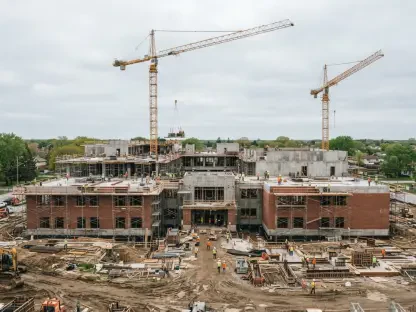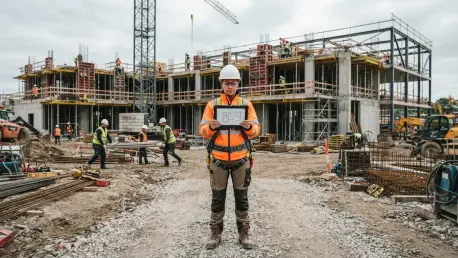

James Grant of PROCON observed that AI can handle eighty percent of a task, such as reviewing subcontractor bids, while humans provide the final critical judgment. This sentiment captures the current atmosphere within the New Hampshire construction landscape, where the integration of advanced algorithms is no longer a speculative future but a tangible daily reality. The industry is witnessing a profound transformation as firms move away from traditional, labor-intensive administrative and safety management processes toward more streamlined, tech-enabled operations. Rather than the humanoid robots often depicted in popular media, the real revolution in the Granite State is occurring through software that enhances human precision and speeds up decision-making. These tools act as a powerful force multiplier, enabling project managers and safety officers to oversee complex developments with a degree of oversight that was previously unattainable. As building projects become more intricate and regulatory environments tighten, the adoption of artificial intelligence serves as a bridge between limited manpower and the increasing demands of modern architecture and engineering. This shift is not merely about staying current with global trends; it is a fundamental reimagining of how the physical world is built, prioritizing both the safety of the individual worker and the fiscal health of the enterprise. By utilizing data-driven insights, companies are finding that they can reduce human error, mitigate unforeseen costs, and foster a safer working environment for everyone involved in the building process.
Advancing Workplace Safety
How Does AI Improve Job Site Safety?
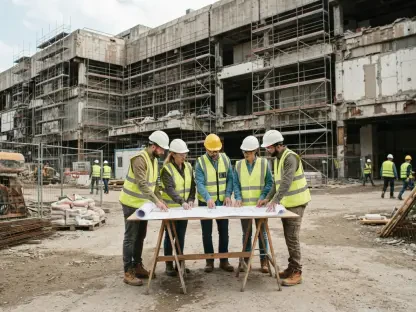
Safety directors across the country are increasingly turning to dedicated platforms like StepoAI to manage the immense complexities of modern job sites. In a field where a single oversight can lead to catastrophic consequences, the ability to digitize the entire safety infrastructure has become a game-changer. For companies with hundreds of employees spread across various remote locations, maintaining a consistent safety presence is traditionally a logistical nightmare. However, by uploading thousands of pages of OSHA regulations, internal handbooks, and specialized standards like the National Fire Protection Association codes into an AI database, these firms have created a “living” safety resource. Electricians and foremen on the ground no longer have to wait for a site visit from a safety officer to clarify a confusing regulation. Instead, they can use their mobile devices to ask specific technical questions or upload photos of equipment setups to receive immediate feedback. This instant access to expert-level information ensures that compliance is integrated into the workflow rather than being an afterthought. The technology essentially acts as a virtual safety consultant that is available twenty-four hours a day, providing clarity in the field where it is needed most, thereby reducing the likelihood of regulatory fines and, more importantly, life-threatening accidents.
The implementation of these tools also facilitates a more collaborative relationship between the back office and the field staff, breaking down the silos that often hinder effective communication. When a worker in the field identifies a potential hazard, the AI platform can instantly cross-reference that specific scenario with a library of historical data and current safety laws to provide a definitive answer. This capability is particularly beneficial for younger or less experienced workers who might hesitate to question a superior or stop a project due to uncertainty. By providing an objective, data-backed second opinion, AI empowers every member of the team to prioritize safety without fear of slowing down production unnecessarily. Furthermore, the systematic nature of these digital platforms means that every safety check, query, and resolution is automatically logged and archived. This creates a transparent paper trail that is invaluable during internal audits or external inspections. As the construction industry continues to face high pressure to meet tight deadlines, these digital assistants ensure that the rush to complete a project does not come at the expense of established safety protocols. The result is a more resilient workforce and a culture of accountability that permeates every level of the organization, from the executive suite to the newest apprentice on the job site.
Managing Risk Through Data
Beyond the immediate utility of answering site-specific questions, artificial intelligence is revolutionizing the long-term strategic approach to risk management. By aggregating data from every logged incident, near-miss, and safety query across various projects, these platforms can identify subtle trends that would be impossible for a human safety team to notice manually. For instance, if data shows an uptick in minor ladder-related slips on commercial sites during the rainy season, the AI can alert management to this emerging pattern. Safety directors can then leverage these insights to proactively address the issue before a major injury occurs. One common application of this predictive power is the generation of highly targeted “toolbox talks.” These are brief, on-site safety meetings where foremen discuss specific hazards with their crews. Instead of relying on generic safety topics, directors can use AI-generated reports to focus their talks on the actual risks currently trending within their specific company or geographic region. This data-driven precision ensures that safety training remains relevant and engaging, keeping the workforce alert to the most pressing dangers at any given moment. By shifting from a reactive “accident-response” mindset to a proactive “hazard-prediction” model, firms are significantly lowering their insurance premiums and protecting their most valuable asset: their people.
The ability to maintain a virtual presence across multiple, decentralized locations is perhaps the most significant benefit for small safety departments tasked with overseeing large workforces. In New Hampshire, it is not uncommon for a team of just three or four safety professionals to be responsible for hundreds of workers across dozens of active construction sites. Without technological intervention, these professionals would spend the majority of their time traveling between sites, often arriving long after a potential hazard has passed or resulted in an incident. AI changes this dynamic by allowing safety officers to monitor real-time inputs and photographic evidence from every location simultaneously. They can set up automated alerts for specific high-risk activities, such as high-voltage electrical work or deep excavation, ensuring they are virtually present during the most critical phases of a project. This decentralized expertise means that the firm’s most knowledgeable safety minds are always just a click away for any foreman in the field. This level of connectivity not only improves physical safety outcomes but also enhances the overall quality of work, as technicians feel more supported and confident in their execution. As the complexity of building systems continues to evolve, the demand for this kind of real-time, expert oversight will only increase, making AI an indispensable part of the modern construction professional’s toolkit.
Streamlining Administrative Workflows
Maximizing Office Productivity
The administrative burden within the construction industry is notoriously heavy, involving a mountain of invoices, change orders, compliance documents, and vendor contracts. For decades, this “clunky” back-office work was considered an unavoidable cost of doing business, often laden with human error and inefficiency. Today, firms are leveraging general-purpose large language models like Claude to dismantle these bureaucratic bottlenecks. These systems are being used to process and reconcile massive datasets that would typically take a human employee days or even weeks to sort through. A practical example involves the handling of landfill weight tickets and soil disposal invoices for large-scale environmental remediation projects. In the past, matching each ticket to a specific invoice and project code was a grueling manual task prone to oversight. With modern AI tools, hundreds of pages of these documents can be scanned and reconciled in roughly fifteen minutes, with the system flagging any discrepancies for human review. This dramatic reduction in processing time allows administrative staff to transition from data entry roles to more strategic positions within the firm. By automating the most repetitive and mundane aspects of project accounting, companies are finding that they can operate with a leaner, more efficient office staff while simultaneously increasing the accuracy of their financial reporting and project tracking.
This shift toward AI-driven efficiency is also changing how construction firms manage their project timelines and procurement schedules. Traditional scheduling software often lacks the flexibility to adapt to the rapid-fire changes that occur on a live job site, leading to communication breakdowns and delayed deliveries. AI models can synthesize information from multiple sources—including weather forecasts, supply chain updates, and subcontractor availability—to provide more realistic project projections. This allows project managers to identify potential delays weeks in advance and adjust their logistics accordingly. Furthermore, the automation of procurement documentation ensures that orders are placed precisely when needed, reducing the costs associated with on-site storage or project stalls due to missing materials. The efficiency gains extend to the bidding process as well, where AI can quickly analyze historical data from previous projects to help estimators create more accurate and competitive quotes. This holistic improvement in office productivity does more than just save time; it provides a significant competitive advantage in a market where profit margins are often razor-thin. Firms that can manage their internal data effectively are better positioned to weather economic fluctuations and take on more ambitious projects without increasing their overhead costs. The administrative revolution is effectively turning the “back office” into a high-performance engine that drives the entire construction process forward.
Balancing Automation and Judgment
Despite the impressive speed and accuracy of modern algorithms, industry leaders remain committed to a hybrid approach that prioritizes human oversight. The “80/20” rule has become a common benchmark, suggesting that while AI can handle the vast majority of a task—such as the initial screening of hundreds of subcontractor bids—the final twenty percent of the work requires the nuance and context that only a seasoned professional can provide. For instance, AI can verify that a bid meets the technical specifications and pricing requirements of a project, but it may struggle to account for the historical reliability of a particular subcontractor or the interpersonal dynamics that might affect a site’s productivity. Humans are essential for interpreting the “gray areas” that data alone cannot resolve. This collaborative model ensures that the firm benefits from the scale and speed of automation while maintaining the high standards of quality and ethical responsibility that the industry demands. By using AI as a sophisticated assistant rather than a replacement, companies are able to scale their operations significantly without losing the personal touch and professional integrity that build long-term client relationships. This balance is critical in an industry where reputation is built over decades but can be tarnished by a single automated error that goes unchecked.
Another aspect of this balance is the trend toward “vibe-coding,” where construction firms use AI to build their own internal software tools rather than relying on expensive, generic packages from external vendors. This allows companies to create proprietary Customer Relationship Management (CRM) systems or project tracking tools that are perfectly aligned with their specific internal workflows. However, this level of customization requires a high degree of human discretion to ensure the resulting tools are functional and secure. While AI can generate code for these applications in seconds, human programmers and project managers must still define the parameters, test the outputs, and ensure the software integrates seamlessly with existing platforms. This DIY approach to technology development represents a significant departure from the traditional model of software procurement, offering firms greater agility and cost savings. Yet, it also underscores the ongoing need for technical literacy within construction management teams. The goal is not to eliminate the need for skilled professionals but to equip them with the tools they need to build better systems from the ground up. In this new era, the most successful firms will be those that can effectively marry the raw processing power of artificial intelligence with the deep industry knowledge and intuitive problem-solving skills of their human staff.
Navigating Industry Challenges
Addressing Adoption Barriers
While the benefits of AI are increasingly evident, the rate of adoption remains uneven across the New Hampshire construction sector, often dictated by the size and financial resources of the firm. Mid-sized to large commercial contractors have been the quickest to embrace these technologies, as they possess the capital to invest in specialized platforms and the volume of work necessary to see a clear return on investment. In contrast, smaller residential contractors often face a more difficult path to integration. For these smaller operations, the high upfront costs of advanced safety software or AI-driven management tools can be prohibitively expensive, and the efficiency gains may seem less impactful when managing only a handful of projects at a time. Furthermore, there is a pervasive sense of technological skepticism among some older, more traditional contractors who are wary of moving away from the methods that have served them well for decades. These individuals often take a “wait-and-see” approach, preferring to let larger firms iron out the kinks before they risk their own reputations and budgets on unproven systems. This digital divide highlights a growing disparity in the industry, where the most technologically advanced firms are able to underbid their competition and complete projects faster, potentially leaving smaller players at a significant disadvantage in the long term.
Another factor complicating the widespread adoption of AI is the sustainability of the current tech market. Some industry veterans have expressed concern that the current affordability of many high-end AI tools is a temporary phenomenon propped up by venture capital rather than actual market stability. If these tech companies were to significantly increase their subscription fees or pivot their business models, many construction firms might find themselves dependent on expensive software that they can no longer comfortably afford. This uncertainty makes strategic planning difficult, particularly for firms that are already operating on narrow margins. Additionally, the rapid pace of technological change means that a tool purchased today might be obsolete in a matter of months, leading to a “cycle of replacement” that can be financially draining. To navigate these challenges, some firms are opting for a more conservative integration strategy, focusing on general-purpose AI tools such as language models that have broader applications and are less likely to disappear overnight. Others are participating in industry consortia to share the costs of developing sector-specific solutions. Despite these hurdles, the overarching sentiment is that AI is an inevitability, and the cost of staying on the sidelines will eventually outweigh the risks of early adoption. Finding a sustainable, cost-effective way to integrate these tools is now a top priority for construction executives across the state.
Evaluating Legal and Security Risks
As construction firms transition into data-driven organizations, they must also grapple with a new landscape of legal and cybersecurity vulnerabilities. One of the most pressing concerns involves the protection of intellectual property and proprietary project data. When employees upload blueprints, engineering specifications, or sensitive client contracts to public AI platforms, they may inadvertently expose that information to the public internet or violate strict confidentiality agreements. Attorneys specializing in construction law warn that many firms have not yet developed robust internal policies to govern the use of AI, leading to a “Wild West” atmosphere where data leaks are a constant threat. Furthermore, the use of AI in design and estimating raises difficult questions about liability. If an AI-generated structural plan contains a flaw that leads to a building failure, legal responsibility may be difficult to assign among the software developer, the construction firm, and the individual engineer who oversaw the project. To mitigate these risks, forward-thinking companies are establishing strict protocols regarding the types of information that can be processed by external algorithms and are investing in private, enterprise-grade AI instances that offer better security and data isolation. This legal caution is not intended to stifle innovation but to ensure that the adoption of new technology does not compromise the firm’s professional and legal standing.
Cybersecurity is another major hurdle, particularly for firms that have adopted “vibe-coding” to create their own internal software applications. While these custom-built tools are highly effective at solving specific operational problems, they often lack the sophisticated security features—such as multi-factor authentication, end-to-end encryption, and robust backup protocols—that are standard in professional enterprise software. This makes them attractive targets for cybercriminals who are increasingly hitting the construction industry with ransomware and phishing attacks. A breach of a custom CRM or project tracking system could result in the loss of sensitive financial data, project schedules, and employee records, causing massive operational disruptions and reputational damage. To counter these threats, firms must integrate cybersecurity into their technology planning from the very beginning. This includes conducting regular security audits of all internal tools, training staff on safe digital practices, and maintaining comprehensive cyber insurance policies. Many companies are also adopting a “parallel processing” approach, where they maintain traditional manual records alongside their digital systems. While this may seem redundant, it provides a vital safety net in the event of a system failure or a cyberattack. As the industry becomes more dependent on digital infrastructure, the ability to protect that infrastructure from external threats will become just as important as the ability to build safe and durable physical structures.
Preparing the Future Workforce
Bridging the Labor Gap
One of the most compelling arguments for adopting artificial intelligence in the construction sector is its potential to address the chronic and worsening labor shortage. For years, the industry has struggled to recruit enough skilled workers to meet the growing demand for new housing and infrastructure—a problem exacerbated by an aging workforce and a lack of interest among younger generations. AI acts as a vital “force multiplier” in this context, allowing the existing workforce to be more productive and efficient without increasing their physical workload. By automating repetitive administrative tasks and providing real-time technical support in the field, these tools allow fewer employees to manage larger, more complex projects. This is particularly crucial in rural areas of New Hampshire, where the pool of available labor is even more limited. Instead of viewing AI as a threat to their jobs, many workers are beginning to see it as an essential partner that makes their work safer and less stressful. This shift in perception is helping to improve employee retention and morale, as workers feel they are being given the best possible tools to succeed in a demanding environment. Ultimately, technology is not just about replacing muscle; it is about augmenting the cognitive abilities of the workforce, ensuring the industry can continue to grow even when the number of boots on the ground remains static.
The increased efficiency provided by AI also makes the construction industry more attractive to a new generation of tech-savvy workers who might otherwise have pursued careers in finance or software development. By demonstrating that a career in construction involves sophisticated problem-solving and the use of cutting-edge technology, firms can reposition themselves in the talent market. This is particularly important for attracting diverse talent, including individuals who may not have the physical strength for traditional labor but possess the analytical skills required to manage AI-driven project systems. Furthermore, the use of these tools can help reduce the physical toll that construction work takes on the human body over time. By optimizing schedules and providing better safety oversight, AI can help prevent the kind of burnout and chronic injury that often drive experienced workers out of the industry prematurely. This holistic approach to workforce management ensures that the industry remains sustainable and vibrant for decades to come. As the demand for modern, high-quality building continues to rise, the ability to leverage technology to maximize the impact of every human worker will be the defining characteristic of the most successful firms. The labor gap is a significant challenge, but it is also a powerful catalyst for the kind of innovation that is currently reshaping the entire building industry from the inside out.
Integrating Technology and Education
Recognizing that the future of the industry depends on a new kind of professional, educational institutions like Keene State College have already begun integrating artificial intelligence into their construction management and safety programs. These curricula are designed to produce “AI-literate” graduates who are as comfortable with data analytics as they are with a tape measure. Students are taught to use AI for everything from risk modeling to schedule optimization, while also being encouraged to maintain a critical eye toward the outputs generated by these machines. This balanced approach is essential, as the goal is to produce thinkers who can evaluate the logic of an algorithm and recognize when it might be producing a “hallucination” or an error. By practicing with real-world scenarios, students learn how to use technology to enhance their professional judgment rather than replace it. This educational shift ensures that the next generation of construction leaders will be prepared to step into a rapidly changing workplace and lead their firms through the complexities of the digital age. The focus is not just on teaching students how to use specific software packages, which may become obsolete quickly, but on fostering a flexible and analytical mindset that can adapt to whatever new technologies emerge in the coming years.
The proactive steps taken by regional educators and industry leaders resulted in a workforce that viewed artificial intelligence as a foundational tool for progress rather than a source of professional displacement. By the time these new professionals entered the field, the industry had successfully navigated the initial growing pains of adoption, establishing clear legal frameworks and security standards for data management. Firms that prioritized a culture of continuous learning and balanced the speed of automation with human ethical standards found themselves at the forefront of the state’s economic expansion. These organizations focused on actionable next steps, such as establishing internal “tech task forces” to evaluate new tools and investing in ongoing digital literacy training for their entire staff. As building projects became increasingly complex, the partnership between human intuition and machine processing power allowed for the creation of safer, more efficient, and more sustainable structures. The focus shifted toward future considerations, such as how to leverage AI for environmental sustainability and carbon footprint reduction in the building process. Ultimately, the successful integration of technology was not a destination but an ongoing journey that required a commitment to innovation, a respect for tradition, and an unwavering focus on the safety and well-being of the people doing the work.