
The pursuit of radical sustainability in the heart of Europe often clashes with stringent building codes and the harsh realities of a temperate climate that demands consistent heating throughout the long winter months. Instead of relying on fossil fuels, the building uses the earth's natural
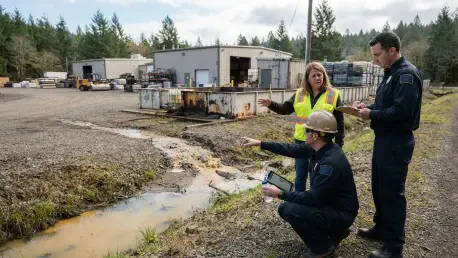
The Oregon Department of Environmental Quality recently issued nine civil penalties totaling $152,496, targeting violations from hazardous asbestos handling to illegal solid waste operations. This comprehensive enforcement summary, released in late 2026, details the state's rigorous efforts to

In Dutchtown alone, three hundred and forty-six vacant buildings stand as obstacles to economic growth, representing the broader challenge of managing thousands of empty structures across the city. This architectural decay is not merely an aesthetic concern but a fundamental barrier to the
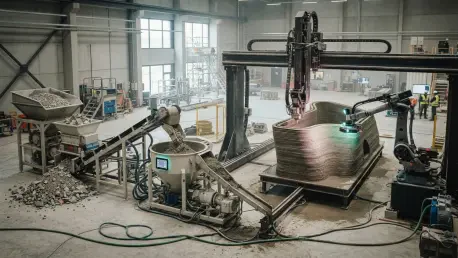
Computer vision systems using semantic segmentation now monitor interlayer lines in real-time to prevent the catastrophic structural failures often caused by minor filament tearing. This technological leap signifies the end of the experimental era for three-dimensional printed concrete (3DPC),

Establishing a designated lead and a formal written policy within one year serves as a primary benchmark for successful corporate technology integration. As the construction industry undergoes a rapid digital transformation, the reliance on advanced algorithms for project management has shifted

Hardware revisions often incur significant costs, prompting the development of agentic verification engines that cross-reference PCB schematics with component datasheets automatically. This paradigm shift in 2026 reflects a broader movement toward high-fidelity automation that minimizes human error