
Construction sites across Australia have long been defined by high-risk environments where the difference between a successful workday and a tragedy often hinges on the quality of height safety infrastructure. Since its inception in 2001, Buildsafe has transformed from a modest Victorian operation into a dominant force in residential edge protection, celebrating its twenty-fifth anniversary in 2026 as the industry leader. This quarter-century of growth represents more than just business expansion; it marks a fundamental shift in how the Australian residential building sector prioritizes worker welfare and liability management. By transitioning from a small fleet of utility vehicles to an expansive professional network, the organization has set a new standard for reliability and scale. This evolution demonstrates that safety is not merely a regulatory hurdle but a critical pillar of operational excellence that enables major builders to maintain momentum in a highly competitive market while ensuring that every individual on a site remains protected from the risks of working at heights.
Evolution from Local Origins to National Leadership
The narrative of this organizational rise began with a concentrated local vision in Victoria, where the initial focus was on providing basic safety solutions for residential projects. As the demand for more sophisticated edge protection grew, the business underwent a strategic leadership transition that catalyzed its expansion into the rapidly developing corridors of South East Queensland. Now headquartered on the Gold Coast, the firm has effectively redefined the scope of residential height safety by scaling its operations to meet the needs of the country’s largest metropolitan hubs. This transition from a regional startup to a national powerhouse was fueled by a commitment to consistency, ensuring that every site receives the same level of rigorous protection regardless of its location. The logistical complexity of managing a fleet that has grown to over 150 specialized vehicles illustrates the sheer scale required to support the modern Australian housing industry while maintaining the most stringent safety protocols across every state.
Beyond the physical assets, the organization’s growth represents a broader professionalization of the construction safety niche, which was once characterized by fragmented local providers. By establishing a centralized management structure and a massive logistical network, the company has managed to bridge the gap between small-scale residential builds and high-volume developments. The presence of over 600 dedicated professionals across the country allows for a rapid response time that is essential in an industry where delays can cost thousands of dollars per day. This human capital is the backbone of a service model that prioritizes reliability, ensuring that height safety equipment is installed and inspected with surgical precision. As the company navigates its silver anniversary, it stands as a testament to the fact that scaling a service-based business in the construction sector requires a delicate balance between aggressive market expansion and an unwavering focus on the core mission of protecting lives on every platform.
Strategic Expansion into Regulatory Frontier Markets
One of the most significant strategic moves in recent years has been the company’s decisive entry into the South Australian market, a region currently undergoing major shifts in safety requirements. This expansion was specifically designed to help local builders adapt to strict new legislation regarding falls from heights of two meters or more, a regulatory change that caught many smaller firms off guard. By identifying these legislative trends early, Buildsafe positioned itself as a critical partner for developers who needed immediate compliance solutions to avoid costly legal repercussions and site shutdowns. The ability to forecast and react to state-specific safety laws highlights the organization’s role as an advisor rather than just a vendor. This proactive approach has allowed the firm to dominate the South Australian landscape, providing a level of expertise and equipment volume that ensures local construction activity remains both compliant and efficient during this significant regulatory transition.
The operational strength required to facilitate such a widespread footprint is supported by a sophisticated logistics system that integrates safety engineers with installation specialists in real-time. Maintaining a visible presence on countless construction sites across multiple states is a feat that requires meticulous planning and a deep understanding of site-specific challenges. This logistical prowess ensures that even the most complex residential designs are outfitted with edge protection that exceeds the minimum legal requirements, thereby reducing liability for the primary contractors. By providing a comprehensive safety ecosystem, the company allows builders to focus on their core competency of construction while the safety experts handle the complexities of elevation risks. This division of labor has become increasingly vital as modern house designs become more intricate, often requiring multi-level protection systems that necessitate expert installation and frequent inspections to maintain site integrity.
Integrating Human Capital and Artificial Intelligence
Central to the sustained success of the firm is an internal commitment to professional development, most notably through the implementation of the “First Lift” training program. This initiative is designed to instill a specific methodology known as the “Buildsafe Way,” ensuring that every technician on a site operates with a uniform set of skills and a deep understanding of safety engineering. By moving away from a traditional labor-hire model and investing in long-term staff education, the company has created a workforce of highly skilled specialists who are capable of identifying hazards before they result in accidents. This focus on internal culture ensures that the high standards established at the headquarters are replicated on every single job site across the nation. The result is a level of service consistency that builds immense trust with site supervisors, who can rely on the fact that the safety equipment has been installed by professionals who view height safety as a specialized and technical discipline.
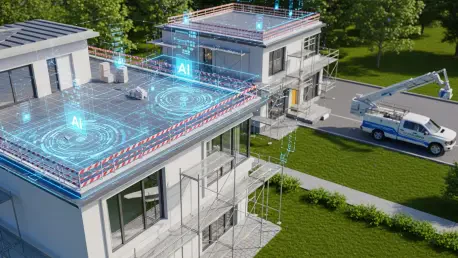
Innovation within the organization has recently taken a technological leap with the integration of “BuildCam,” an artificial intelligence-driven system that monitors site conditions and safety compliance in real-time. This technology represents a shift from passive protection measures to a dynamic, digital safety ecosystem that provides builders with unprecedented oversight of their projects. By using AI to analyze visual data from elevated platforms, the system can detect potential risks or unauthorized modifications to safety barriers, alerting management instantly to take corrective action. This data-driven approach moves the industry beyond traditional scaffolding inspections, offering a layer of transparency that was previously impossible to achieve. By incorporating these advanced digital tools into daily operations, the firm is setting a new benchmark for how technology can be used to augment human expertise, ensuring that worker protection is proactive rather than reactive in the face of rapidly evolving site conditions.
Collaborative Safety Culture and Future Standards
The influence of the company extends through its strategic partnerships with major national builders such as Metricon and Mirvac, where it has become an integral part of the residential construction supply chain. These long-term collaborations are built on a foundation of mutual trust and the consistent delivery of high-quality safety solutions that protect both the workers and the builders’ reputations. By working closely with these industry giants, the organization is able to influence safety culture on a massive scale, helping to establish best practices that eventually filter down to the rest of the market. These partnerships allow for a more integrated approach to site planning, where safety considerations are baked into the project schedule from the very beginning. This collaborative model ensures that safety is treated as an essential component of the building process rather than an afterthought, ultimately leading to safer work environments and more predictable project timelines for the nation’s largest developers.
The journey of the last twenty-five years provided a clear blueprint for how construction safety was managed through a combination of specialized training, technological adoption, and strategic partnerships. Industry stakeholders who prioritized the early adoption of these integrated safety systems observed significant reductions in site accidents and legal liabilities, proving that proactive investment was more effective than reactive compliance. Builders were encouraged to move beyond the minimum legal requirements by implementing real-time monitoring tools like AI-driven site cameras to ensure continuous oversight. The organization demonstrated that a centralized safety culture, supported by a robust logistical network, was essential for maintaining high standards across diverse geographical regions. By focusing on the professionalization of onsite staff through dedicated training programs, the sector successfully transitioned away from high-risk labor practices. These collective actions solidified a new standard where safety became a seamless, data-supported component.