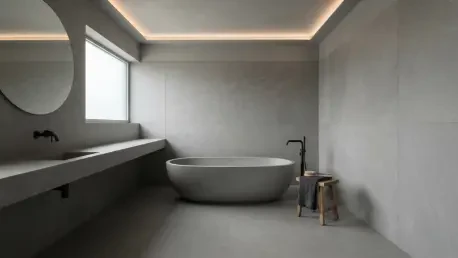

Current design trends show a moving pendulum away from safe aesthetics toward highly personalized spaces that offer a distinct wow-factor for residents. This shift is most visible in the rise of tile drenching, an ambitious design philosophy where every surface—from the floor and walls to the very ceiling—is encased in a single, cohesive material. Unlike the conventional approach of limiting tile to splash zones or shower enclosures, this method creates an uninterrupted architectural skin that wraps the inhabitant in a spa-like envelope. By removing the traditional transition points where tile meets painted drywall, the bathroom is transformed from a utilitarian room into a monolithic sanctuary. This immersive technique draws inspiration from the color-drenching movement but elevates it through the use of permanent, high-weight materials that signal a deep commitment to both luxury and longevity.
The Motivation: Shifting Toward Personalization
Emotional Impact: Beyond the Generic Aesthetic
The contemporary landscape of interior design is increasingly defined by a rejection of “safe” or builder-grade choices that once dominated residential projects. Homeowners in 2026 are viewing their bathrooms not merely as functional areas, but as intimate retreats that should reflect a strong, individualistic identity. Tile drenching meets this demand by providing a dramatic, custom-made environment that feels intentionally curated rather than assembled from separate parts. The visual continuity achieved by a fully tiled space creates a sense of quietude and focus, as the eye is no longer distracted by contrasting textures or interrupted color palettes.
Furthermore, the psychological benefits of total immersion are becoming a central focus for architects working on high-end renovations. When a room is fully enveloped in a singular material like natural stone or artisanal ceramic, it creates a “cocoon effect” that enhances the sensory experience of daily rituals. This approach allows the lighting and fixtures to become the primary focal points, standing out against a consistent backdrop rather than competing with varying wall finishes. The result is a highly personalized “wow-factor” that provides residents with a sanctuary that feels structurally integrated into the home’s very foundation.
Practical Engineering: Building a Waterproof Vault
While the aesthetic allure of tile drenching is undeniable, the trend is equally grounded in extreme practicality and structural preservation. Bathrooms are inherently high-moisture environments where humidity, steam, and direct water contact constantly challenge the integrity of traditional materials like wood trim or gypsum board. By extending non-porous surfaces across every square inch of the room, including the ceiling, designers are essentially creating a waterproof vault. This defensive layer ensures that moisture remains contained, significantly reducing the risk of mold growth or water-related deterioration within the wall cavities.
From a maintenance perspective, a fully drenched bathroom offers unparalleled resilience and ease of care. The absence of traditional painted surfaces eliminates the need for periodic repainting or repairs to peeling wallpaper caused by steam saturation. Homeowners are finding that the higher upfront investment in extensive tiling is offset by the drastically reduced long-term upkeep costs and the enhanced durability of the space. As residences are increasingly viewed as long-term investments in well-being, the shift toward materials that can withstand the rigors of a wet environment while maintaining their beauty has become a logical choice for the modern estate.
Design Strategies: Professional Execution and Safety
Material Depth: Balancing Texture and Warmth
One of the most critical challenges in executing a tile-drenched space is ensuring that the environment does not feel cold, sterile, or overly industrial. To mitigate this, experts emphasize the importance of dimensional variation and material layering within a monochromatic theme. Successful projects often feature a sophisticated mix of finishes, such as pairing honed stone on the floor with highly glazed, reflective tiles on the walls. This interplay of light and texture prevents the space from appearing flat and adds a necessary layer of visual friction that makes the drenching effect feel rich and intentional.
The selection of the material itself plays a pivotal role in establishing the room’s character, with natural stone and artisanal options leading the way. Natural marbles or travertines provide a timeless elegance, offering the look of solid slabs through more versatile tile formats. Meanwhile, the popularity of Zellige tiles—Moroccan hand-glazed ceramics—continues to grow due to their inherent imperfections and luminous quality. Because these tiles are not perfectly flat, they catch the light at different angles throughout the day, ensuring that the fully tiled room feels dynamic and handcrafted rather than repetitive or mass-produced.
Technical Precision: Scale and Safety Standards
The scale of the tile selected for a drenching project dictates the overall architectural vibe, with large-format slabs currently favored for their ability to create a seamless, minimalist aesthetic. By utilizing tiles that are 24×48 inches or larger, designers can minimize grout lines, which not only streamlines the visual flow but also simplifies the cleaning process. Conversely, some high-end projects utilize small-format tiles, such as thin finger mosaics or traditional subways, to lean into the repetition of the material. This design-heavy move highlights the texture of the installation and creates a tapestry-like effect that covers the entire volume of the room.
Safety and technical standards remain paramount when integrating floor, wall, and ceiling surfaces into a single theme. The Coefficient of Friction is a vital metric for floor tiles in these environments, necessitating matte or honed finishes to provide traction in wet conditions. Porcelain is frequently the material of choice over standard ceramic due to its superior density and near-zero porosity, making it ideal for the extreme coverage required by drenching. By strategically placing polished tiles on non-walking surfaces like ceilings to reflect light, and using slip-resistant versions on the floors, professionals achieve a cohesive look that is as safe as it is luxurious.
Actionable Steps: Realizing the Future Sanctuary
The movement toward fully immersive environments established a new baseline for residential luxury by prioritizing architectural unity over decorative fragmentation. Designers observed that by eliminating visual breaks where materials typically change, even smaller bathrooms felt significantly more expansive and intentional. It was concluded that tile drenching offered the most robust defense against the environmental stressors of high-humidity zones while providing a permanent, high-impact aesthetic. Those looking to implement this trend should first evaluate the structural load-bearing capacity of their ceilings to ensure they can support the weight of full-coverage tile.
Selecting a single color palette with varying textures proved to be the most effective way to maintain sophistication without overwhelming the senses. Homeowners were encouraged to work closely with specialized contractors who understood the nuances of waterproofing systems, such as advanced membrane applications that extend from floor to ceiling. Moving forward, the focus should remain on the intersection of sensory comfort and technical performance. By investing in high-quality porcelain or natural stone and prioritizing slip-resistant finishes for all walking surfaces, residents successfully transformed their standard bathrooms into durable, high-value sanctuaries that will endure for decades.