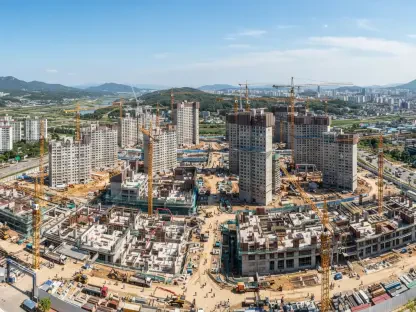

By providing an all-in-one solution for utility trades, the firm addresses the growing industry demand for consolidated project delivery in high-stakes environments. Southern California’s dense urban landscape presents a unique set of logistical nightmares for developers and municipal planners alike. Traditionally, a single project might require coordination between five or six different subcontractors for electrical, gas, water, and telecommunications work. This fragmented approach often leads to scheduling conflicts, increased costs, and prolonged road closures that frustrate the public. S-Line has disrupted this legacy model by serving as a single point of contact for all underground utility needs. By internalizing specialized skill sets that were previously siloed, the company ensures that trenching, pipe laying, and cabling happen in a synchronized sequence. This synchronization is not just about speed; it is about mitigating the risks associated with multi-vendor handoffs in complex zones like Los Angeles and San Diego.
Advancing Efficiency Through Integrated Utility Management
The Mechanics: Single-Source Delivery Models
The primary hurdle in modern infrastructure development is the sheer lack of cohesion between various utility stakeholders. When a primary contractor manages multiple entities, the margin for error expands significantly, often resulting in redundant excavations or damaged existing lines. S-Line eliminates these friction points by utilizing a vertically integrated workforce that handles everything from initial site surveying to final utility activation. This methodology allows for real-time adjustments on-site without the need for lengthy bureaucratic approvals between different firms. For example, if a crew discovers an undocumented obstacle while digging for electrical conduits, they can immediately pivot to water line placement rather than halting work for days. Such agility is essential in 2026, where project timelines are increasingly compressed by rising interest rates and housing shortages. By maintaining a steady operational tempo, the firm effectively shortens the critical path of major civil engineering projects.
Technology Integration: Ensuring Precision and Safety
Beyond the administrative streamlining, the technical sophistication of integrated utility management provides a layer of safety and precision that is rarely achieved in piecemeal construction. Utilizing advanced ground-penetrating radar and digital twin mapping, the crews can visualize the subterranean environment with remarkable clarity before a single shovel hits the dirt. This data-driven approach minimizes the risk of utility strikes, which are not only expensive but can be life-threatening in high-voltage or high-pressure gas scenarios. Furthermore, because the same firm manages the entire lifecycle of the underground work, there is a consistent standard of quality control applied across all disciplines. Instead of dealing with disparate safety protocols and varying levels of craftsmanship from multiple vendors, project owners receive a uniform output that adheres to the strictest California regulatory standards. This consistency builds trust with local municipalities, ensuring that inspections and permit sign-offs proceed with fewer complications.
Modernizing Public and Private Infrastructure Partnerships
Future-Proofing Communities: Resilience and Scalability
The transition toward smarter, more resilient cities in Southern California requires infrastructure that can adapt to changing energy demands and climate pressures. S-Line’s comprehensive service offerings are particularly relevant as the region scales up its electric vehicle charging networks and transitions to modernized electrical grids. These projects are inherently multi-disciplinary, requiring trenching across public rights-of-way while simultaneously integrating complex electrical components. By centralizing these tasks, the firm reduces the overall footprint of construction activity, which is a vital consideration for high-traffic corridors and residential neighborhoods. This reduction in community disturbance is not merely a public relations benefit; it translates into tangible savings for municipalities that would otherwise face higher costs for traffic control and road restoration. As the state moves toward more aggressive renewable energy targets from 2026 to 2030, the ability to rapidly deploy utility upgrades becomes a competitive advantage.
The Outcome: Actionable Strategies for Project Stakeholders
Stakeholders who prioritized early engagement with integrated utility providers saw significant improvements in project viability and timeline predictability. By shifting the focus away from low-bid fragmented subcontracting toward value-based comprehensive partnerships, developers mitigated the most common causes of budget overruns. The success of the S-Line model demonstrated that infrastructure resilience was best achieved through a holistic view of the construction lifecycle. Moving forward, it became clear that city planners needed to incentivize consolidated utility work through streamlined permitting for firms that demonstrated multi-trade proficiency. Investing in digital utility mapping and shared trenching strategies emerged as a critical next step for any major urban development. These proactive measures reduced long-term maintenance costs and enhanced the reliability of essential services for millions of residents. Ultimately, the adoption of specialized, all-in-one infrastructure solutions proved to be the most effective way to navigate the complexities of Southern California’s evolving urban environment.