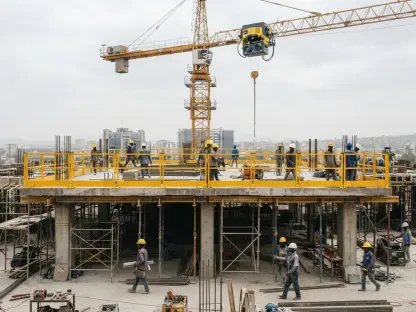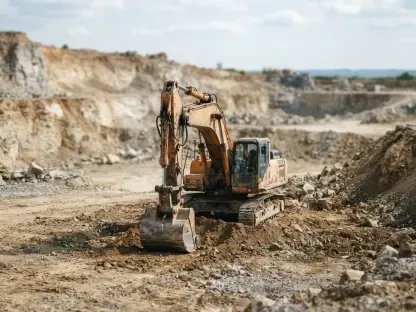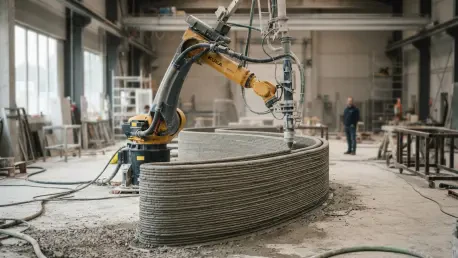

The development of green mortars necessitates a thorough understanding of how recycled mineralogy affects the fresh-state behavior of the mix, especially as the construction industry navigates a profound transformation driven by the dual pressures of rapid urbanization and the urgent need for environmental sustainability. As the global population expands, the demand for housing and infrastructure has accelerated, leading to the adoption of automated additive manufacturing, popularly known as 3D concrete printing (3DCP). While this technology promises to revolutionize the sector by eliminating the need for traditional formwork, reducing labor costs, and increasing geometric complexity, it remains tethered to resource-intensive materials. Specifically, the heavy reliance on virgin river sand and carbon-heavy Portland cement often contradicts the “green” narrative of digital fabrication. This technological shift requires a radical rethink of the materials used in extrudable mixtures to ensure that the ecological benefits of automation are fully realized in 2026.
Optimization of Green Mortar Properties
The primary challenge in modern masonry involves maintaining the workability of a mixture while ensuring it can support its own weight during the printing process. For a mortar to be viable for 3DCP, it must be fluid enough to travel through a hose but firm enough to retain its shape once extruded. Researchers recently utilized a three-stage experimental framework to find the perfect balance between these competing needs. They first established a baseline with conventional materials before incrementally introducing recycled sand and ultra-fine concrete fines to observe how these changes affected the fresh-state performance. This systematic approach allowed for the identification of a specific operating window where the material behaves predictably. By analyzing the interaction between the binder and the recycled components, the study provided a roadmap for formulating mixes that do not clog the pump yet solidify quickly enough to permit high-speed vertical construction without structural collapse.
To improve the sustainability of the binder itself, the study utilized cement containing blast furnace slag, which naturally has a lower carbon footprint than standard cement. A critical technical hurdle when using recycled aggregates is their high porosity, which causes them to absorb more water than natural sand. To manage this, the team adjusted the batch water levels based on the absorption capacity of the recycled grains. This proactive step prevented the mixture from drying out prematurely, ensuring that the mortar remained flowable throughout the extrusion process. Without this compensation, the recycled aggregates would essentially “steal” moisture from the chemical hydration process, leading to brittle filaments and poor interlayer adhesion. The integration of slag-based binders and high-absorption aggregates represents a significant leap toward carbon neutrality, provided that the water-to-binder ratio is meticulously controlled to maintain the necessary rheological properties for consistent flow.
Rheological Performance and Fresh-State Stability
The success of a 3D-printed structure depends heavily on the rheology of the material, specifically its yield stress and plastic viscosity. Using specialized measuring tools like rotational rheometers, researchers discovered that a water-to-binder ratio of 0.40 and a sand-to-binder ratio of 1.50 created the optimal “sweet spot” for printing. Mixtures with too little water were found to be far too stiff to exit the nozzle effectively, while those with excessive water behaved like a Newtonian fluid and collapsed immediately after being deposited. Identifying this delicate balance is crucial for industrial applications where deviations in moisture can lead to catastrophic structural failure during the build. By quantifying the Bingham plastic behavior of the mix, engineers can now predict how different recycled materials will influence the extrusion pressure and the final geometry of the printed layers, allowing for real-time adjustments on the construction site to ensure consistent buildability and safety.
Interestingly, the study found that up to 75% of natural river sand could be replaced with recycled sand while maintaining the necessary flow characteristics. Even at these high substitution levels, the addition of superplasticizers allowed the mortar to remain workable and responsive to the mechanical forces of the pump. Manual and automated tests confirmed that these recycled formulations could support multiple stacked layers without any signs of tearing or structural failure, proving that sustainable aggregates can indeed meet the rigorous demands of automated construction. This discovery challenges the previous industry bias that recycled materials are inherently inferior for high-precision tasks. Moreover, the inclusion of ultra-fine concrete crushed fines acted as a physical lubricant, filling the voids between larger sand grains and enhancing the overall suspension of the cement paste. This synergy between the recycled sand and the finer concrete particles ensures a continuous output that rivals traditional virgin mixtures.
Mechanical Integrity and Hardened-State Findings
While the behavior of the wet mortar is essential for the printing process, the strength of the hardened concrete determines its long-term viability and safety. The researchers set a target compressive strength of 50 megapascals (MPa) to ensure the printed structures could handle significant loads and provide a safety margin against anisotropic defects. The data revealed a predictable trend: as the amount of recycled sand increased, the compressive strength decreased. Specifically, every 25% increase in recycled sand led to a drop of about 5.5 MPa in overall strength. This reduction is attributed to the weaker interfacial transition zone found in recycled aggregates compared to the dense surface of natural river sand. However, the study demonstrated that this loss is manageable within the context of semi-structural and architectural designs. By understanding the linear relationship between substitution rates and strength, designers can tailor their material choices to the specific load-bearing requirements of each building component.
Despite the reduction in peak performance, the mixture featuring 75% recycled sand still achieved a robust 28-day strength of over 52 MPa, surpassing the initial target. The study also tested ultra-fine recycled concrete crushed fines (CCF) as a partial cement replacement to further reduce the carbon footprint. While these fines helped “lubricate” the mixture and improve particle packing, they acted primarily as an inert filler rather than a reactive chemical binder. Consequently, substitutions of up to 10% were successful, but higher levels caused the strength to drop below the desired threshold for structural applications. This suggests that while CCF is an excellent tool for rheological modification, its role in the hydration process is limited. Engineers must therefore view CCF as a high-quality engineered filler that optimizes the internal structure of the mortar, allowing for more efficient use of the primary binder without compromising the long-term durability or the integrity of the finished 3D-printed object.
Practical Validation and Industrial Application
To move the research from controlled laboratory environments to real-world scenarios, the optimized mixtures were tested on a three-axis laboratory printing platform. The formulations containing 75% recycled sand and 10% concrete fines performed flawlessly, flowing consistently through a 34-millimeter nozzle without any blockages or slugging. The test structures, which consisted of ten stacked layers, showed excellent dimensional stability with no visible bulging or deformation under the weight of the upper layers. This practical validation proved that the rheological models developed in the first half of the study are accurate predictors of performance. The consistency of the extrusion suggests that the internal friction of the recycled aggregates is not a barrier to large-scale deployment. By maintaining a constant deposition speed of 75 millimeters per second, the team demonstrated that these green mortars are compatible with modern automated systems, paving the way for wider industry adoption in 2026.
While these laboratory successes are promising, the transition to industrial-scale printing will present additional challenges that must be addressed in the coming years. Full-scale buildings involve much higher vertical pressures and significantly longer pumping distances than those found in a small-scale laboratory setting. Additionally, because the properties of recycled waste can vary depending on their geographic source and the quality of the demolition site, local testing remains essential for anyone looking to adopt these mix designs. This study serves as a vital proof of concept, showing that the path to sustainable 3D printing lies in the intelligent reuse of debris. The ability to utilize locally sourced recycled concrete waste reduces transportation costs and carbon emissions, making the technology more accessible for decentralized construction projects. As the industry moves forward, the focus must shift toward refining these waste-to-resource pipelines to ensure a steady supply of high-quality materials.
The Path Forward: Scaling Sustainable Masonry
In the final analysis, the research established a clear engineering pathway for incorporating dual-waste streams into 3D concrete printing. The study confirmed that a mix composed of 75% recycled sand and 10% recycled concrete fines achieved the necessary balance of fluid flow and structural rigidity. By successfully stacking multiple layers without deformation, the experimental trials proved that demolition waste could be transformed into a high-performance building material. This achievement moved the conversation away from simple waste management and toward high-value manufacturing. The data collected regarding the mechanical properties of these green mortars provided a solid foundation for future structural codes that will likely govern the use of recycled materials in automated construction. It was demonstrated that the inclusion of slag-based binders and ultra-fine fillers not only lowered the environmental impact but also provided the rheological stability required for the precise deposition of complex geometric shapes.
To build on these findings, the study suggested that practitioners prioritize the establishment of regional processing centers capable of providing standardized recycled aggregates and fines. The next phase of development identified for the period from 2026 to 2028 focused on scaling these laboratory successes to multi-story structures where the dynamic loads during printing are more significant. Future efforts emphasized the investigation of the long-term durability of these mortars, including their resistance to freeze-thaw cycles and chemical erosion. Designers and engineers were encouraged to implement digital material monitoring systems that adjusted the water and superplasticizer dosages in real-time based on the moisture content of the recycled components. By adopting these actionable steps, the construction industry aimed to transition from a linear model to a circular ecosystem where demolition projects provided raw materials for a new, 3D-printed future. This holistic approach ensured that digital innovation remained aligned with global ecological goals.