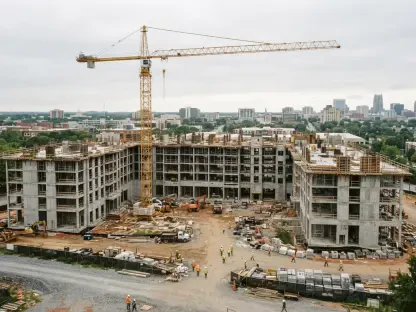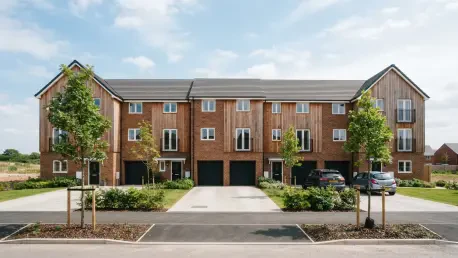

By focusing on residents earning 50% to 60% of the median income, the Southgate Townhomes project addresses a specific economic tier currently underserved in Hastings, Minnesota. While the city has witnessed substantial growth in luxury developments and single-family sprawl, the vital “middle” sector often remains ignored, forcing essential local staff to commute from distant municipalities. This proposed development by the Dakota County Community Development Agency represents more than just a construction project; it is a strategic intervention in a regional housing market that has become increasingly disconnected from the wages of the very people who keep the local economy running. By targeting those with annual earnings between $59,300 and $71,520, the CDA is attempting to bridge a widening gap in the local social fabric. This initiative arrives at a time when the community is grappling with limited rental inventory, making the push for dense townhome living a matter of significant public interest and local debate.
Development Strategy for Housing Stability
Bridging the Gap for Essential Workers
Maggie Dykes, a representative for the Dakota County CDA, has highlighted that these townhomes are specifically curated for the workforce that forms the backbone of the Hastings community. Often, individuals such as nursing assistants, school bus drivers, and dedicated service industry employees find themselves priced out of market-rate apartments, despite holding full-time, stable positions. The Southgate Townhomes project seeks to rectify this by offering a pricing structure that aligns with the financial realities of these households. By providing secure, long-term rental options, the city ensures that its labor force remains stable and that employees can live within a reasonable distance of their workplaces. This proximity reduces the environmental impact of long-distance commuting and fosters a stronger sense of civic engagement. This deliberate focus on the “missing middle” housing sector is a response to data indicating that Hastings faces a substantial deficit of 400 units.
Site History and Modern Revitalization
The chosen site for this development carries a unique historical weight, situated on a 6.36-acre parcel east of Red Wing Boulevard that once housed the KDWA radio station tower. For decades, this land remained underutilized, serving as a reminder of past development attempts that never reached fruition. Historical records show that a 48-unit residential plan was originally approved for this exact location in 2006, but the project was eventually abandoned during the economic volatility of that era. Today, the Southgate Townhomes proposal aims to finally realize the potential of this land, transforming a vacant lot into a functional neighborhood asset. This revitalization effort is emblematic of a broader urban planning trend where cities repurpose previously developed or fallow land to meet current population demands. By returning to this site, the CDA is not only addressing housing needs but also completing a chapter of urban growth that was interrupted 20 years ago for the benefit of the community.
Architectural Design and Community Integration
Balancing Density With Local Infrastructure
During the recent administrative review process, the Hastings planning commission examined the intricate site plans for the nine-building cluster that will comprise Southgate. While the project received a recommendation for approval, the deliberations were not without friction from the surrounding neighborhood. Residents voiced legitimate concerns regarding the potential for increased traffic congestion and the pressure on existing street parking. In a proactive move to mitigate these external impacts, the Dakota County CDA adjusted its architectural blueprints to include 113 parking spaces, a figure that significantly exceeds the minimum regulatory requirements set by city ordinances. This adjustment demonstrates a commitment to harmonious integration, ensuring that the influx of new residents does not overwhelm the local infrastructure. Furthermore, the development adheres strictly to existing zoning laws, which commissioners noted simplifies the path to final approval for the developers.
Implementing Sustainable Residential Solutions
To ensure the long-term success of the Southgate development, municipal planners prioritized the establishment of a robust property management framework that integrates social services with residential maintenance. This approach transformed the project from a simple housing proposal into a comprehensive community stability initiative. Stakeholders recognized that physical structures alone do not solve the affordability crisis; instead, they invested in infrastructure that supports career advancement and local transit connectivity. Residents were encouraged to participate in neighborhood governance, which established a sense of ownership and reduced turnover rates. The city council ultimately determined that expanding the housing inventory required a departure from traditional low-density models in favor of diverse, multi-generational complexes. These strategies provide a clear roadmap for other Dakota County municipalities seeking to balance economic growth with inclusive residential development policies for the area.