
Drawing from the rhythmic phases of the moon, Masud’s project for designer Nada Debs explores how lunar cycles can influence both cultural narrative and garden design. This specific endeavor serves as a microcosm of her broader professional philosophy, where the environment is treated as a living archive of both biological and personal history. Based in Dubai’s Jumeirah neighborhood, her bungalow acts as a bridge between the arid landscape of the Middle East and the diverse cosmopolitan influences she gathered while living in cities like Jeddah, London, Paris, and Moscow. By viewing design through the lens of migration, she successfully transforms static spaces into dynamic environments that reflect a deep understanding of displacement and belonging. Her home is not just a residence but a carefully curated repository of global artifacts and local sensibilities, creating a layered aesthetic that challenges the conventional boundaries of interior and exterior living. This intentional fusion allows for a lifestyle that prioritizes the slow, rhythmic passage of time over the frenetic demands of modern urban existence.
Championing Native Flora and Environmental Resilience
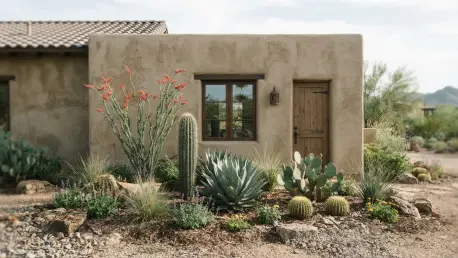
At the core of this practice lies a steadfast commitment to the resilience of native flora and fauna, particularly within the challenging climate of the United Arab Emirates. Masud views the extreme summer heat, which frequently reaches 50 degrees Celsius, not as a barrier to be overcome with excessive irrigation but as a litmus test for ecological authenticity. This philosophy was reinforced when a minor irrigation failure left her own garden appearing desiccated, yet she observed that the native species continued to thrive and flower despite the lack of intervention. Consequently, she maintains a strict policy of rejecting commissions that demand water-intensive tropical greenery, which she considers ill-suited and dishonest to the desert environment. By championing local biodiversity, she encourages a design language that respects the natural limitations of the land while celebrating its inherent rugged beauty. This approach fosters a landscape that is both sustainable and capable of providing a genuine sense of place for its inhabitants.
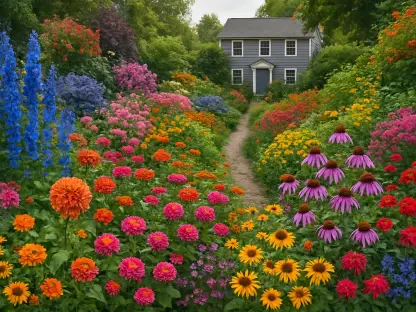
Beyond the physical endurance of specific plant species, the integration of cultural and spiritual narratives remains a vital component of her environmental strategy. In the collaboration with Nada Debs, the garden was structured around the phases of the moon to evoke the historical and poetic significance of lunar cycles in Arabic culture. This design choice facilitates a deeper connection between the residents and the celestial rhythms that have governed life in the region for centuries. The resulting space is designed to help individuals reclaim their sense of time, offering a sanctuary for contemplation that stands in stark contrast to the rapid-fire digital world. By prioritizing these natural sequences, the landscape becomes a rhythmic entity that encourages a slower pace of life and a heightened awareness of one’s surroundings. This synthesis of ecology and storytelling ensures that a garden is never just a collection of plants but a profound reflection of the collective memory and the spiritual heritage inherent in the local landscape and its people.
Integrating Global Influences and Animal Instincts
The evolution of this design perspective is deeply rooted in a professional journey that began in earnest six years ago, following a transformative landscape course during the global pandemic. This relatively recent career shift was informed by a lifetime of international exposure, having navigated the cultural nuances of diverse hubs such as Delhi, London, and Moscow. These migratory experiences provided a sophisticated aesthetic palette that allows for the seamless integration of global art influences into regional projects. A prime example of this is the development of a sculpture park at the Jaipur Centre for Art, where the focus extends beyond the placement of physical objects to the animation of the space by its inhabitants. Masud posits that a garden only achieves its true spiritual potential when it serves as a host for non-human inhabitants, including birds, insects, and other local wildlife. By designing with these creatures in mind, she creates environments that feel alive and responsive, bridging the gap between high-level artistic concepts and the raw, unscripted vitality of the natural world.
Practical insights for these complex designs are often gathered through the simple observation of animal instincts within her own domestic sphere. Shared with a whippet named Fig, an Arabian Mau kitten named Farawla, and a pair of pet-sitting tortoises, her home serves as a living laboratory for behavioral ecology. By monitoring where these animals seek shade during the peak of the afternoon or which specific plants they are naturally drawn to for nourishment, she gains invaluable data on how to structure functional outdoor spaces. This interdisciplinary approach ensures that her professional work remains grounded in the realities of biological needs rather than just abstract visual appeal. The movements of her pets provide a blueprint for how light, shadow, and vegetation can be layered to provide comfort and security for all living beings. This focus on instinctual interactions elevates her projects, transforming them into ecosystems that cater to the innate requirements of both humans and animals, thereby reinforcing the interconnectedness of all life forms within a shared habitat.
Shaping Curated Interiors Through Memory
The interior of the Jumeirah bungalow functions as a physical manifestation of a curated personal archive, where every piece of furniture possesses a distinct lineage. A kitchen table transported from a childhood home in London and a massive 600-kilogram stone dining table from Jaipur serve as foundational markers of her personal history. These objects are not merely functional items but symbolic anchors that connect her current life in Dubai to the various stages of her migratory past. The installation of the stone table, which required a crane, highlights the physical weight of memory and the importance of surrounding oneself with pieces that carry significant emotional resonance. Similarly, surfaces throughout the home are adorned with eclectic curiosities, ranging from delicate Venetian glass to coral branches found on the beaches of Thailand. By repurposing these items—such as turning coral into candleholders—she creates a space that feels both globally informed and deeply intimate. This layering of artifacts allows the home to serve as a bridge between disparate geographical locations and different eras of her life.
Intellectual pursuits and daily rituals further define the atmosphere of the home, with a heavy emphasis placed on the physical presence of literature. As an avid reader, she surrounds herself with a diverse collection of books covering art, religion, botany, and politics, prioritizing the tactile experience of paper over digital screens. This commitment to the crafting of a text is reflected in a morning routine that involves reading poetry to ground the nervous system before the day begins. By consciously choosing to engage with literature instead of the digital doomscrolling often associated with modern life, she maintains a sense of mental clarity and focus. These literary interests often intersect with her design work, as she draws inspiration from Islamic landscapes and the astronomical precision of Jantar Mantar. The presence of these texts within her living space reinforces the idea that design is an intellectual exercise as much as an aesthetic one. Ultimately, the integration of these books into her environment reflects a desire to maintain a continuous dialogue with the great thinkers and traditions that have shaped her worldview.
Fostering Synergy Between Global Artistry and Local Craft
As she navigates what she describes as her bedecked era, her personal style mirrors the rich, layered composition of her interior environments. This aesthetic is characterized by an assortment of necklaces gifted by loved ones, which she wears alongside pragmatic staples like Oxford shirts and Birkenstocks. This blend of the sentimental and the functional reflects a broader philosophy of life that values the depth of human connection over fleeting fashion trends. This perspective extends to her professional practice, where she frequently collaborates with local artisans in Dubai’s Al Satwa district to bring her specific visions to life. Whether it is commissioning custom furniture or joining reed mats sourced from Bangalore, these partnerships highlight a commitment to craftsmanship that honors both global inspiration and local expertise. By leveraging the skills of neighborhood makers, she ensures that her designs are rooted in the tangible reality of the community. This synergy between international concepts and regional fabrication results in a unique design language that feels both sophisticated and authentically tied to the specific place in which it exists.
In conclusion, the practice and lifestyle of this landscape designer provides a compelling model for how individuals can root themselves in a globalized world. By prioritizing the endurance of native plants and the richness of personal memory, she successfully established a unified philosophy that transcends mere decoration. The bungalow in Jumeirah functions as a living testament to the idea that our environments should be reflections of our internal landscapes, filled with the stories of where we have been and the values we hold. Looking ahead, this approach suggests that the future of design lies in a more intentional, slower way of being that honors both ecological reality and cultural heritage. Designers and homeowners alike might find value in shifting their focus away from temporary trends and toward the creation of spaces that foster resilience and connection. By treating the garden and the home as evolving narratives rather than static stages, one can achieve a more profound sense of belonging. The legacy of such work remains in its ability to balance the harsh demands of the environment with the delicate nuances of the human experience, proving that a life well-lived is one that is deeply bedecked in the wisdom of both nature and history.