
Over 12 million American households are now considered severely rent-burdened, dedicating more than half of their total income to housing and utility expenses. This reality underscores a housing market in flux, where the post-pandemic development frenzy has given way to a more cautious era of construction. As 2026 unfolds, the multifamily sector is witnessing a deliberate recalibration, with new apartment deliveries projected to fall significantly from the peaks seen just a year ago. Analysts observe that the current cooling is a systemic normalization. For the first time in years, the volume of new units is dipping below the ten-year average of 466,000 units. This transition suggests a shifting power dynamic for property owners and operators, who may soon face less competition from brand-new developments, even as they navigate a landscape where high demand meets a shrinking supply pipeline across major metropolitan hubs where the need for housing remains at an all-time high.
Economic Hurdles: Financing Constraints and Pipeline Shifts
Market Contraction: Why New Construction Starts Are Falling
The leading indicators for future housing inventory, known as construction starts, have shown a pronounced decline that mirrors the drop in completions. Data from the National Association of Home Builders indicates that multifamily starts, including both traditional apartments and condominiums, plummeted by nearly 25 percent compared to the prior annual cycle. This contraction is a direct response to a widening gap between the capital required to build and the projected rental income necessary to justify massive investments. Developers are increasingly finding it impossible to make the numbers work, leading to a scenario where many planned residential communities are being indefinitely postponed or shelved entirely. This slowdown is not merely a temporary pause but a structural adjustment to a tighter financial environment. As these starts dwindle, the long-term impact on the supply chain becomes clearer, ensuring that the market will remain relatively undersupplied well into the next several years.
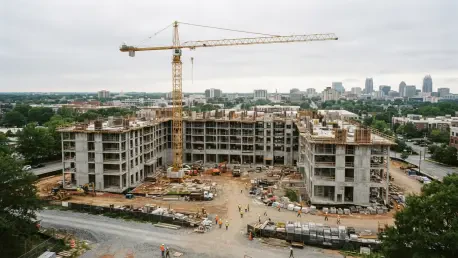
Beyond the decline in new projects, the existing inventory currently under construction is reaching its final stages, leading to a much thinner pipeline for the upcoming years. This normalization follows an aggressive building wave that saturated some markets with luxury units while leaving the mid-tier segment largely neglected. For industry observers, this shift represents a necessary correction that allows existing properties to stabilize their occupancy rates without the constant pressure of nearby “lease-up” properties offering aggressive concessions. While the reduction in new supply could eventually lead to stronger rent growth, the timing remains highly sensitive to local economic conditions and employment rates. In cities where corporate expansions have slowed, the lack of new inventory may match cooling demand, whereas high-growth areas could see a return to rapid price appreciation. Understanding these mechanics is essential for stakeholders attempting to time their investments in the current landscape.
Financial Barriers: Factors Squeezing Developer Profit Margins
The primary catalyst for the current stagnation in multifamily development is a restrictive financial climate defined by elevated interest rates and expensive capital. High borrowing costs have fundamentally changed the mathematics of property development, requiring significantly more equity and higher return thresholds than were common in recent years. As the cost of debt remains high throughout 2026, developers are forced to rethink project scales or seek alternative financing structures that often dilute potential profits. This environment has created a high barrier to entry, where only the most well-capitalized firms can afford to break ground on new large-scale projects. Furthermore, the disconnect between investor expectations and actual rental rates has reached a breaking point. When the cost of construction and financing exceeds potential revenue, projects lose feasibility, leaving a void in the housing market that neither private nor public initiatives have been able to fill effectively under the current monetary policy.
In addition to financial constraints, rising costs of labor and specialized building materials continue to exert pressure on developer margins. While some supply chain disruptions have eased, the scarcity of skilled tradespeople has kept wages high, making the physical process of building more expensive than ever before. This persistent inflation in construction costs means that even if interest rates were to soften, the overall price tag for new apartment buildings would remain a significant obstacle. Many developers are now prioritizing renovations or smaller-scale infill projects over massive suburban complexes to mitigate these risks. Regulatory hurdles and zoning complexities further complicate the picture, as many municipalities have failed to streamline approval processes despite the obvious need for more housing. The result is a bottleneck where new supply is throttled by macroeconomic factors and localized bureaucratic friction, ensuring that the current shortage of available apartment units will persist.
Regional Divergence: Analyzing National Supply Trends
Engine of Growth: The South and Northeast Drivers
While the national trend points toward a cooling market, specific regions like the Northeast are defying expectations with a surge in new apartment deliveries. Projections indicate a 20 percent increase in completed units across this region by the end of 2026, a growth spurt primarily fueled by the New York City metropolitan area. For years, New York suffered from a chronic lack of new construction due to a combination of stringent local regulations and the high cost of urban development. However, recent and sustained rent growth has finally reached a point where new projects are becoming financially viable despite the hurdles. This regional uptick suggests that in supply-constrained areas where demand remains inelastic, developers will still find ways to bring inventory to market. The Northeast’s ability to maintain upward momentum into the coming years stands in contrast to the rest of the country, highlighting how local market dynamics can diverge from the national narrative of contraction.
The South remains the undisputed engine of the American multifamily market, accounting for nearly half of all national deliveries despite the broader slowdown. States like Texas and Florida continue to attract significant investment due to favorable land availability, business-friendly regulatory environments, and a steady influx of residents migrating from higher-cost regions. In 2026, this region is projected to deliver approximately 47 percent of all new apartment units in the United States, with major activity centered in high-growth hubs like Charlotte and Austin. However, this massive volume of new inventory presents a unique challenge for local property operators who must compete for tenants in an increasingly crowded field. Unlike the supply-constrained Northeast, the South’s aggressive building pace means that rent growth may remain muted as the market works to absorb units. Owners in these areas are focusing more on tenant retention and upgrades to maintain their market share against new modern competition.
Cooling Zones: Slower Activity in Western and Midwestern Markets
In contrast to the booming activity in the South and Northeast, the West and Midwest are experiencing a more pronounced retreat in construction activity. The West, once a hotspot for tech-driven housing demand, now accounts for roughly 23 percent of the national pipeline, with California being the primary driver of this slowing trend. High regulatory costs and changing migration patterns have made many Western developers more cautious, leading to a noticeable drop in the number of active construction sites. Meanwhile, the Midwest represents the smallest share of the new supply, making up only about 12 percent of the national total. While these regions are seeing fewer new buildings, the lack of supply could lead to more stable market conditions for existing property owners, as there is less risk of oversupply depressing rental rates. The Midwestern markets have shown resilience, offering steady returns for investors who prioritize stability over the rapid growth found in the Sun Belt.
The shift in the multifamily landscape demanded a more sophisticated approach to asset management that moved beyond generic national forecasts. Stakeholders recognized that the era of a rising tide lifting all boats had ended, replaced by a cycle where localized intelligence was the most valuable currency. Investors prioritized analyzing specific submarket data, focusing on exactly when competing units would hit their primary leasing phases. They evaluated how their existing amenity packages compared to new inventory to ensure they remained competitive without overspending on unnecessary upgrades. Ultimately, successful operators focused on the persistent affordability crisis, seeking ways to provide value to residents who were increasingly sensitive to price. By the time the market reached this turning point, the most effective strategies were those that addressed the disconnect between housing supply and economic capacity. This period proved that resilience was built on understanding neighborhood-level demand rather than broad regional trends.