
Large-scale, fragmented infrastructure projects like highways yield a lower return on safety investments than concentrated, high-complexity industrial facility developments; this finding serves as a cornerstone for current evaluations of the Ethiopian construction sector, where the rapid pace of urban development has historically outpaced the implementation of modern safety protocols. As cities like Addis Ababa expand through 2026 and beyond, the disparity between high-tech building projects and traditional safety management has become increasingly apparent. Researchers are now looking toward sociotechnical systems and resilience engineering theories to understand how technical solutions can be tailored to the nation’s specific sociocultural and governance structures. By examining the interaction between engineering safeguards and site behavior, the industry is discovering that physical barriers and digital monitoring are far more effective than human supervision alone in preventing life-threatening accidents on site.
Core Impact: Engineering Interventions
Statistical Evidence: Supporting Technical Solutions
Quantitative analysis of recent construction data reveals a powerful and direct correlation between specific engineering expenditures and a measurable reduction in workplace injury rates. In the Ethiopian context, experts have found that a single-unit increase in engineering-focused safety investment results in a 0.82-point gain in overall safety performance, a statistic that underscores the reliability of physical interventions. Unlike behavioral shifts, which are often inconsistent and influenced by employee fatigue or stress, engineering controls like modular guardrail systems and automated fall-arrest mechanisms provide a constant baseline of protection. These technical measures “engineer out” the possibility of disaster by creating physical separations between workers and potential hazards. This shift toward mechanical and digital reliability represents a significant departure from older supervision models that depended almost entirely on the constant and fallible presence of human site overseers.
Beyond immediate injury prevention, these technical solutions facilitate a more predictable and efficient environment for managing complex material flows and personnel movements. Digital monitoring tools are increasingly utilized to track heavy machinery coordinates and worker proximity to high-risk zones, triggering real-time alerts that preempt potential collisions before they occur. This technical infrastructure serves as a silent, high-precision partner to site engineers, ensuring that fundamental safety requirements are consistently met even when managers are focused on pressing logistical tasks. Furthermore, the adoption of standardized, pre-engineered scaffolding systems has significantly reduced the structural failures that were once common with traditional timber platforms. By investing in these durable and reusable technical assets, Ethiopian firms are not only protecting their laborers but are also realizing long-term financial benefits through reduced insurance liabilities and minimal downtime, proving that robust engineering is a primary driver of project profitability.
Performance Variance: Different Project Types
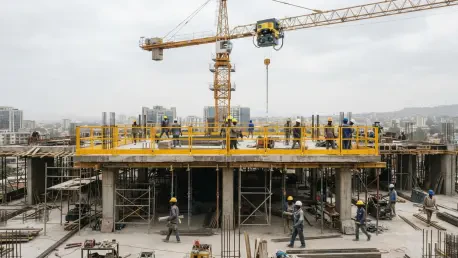
The effectiveness of engineered safeguards is highly sensitive to the specific nature of the project environment, with high-complexity developments seeing the most significant safety returns. In the realm of high-rise construction and specialized industrial facilities, technical interventions explain approximately 71% of the variance in safety success. These projects are characterized by vertical concentration and a clear hierarchy of control, allowing for the seamless integration of sophisticated hardware such as crane anti-collision sensors and perimeter protection screens. Because the workspace is contained and highly monitored, engineering solutions can be applied with a level of precision that is difficult to replicate in more sprawling environments. This centralized nature makes it easier to enforce a uniform safety standard that covers every phase of the construction process, ensuring that the highest-risk activities are always shielded by redundant technical safeguards.
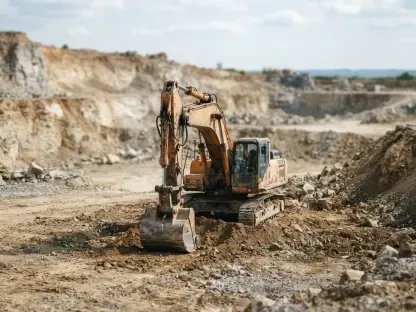
In stark contrast, large-scale infrastructure projects such as regional highways and bridges present a more difficult landscape for the deployment of engineering-led safety measures. The fragmented and geographically dispersed nature of these sites often results in a lower return on safety investment, with technical controls accounting for only 35% of performance improvements. The logistical difficulty of maintaining a consistent technical shield across many miles of roadway, combined with a high reliance on transient subcontractors, frequently leads to gaps in protection. When a project is spread thin, the localized focus that makes high-rise safety so effective is often lost, and the costs of deploying high-tech monitoring along the entire route can become prohibitive. This suggests that for massive infrastructure works, the safety strategy must evolve to include mobile technical units and more robust logistical oversight to ensure that physical protections move dynamically with the workforce rather than remaining at a single staging area.
Systemic Challenges: The Training Gap
Reevaluating Methods: Traditional Safety Education
A critical insight from current industry studies is that conventional workforce training sessions often fail to produce a statistically significant impact on actual site safety outcomes. With a calculated significance value of only 0.11, it is evident that simply putting workers through a standard classroom-style seminar does little to change the hazardous reality of a modern job site. This “training gap” occurs because education provided in isolation does not give laborers the physical tools or the organizational authority to alter their dangerous surroundings. If a worker is taught about the critical importance of fall protection but is then expected to perform tasks on a site where safety harnesses are missing or damaged, the training becomes practically useless. This disconnect highlights the necessity of aligning educational efforts with the immediate availability of engineering resources, ensuring that safety lessons are always backed by the physical means to implement them.
Furthermore, traditional lecture-based training frequently fails to account for the diverse educational backgrounds and the multiple languages spoken on many Ethiopian construction sites. Without hands-on demonstrations or the use of clear, visual communication tools, complex safety concepts are often lost in translation or forgotten shortly after the session ends. This leads to a situation where workers might pass a written safety exam but remain unable to identify a malfunctioning hydraulic valve or a structural weakness in a trench wall during their daily work. To address this, progressive firms are shifting toward immersive, on-site coaching that integrates safety procedures directly into the technical workflow. By demonstrating the correct use of engineered systems in real time, these companies ensure that knowledge is not just theoretically acquired but is actively applied to manage specific site hazards, turning safety education from a bureaucratic requirement into a vital technical skill.
Overcoming Exclusion: Workforce Culture
A major sociological barrier to safety in the Ethiopian construction sector is the culture of workforce exclusion, where the laborers most at risk are often left out of the planning process. Studies show that over half of the construction workforce feels that their practical insights regarding immediate site hazards are routinely ignored by upper management. This top-down approach creates a dangerous information gap, as site engineers may be unaware of granular risks that only someone working directly on the front line would notice, such as subtle shifts in soil stability or minor equipment defects. When workers feel that their voices do not matter, they become less likely to report near misses or suggest technical improvements, leading to a “silence culture” that can result in catastrophic failures. Breaking this cycle requires a deliberate shift toward participatory safety management, where frontline feedback is actively integrated into engineering plans.
By empowering workers to contribute to safety decision-making, companies can tap into a vast reservoir of site-specific knowledge that digital sensors alone cannot replicate. This inclusive approach not only improves hazard identification but also fosters a deep sense of ownership and accountability among the entire crew. When a laborer sees that their suggestion for a more secure material-handling route is actually implemented, they are more likely to take pride in the overall safety of the site and encourage their colleagues to follow suit. This psychological shift from being a passive recipient of rules to an active contributor to a resilient system is essential for the long-term success of any engineering-led intervention. Creating a collaborative environment ensures that technical safeguards are utilized correctly and maintained diligently by the very people whose lives they are designed to protect.
Structural Barriers: Future Frameworks
Financial Constraints: Navigating Institutional Hurdles
Despite the clear evidence supporting a shift toward engineering-led safety, significant structural hurdles remain, most notably a pervasive lack of funding for high-tech site interventions. Approximately 68% of construction firms in Ethiopia cite financial constraints as the primary reason for their continued reliance on outdated or inadequate safety equipment. In a market where profit margins are often slim and competition is fierce, the upfront cost of modular scaffolding, digital monitoring systems, or specialized safety hardware can seem prohibitive to many smaller contractors. This economic pressure is often exacerbated by a lack of access to low-interest financing or tax breaks specifically earmarked for safety-related investments. Without a clear financial incentive, many firms remain trapped in a cycle of underinvestment that leaves their workforce vulnerable to risks that are otherwise preventable with the right equipment.
Compounding these financial issues is a regulatory environment that has traditionally been viewed as reactive rather than proactive. Currently, many government oversight bodies are seen as “after-the-fact” participants who only become involved in site management once a major accident has already occurred. This lack of consistent, preventative inspections allows some contractors to cut corners on safety to meet aggressive project deadlines or reduce operational costs. To truly transform the sector, the focus must shift toward a regulatory model that rewards compliance and penalizes negligence before tragedy strikes. This involves not only increasing the number of trained site inspectors but also utilizing digital reporting tools to maintain a real-time database of site conditions across the country. By establishing a culture of accountability where safety is a non-negotiable part of the procurement process, the government can help overcome institutional resistance and ensure technical safeguards become the standard.
Main Obstacles: Safety in Ethiopia
The primary challenges currently facing the sector involve a deep-seated combination of financial limitations and a widespread gap in specialized technical skills. While many firms recognized the value of modern safety systems, 68% found themselves unable to secure the capital necessary for such upgrades, leading to a continued reliance on manual labor without adequate technical protection. Furthermore, the lack of a standardized national building code that mandates specific engineering safeguards allowed for a wide disparity in safety quality between different project sites. Researchers noted that without a proactive government inspection regime, safety protocols were often viewed as optional rather than foundational. These institutional barriers created an environment where speed and cost reduction were prioritized over the long-term health and safety of the workforce, resulting in preventable incidents that hindered the industry’s overall growth.
In response to these findings, the industry began exploring a hybrid safety model that localized international best practices by using affordable, locally sourced materials. For example, the certification of traditional bamboo scaffolding reinforced with modern metal clamps provided a cost-effective way for smaller contractors to meet higher safety standards. The sector also moved toward integrating health and safety criteria directly into public bids, ensuring that only firms with a proven commitment to engineering-led protection could win government contracts. This shift encouraged a more inclusive safety culture by establishing committees that gave frontline workers a voice in identifying hazards. By treating safety as a core engineering discipline rather than a secondary administrative task, the industry successfully transitioned toward a more resilient and sustainable future where the protection of the workforce was seen as an essential component of Ethiopia’s urban expansion.