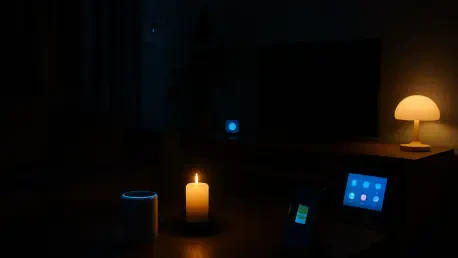

The modern smart home operates on a delicate hierarchy of dependencies that becomes abruptly visible the moment the power grid fails and the lights flicker out. While most homeowners view a blackout as a total system failure, it is actually a predictable sequence of layered outages that can be managed with the right technical preparation. The central hub serves as the architectural foundation of the entire ecosystem, meaning that all downstream sensors and automated routines rely on its operational status to function correctly. Most delays in restoring a smart home are not caused by hardware malfunctions but rather by devices fruitlessly searching for network credentials that are no longer being broadcast. By understanding which specific components remain active and which go dark, a resident can transition from a frustrating evening of troubleshooting to a streamlined ten-minute recovery process. Effective management during these events requires distinguishing between local and cloud dependencies before the next storm arrives.
1. Hardware Vulnerabilities: Hubs and Wired Equipment
The central hub is the single most critical point of failure in any automated residence because it orchestrates the complex communication between disparate devices. When power is lost, the hub takes all pre-programmed schedules, remote access capabilities, and cross-device automations down with it, regardless of whether the individual sensors are still functional. Since most modern hubs draw less than 10W, integrating a dedicated battery backup or a small Uninterruptible Power Supply (UPS) is a high-return investment that maintains the brains of the house. Wired cameras and video doorbells typically cease functioning the instant the transformer loses electricity, often requiring a manual re-pairing process once power returns. Sensors utilizing Zigbee or Z-Wave are more resilient if the hub remains powered, as they will continue reporting status updates and maintaining the integrity of the home’s smart mesh. Monitoring the management application during an active outage helps identify which specific devices have fallen into the reconnection queue for later attention.
Critical safety components such as smoke detectors, smart locks, and leak sensors are engineered with internal battery backups specifically to survive these grid failures. However, the reliability of these devices is often compromised by neglected maintenance, as a smart lock running on aging AA batteries may fail just when it is needed most. Regularly replacing these internal power sources at the start of each storm season is a much more cost-effective strategy than calling an emergency locksmith in the middle of the night. For extended outages, portable power stations like the Anker SOLIX S2000 keep essential hubs and routers operational for several days. Automations that rely on the cloud will cease to function without an internet connection, but local rules programmed to trigger lights through a hub will continue to work during a blackout. Prioritizing the migration of essential routines to local execution environments ensures that the most critical functions of the home, such as flood detection or emergency lighting, remain active regardless of external status.
2. FAQ: How to Restore Connectivity and Settings?
Bringing a complex smart home back online requires a disciplined approach to the reconnection order to avoid network bottlenecks and device errors. The first step involves reactivating the network infrastructure, ensuring that the modem and router are fully booted and broadcasting a stable signal before anything else. Once the internet is established, the central control hub should be powered on to re-register its credentials and prepare for device signals. Peripheral devices should then be allowed to rejoin the mesh network gradually, ideally waiting at least five minutes between layers to avoid connection bottlenecks. After the hardware is online, checking the management application ensures that all routines are enabled and that devices are showing as active rather than stuck in a sleep state. Reversing this logical sequence often leads to a cascade of failed connections, as peripheral devices attempt to check in with a hub that is not yet ready to receive them, turning a simple reboot into a lengthy troubleshooting task.
Regarding common concerns, homeowners often ask which devices should be prioritized during a blackout; the answer is always the hub and the router to maintain the local intelligence layer. Another frequent question involves the functionality of smart locks, which continue to operate on independent battery power for physical access but lose remote management features without a powered hub. Residents often wonder why smart lights turn on automatically after a blackout, a behavior designed for traditional switch compatibility that can be adjusted in the settings to “Last State.” To determine if an automation is local or cloud-based, residents can test if routines continue to function when the internet cable is unplugged while internal Wi-Fi remains active. Furthermore, following a power restoration, internal system clocks must be audited to ensure that automated schedules for lighting and climate control do not trigger at inappropriate times. Validating that the router retained its security credentials and that the hub recognizes every device on the list is essential for total recovery.
3. Strategic Evolution: Future-Proofing Local Infrastructure
The process of auditing and reconfiguring smart home settings following a significant power disruption establishes a clear roadmap for future resilience. Technical experts recommend documenting the specific reconnection order on a physical note stored near the router to eliminate guesswork during high-stress events. By prioritizing local execution for critical safety routines, residents can successfully reduce their dependency on external internet providers during grid fluctuations. Future considerations for smart home management involve the integration of larger-scale energy storage solutions that can bridge the gap between short-term outages and prolonged blackouts. The systematic verification of system clocks and device tallies should become a standard operating procedure to ensure long-term automation accuracy. Ultimately, the transition from reactive troubleshooting to proactive infrastructure management provides a more stable environment for all connected technologies. These actionable steps transform the way automated systems are perceived.
Building on these observations, the implementation of localized backup protocols proves that a smart home can remain functional despite external utility failures. Homeowners are beginning to prioritize hardware with local API support to ensure that their investment remains under their control even when cloud servers become unreachable. This shift toward local-first architecture represents a significant milestone in the maturation of home automation technology. Professionals suggest that regular battery health checks and the use of dedicated power circuits for network hardware are the most effective ways to mitigate the impact of sudden energy loss. As the ecosystem continues to evolve, the focus moves away from simple convenience and toward the creation of a robust, self-sustaining environment. The integration of advanced power management software allows for the automatic shedding of non-essential loads, further extending the runtime of critical security components. These strategies ensure that the modern residence stays intelligent, responsive, and secure during any unforeseen disruption.