
Pre-warmed water from the solar cooling phase is fed back into a building’s thermal collection system, pushing the comprehensive efficiency of the integrated setup to an average of 86.6 percent. This discovery, detailed in a comprehensive research review published in the August 2025 edition of City and Built Environment, marks a significant shift in how architects and engineers approach the design of net-zero structures. Led by researcher Handan Fan, the study investigates the potential of the Rainwater Photovoltaic-thermal System, or RPS, to bridge the divide between energy production and water conservation. For years, the energy-water nexus was a theoretical concept, but the integration of these two critical infrastructures into a single hardware platform represents a practical leap forward. By coupling rainwater harvesting with photovoltaic-thermal technology, the RPS framework creates a symbiotic relationship that addresses the persistent technical shortcomings of standalone units. This approach does more than just save space; it fundamentally alters the thermodynamics of a building’s exterior, turning a static roof into a dynamic energy-generating asset that performs optimally regardless of external thermal stressors. As cities face increasing pressure to decarbonize, these integrated models provide a necessary roadmap for achieving the aggressive sustainability goals of the current decade through holistic engineering.
Overcoming Thermal Degradation in Solar Arrays
The fundamental challenge with traditional solar energy adoption lies in the inherent physical limitations of photovoltaic modules, which suffer a notable decline in efficiency as their operating temperature rises. In high-density urban environments, rooftops often become heat traps where solar panels frequently experience temperature spikes ranging from 10 to 15 degrees Celsius above the ambient air during peak sunlight hours. This heat accumulation triggers a degradation in electrical conversion performance, essentially wasting the very solar radiation the panels are designed to capture. Furthermore, the fragmented nature of modern green building design often results in a competition for limited real estate between solar arrays and rainwater harvesting systems. When these systems operate independently, they fail to leverage the potential cooling benefits that one could provide to the other, leading to missed opportunities for energy optimization. Currently, internal building systems account for over 30 percent of total urban energy consumption, making the resolution of these thermal inefficiencies a top priority for developers seeking to reduce operational costs and carbon footprints.
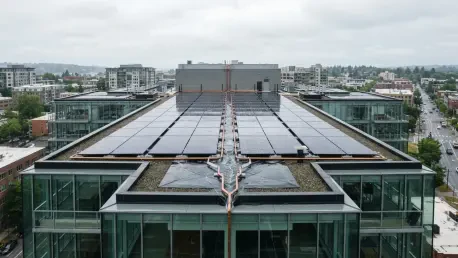
By reimagining the roof as a unified ecosystem, the RPS framework addresses these conflicts through a clever and mutually beneficial architecture that prioritizes synergy. In this integrated setup, rainwater collection pipes are not merely adjacent to the solar panels but are embedded within or circulated directly through the photovoltaic-thermal modules. This configuration allows the collected rainwater to act as a consistent natural coolant, absorbing excess heat from the cells to keep them operating within their ideal temperature range. Simultaneously, the electricity generated by these stabilized panels is used to power the various pumps and purification units required to maintain the rainwater harvesting system. To maximize this interaction, engineers have determined that a tilt angle between 15 and 30 degrees provides the optimal balance for both solar exposure and efficient water drainage. This dual-purpose orientation ensures that rainwater is diverted into collection networks with minimal loss while the solar panels maintain the necessary pitch to capture maximum irradiance throughout the day, effectively doubling the utility of the rooftop surface area.
Technical Performance and Material Innovations
Experimental evidence gathered through rigorous testing highlights the dramatic impact that water-based cooling has on the overall electrical performance of integrated systems. Studies indicate that channel-based water cooling mechanisms can successfully drop the surface temperature of panels by nearly 10 degrees Celsius, with back-side temperatures showing a reduction of as much as 14.5 degrees Celsius. For standard monocrystalline silicon panels, this reduction in thermal stress translates directly into a 13 percent increase in power generation efficiency. The difference becomes even more pronounced when comparing passive cooling methods to active loops; while air-cooled systems typically hover around 15.5 percent efficiency, active cooling using harvested water can push electrical efficiency to 22 percent. This leap in performance is critical for smaller urban buildings where every square foot of solar array must produce the maximum possible wattage to meet the demands of the occupants. The ability to maintain lower operating temperatures even during the hottest months of the year ensures a more predictable and stable energy supply for the building’s internal grid.
The success of these systems relies heavily on advancements in material science and specialized coatings that enhance both thermal conductivity and maintenance. Modern RPS architectures often utilize perovskite tandem photovoltaic panels protected by double-glass encapsulation, a combination capable of achieving conversion efficiencies of at least 28 percent. To facilitate the rapid removal of heat from these high-performance cells, the system employs copper-aluminum composite heat-collection tubes filled with aluminum oxide-based nanofluids. These engineered fluids are far more effective than standard water, offering a 40 percent improvement in thermal conductivity to ensure that heat is stripped away from the solar cells as quickly as it is generated. Additionally, a specialized hydrophobic coating is applied to the exterior glass of the panels. With a contact angle exceeding 150 degrees, this coating provides a self-cleaning surface that prevents the accumulation of dust and pollutants, while also ensuring that rainwater flows off the panels with almost zero resistance. This maintains a high runoff coefficient between 0.85 and 0.92, ensuring that the maximum amount of water reaches the storage tanks.
Integrated Water Management and Reclaimed Heat
The water management component of the RPS is designed with the same precision as the electrical hardware, following a rigorous multi-stage purification process to ensure utility. Once the rainwater is collected from the solar array, it passes through a series of coarse filters, activated carbon stages, and ultraviolet disinfection units to meet high harvesting efficiency standards. After purification, the water is intelligently distributed based on the building’s real-time needs through a diverter valve. One stream is funneled toward non-potable domestic applications, such as landscape irrigation or toilet flushing, which drastically reduces the building’s reliance on municipal water supplies and lowers monthly utility expenses. The second stream is directed through micro-channel coolers specifically designed to regulate the temperature of the solar panels. This dual-path strategy ensures that the rainwater is never a static resource but a versatile tool for both cooling and conservation. By integrating these processes, the system manages to capture over 90 percent of available rainfall, turning a seasonal weather event into a reliable source of cooling and gray water.
A key innovation of the RPS is the secondary use of the water after it has completed its cooling cycle. As the rainwater flows behind the photovoltaic panels, it absorbs the thermal energy that would otherwise degrade the panels’ performance, typically rising in temperature by 5 to 8 degrees Celsius. This pre-warmed water is not discarded; instead, it is funneled into the building’s primary thermal collection system. This creates a highly efficient positive feedback loop where the act of cooling the solar panels provides a head start for domestic hot water heating or space heating systems. By reclaiming this low-grade heat, the RPS avoids the energy expenditure usually required to raise water from ambient temperatures to usable levels. This integration is what allows the comprehensive efficiency of the total setup to reach that impressive 86.6 percent average. This level of performance makes a compelling case for the technology, as it addresses both the electrical and thermal demands of a building simultaneously, providing a more well-rounded approach to renewable energy than traditional solar installations could ever achieve.
Energy Storage and Seasonal Resilience
To effectively manage the intermittent nature of both solar radiation and rainfall, the RPS incorporates advanced storage solutions that ensure long-term operational stability. Electrical energy is managed through high-efficiency lithium-ion battery packs that boast a cycle efficiency of over 95 percent, allowing the building to maintain power during nighttime hours or periods of heavy cloud cover. For thermal energy, the system utilizes phase-change thermal-storage tanks containing wax-based composites. These tanks are highly compact and offer a thermal storage density of at least 180 megajoules per cubic meter, providing a reliable reservoir of heat that can be drawn upon when the solar panels are not active. This storage infrastructure enables a strategy known as multi-energy complementation. On sunny days with low demand, the building can prioritize selling its excess electrical capacity back to the regional grid. Conversely, during periods of low sunlight, the system switches to its stored reserves to maintain consistent internal temperatures and water availability, ensuring that the building remains resilient in the face of varying weather conditions.
Seasonal changes also play a major role in the operational logic of the RPS storage and distribution network. During the winter months, when solar gain is lower and freezing temperatures present a risk to plumbing, the stored thermal energy is used for frost prevention on the roof and to maintain a steady supply of domestic hot water. This versatility prevents the system from becoming a liability in colder climates and ensures that the infrastructure remains productive year-round. In contrast, during the summer, the focus shifts back to maximizing the cooling of the photovoltaic panels to combat high ambient heat. This adaptability is central to the value proposition of integrated green building technologies. By balancing the storage and release of energy across different timescales, the RPS allows for more autonomous building operation. This reduction in peak demand from the municipal grid not only benefits the individual building owner but also contributes to the overall stability of urban energy networks, especially as more structures move toward decentralized power models.
Economic Hurdles and Regulatory Standards
Despite the undeniable technical and environmental benefits, the widespread adoption of RPS technology still faces significant economic and regulatory barriers. The primary obstacle is known as the “green premium,” as the initial capital expenditure for an integrated RPS is currently 1.5 to 2 times higher than that of a standard independent photovoltaic installation. This increased cost is driven by the complexity of the heat-collection tubes, the sophisticated filtration systems, and the advanced storage tanks required to make the system functional. As a result, the investment payback period typically stretches between six and nine years, which can be a deterrent for developers focused on short-term returns. Furthermore, the performance of the system is highly sensitive to the precision of its installation. If the tilt angle of the panels or the design of the storage tanks is even slightly mismatched, the water collection efficiency can drop by as much as 50 percent. In colder regions, the necessity for additional anti-freezing measures can drive up material costs by another 12 percent, further complicating the financial equation for northern cities.
Beyond the financial challenges, there is a distinct lack of unified international technical standards for integrated water-energy systems. Current green building certification frameworks, such as LEED or regional equivalents, do not yet prioritize water-energy coupling efficiency as a core metric for evaluation. This institutional vacuum makes it difficult for architects and developers to quantify the comprehensive value of an RPS, often resulting in these systems being sidelined in favor of simpler, albeit less efficient, standalone technologies. Without standardized benchmarks, the penetration rate for distributed photovoltaics in urban settings has remained below 15 percent. To overcome this, industry leaders and policymakers must collaborate to create clear guidelines that account for the long-term life cycle benefits of integrated systems. Establishing these standards would provide the necessary confidence for investors and help drive the economies of scale needed to bring down the initial costs of the hardware. Addressing these regulatory gaps is essential for moving integrated solar and rainwater systems from a niche engineering curiosity to a standard feature of the urban skyline.
Practical Steps Toward Digital Integration
The evolution of integrated building systems required a fundamental shift toward digital management to unlock the full potential of the energy-water nexus. Research suggested that the most effective way to maximize the output of an RPS was the implementation of digital twin technology. This involved creating a virtual replica of the building’s energy and water systems, which used real-time data from local weather stations and internal sensors to adjust the system’s parameters on the fly. By utilizing multi-objective optimization models, engineers were able to fine-tune the tilt of solar panels and the flow rate of cooling water to match current environmental conditions. This level of precision ensured that the system always operated at its peak theoretical efficiency, regardless of whether the building was experiencing a heatwave or a prolonged period of rain. These digital tools provided building managers with actionable insights, allowing them to predict maintenance needs and optimize energy sales to the grid, which significantly improved the overall return on investment.
Moving forward, the focus for developers and city planners should be the integration of these systems into broader smart city initiatives. The transition toward more resilient urban infrastructures relied on the successful demonstration of integrated models that proved synergy between natural elements and mechanical systems could overcome traditional efficiency plateaus. Actionable next steps include the adoption of modular RPS designs that can be retrofitted onto existing commercial buildings, thereby bypassing the limitations of new construction cycles. Furthermore, local governments could incentivize the adoption of integrated systems by offering credits for stormwater mitigation, as the RPS significantly reduced the burden on municipal drainage during heavy downpours. By viewing the building envelope as a three-dimensional active power plant rather than a passive shield, the industry moved closer to a truly sustainable urban model. This holistic approach to resource management turned two of nature’s most abundant resources—sunlight and rain—into a cohesive engine for green growth, providing a scientifically sound foundation for the future of city living.