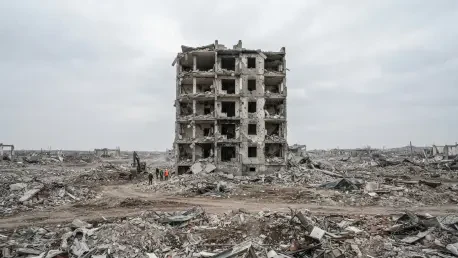

Living in a tent often involves enduring extreme heat and infestations of rodents, driving many Palestinians back into the shells of their former homes. This harrowing reality defines the current humanitarian landscape in Gaza, where the concept of a safe haven has been systematically eroded by years of sustained conflict. Thousands of displaced individuals now find themselves navigating a lethal paradox: choosing to remain in overcrowded, unsanitary encampments exposed to the elements or returning to urban ruins where the very walls could collapse at any moment. As the structural integrity of the enclave’s remaining buildings continues to fail, the choice between vertical and horizontal displacement has become a gamble with death. The urban environment, once a symbol of community and permanence, has been transformed into a sprawling network of precarious traps. This crisis is not merely a matter of damaged infrastructure but a failure of the humanitarian response to keep pace with the scale of the ongoing residential devastation.
Tragedies Within Gaza’s Fragile Concrete Structures
The Al-Saada Collapse: Analyzing the Anatomy of Failure
On September 16, the latent dangers of these compromised structures manifested in the catastrophic collapse of the Al-Saada building on Al-Sinaa Street in Gaza City. This six-story edifice, which had been serving as a makeshift sanctuary for approximately 100 displaced people, suddenly gave way, pancaking floors and trapping dozens beneath tons of reinforced concrete. The incident resulted in twenty-one confirmed deaths and left forty-five others with life-altering injuries, illustrating the extreme risks inherent in occupying buildings that have suffered significant kinetic trauma. Among the victims was the entire family of Mahmoud Abu Saada, who had sought refuge in the ruins after finding the conditions in coastal tent camps to be entirely unsustainable. This tragedy underscored the fact that in a densely packed urban combat zone, the initial impact of a strike is often only the beginning of a long-term structural decay process that eventually claims more lives after the fighting moves on.
Foundational Damage: The Lingering Impact of Military Strikes
The debate surrounding the technical cause of the Al-Saada collapse highlights the complexities of assessing structural safety in an active conflict zone. Local government media offices maintained that the building’s foundations had been targeted during earlier bombardment phases, specifically on October 9, 2023, creating a delayed failure mechanism that matured over time. While military officials have issued denials regarding specific strikes on that day, the consensus among independent engineers is that the force of modern munitions often leaves behind invisible micro-fractures in load-bearing columns. These structural weaknesses are frequently exacerbated by the weight of dozens of residents and their belongings, which the buildings were never designed to support in a damaged state. Consequently, many structures that appear stable from the outside are actually hovering on the brink of failure, turning every day spent inside into a silent countdown toward a potential disaster for those seeking shelter within the fractured concrete.
The Dire Motivation Behind Occupying Ruins
The Impossible Choice: Why Tents Offer No Sanctuary
The motivation for returning to these death traps is rooted in the increasingly untenable conditions of the makeshift tent cities, such as those found in the Al-Mawasi area. For survivors like Mahmoud Abu Saada’s mother, Umm Mahmoud, the transition back to the ruins was driven by a desperate need for basic human dignity. In the camps, families are forced to endure scorching temperatures inside plastic and fabric shelters that provide no insulation against the relentless sun. Furthermore, the lack of sanitation infrastructure has led to widespread infestations of rodents and insects, making sleep and food preparation nearly impossible. The absence of privacy and the constant exposure to the elements create a psychological toll that eventually outweighs the fear of a building collapse. For many, a damaged concrete roof represents a return to a familiar space where they can escape the grinding indignity of life in a dust-choked camp that offers no protection from the harsh Mediterranean climate that persists through 2026.
Urban Degradation: The Widespread Danger in Densely Populated Zones
Economic desperation further cements this dangerous trend, as many displaced Palestinians lack the financial means to secure even the most basic alternative housing. In locations like the Al-Shati refugee camp, residents like Amal Tafesh continue to live in structures where the walls are visibly bowing and ceilings are shedding heavy stone fragments. When neighboring high-rise buildings collapse into smaller homes, they often trigger a “domino effect” that compromises the foundations of entire blocks. Despite the clear evidence of deterioration, including deep cracks that span multiple floors, families of thirty or more people often huddle together in the shells of their former lives. They justify their presence by pointing to the scarcity of tents and the exorbitant costs associated with moving to safer zones, which remain out of reach for the majority of the population. This cycle of forced risk-taking is intensified by the passage of time, as environmental factors and the natural settling of earth further erode the stability of these neighborhoods.
Barriers to Ensuring Public Safety
Institutional Paralysis: The Failure of Evacuation Mandates
Local safety officials in Gaza face a condition of institutional paralysis, where the ability to identify danger far outstrips the capacity to mitigate it. While the Ministry of Public Works has documented thousands of structures that are unfit for human habitation, the lack of alternative shelter means that evacuation orders are rarely enforceable. For many residents, the threat of a building collapse is a distant possibility compared to the immediate and certain suffering found in the tent cities. Humanitarian organizations are currently struggling to bridge this gap, but with fewer than 1,000 tents available for tens of thousands of families in need, the mathematics of safety simply do not add up. The Civil Defense finds itself in the position of warning people to leave their homes while knowing that doing so will condemn them to the exposure and diseases prevalent in the camps. This disconnect between safety mandates and physical reality has created a scenario where thousands continue to live in condemned buildings, awaiting a disaster they have no means to avoid.
Technical Deficits: The Critical Lack of Heavy Rescue Machinery
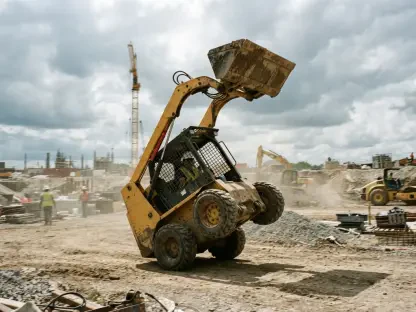
Efforts to manage the hazard of standing ruins are fundamentally stymied by a critical lack of the heavy machinery and specialized tools required for safe demolition and rescue. International observers have noted that restrictions on the entry of construction-grade equipment make it nearly impossible for the Civil Defense to perform controlled teardowns of high-risk buildings. During the Al-Saada collapse, the absence of hydraulic jacks and heavy-lift cranes meant that rescuers were forced to watch helplessly as the window for saving those trapped beneath the rubble closed. Without access to thermal imaging and acoustic sensors, locating survivors in the remains of a pancaked building becomes a matter of chance rather than precision. The persistent blockade on reconstruction materials also prevents the temporary stabilization of buildings that might otherwise be salvaged. This technical deficit ensures that every structural failure results in a higher mortality rate, as the tools necessary to save lives are simply unavailable to those on the front lines.
Escalating Risks as Winter Approaches
Seasonal Pressure: How Climate Hazards Amplify Existing Crises
The approach of winter in late 2026 introduces a secondary layer of risk that threatens to accelerate the failure of already weakened structures across the Gaza Strip. Seasonal rains and the resulting saturation of the ground often lead to soil erosion around building foundations, which can trigger sudden collapses without any additional military activity. For those occupying damaged apartments, the lack of intact roofing and windows means that rainwater accumulates on interior floors, adding thousands of pounds of dead weight to structural slabs that were never designed to hold such loads. Furthermore, the persistent dampness accelerates the corrosion of exposed rebar, significantly reducing the load-bearing capacity of concrete columns. As temperatures drop, the struggle to maintain warmth often leads residents to use open flames for heating inside these ruins, creating a heightened risk of fire in environments where escape routes are often blocked. This confluence of weather and structural decay makes the winter months the most dangerous period.
Future Considerations: Moving Beyond the Cycle of Risk
The humanitarian response to the housing crisis eventually required a total reassessment of how aid was prioritized in conflict zones. It was determined that the cycle of displacement could only be broken if structural clearing and the provision of prefabricated modular homes were treated as immediate life-saving interventions rather than long-term reconstruction goals. Moving forward, the international community recognized that providing tents was a temporary fix that failed to address the fundamental need for protection from both military and environmental hazards. Successful initiatives involved the immediate importation of heavy cranes and excavation tools that allowed local teams to safely dismantle the most precarious structures before they could claim more lives. By late 2026, the strategy shifted toward establishing designated safe zones with rigid infrastructure. This proactive approach provided a blueprint for managing urban decay in future crises, emphasizing that safety must be built from the ground up through logistical empowerment.