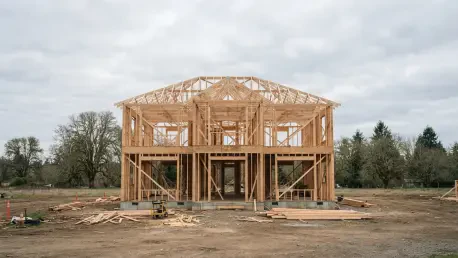

When OHS officers discovered framing crews working on a two-story residence at heights exceeding six meters without fall protection, they immediately halted all high-altitude activities. This decisive action by Alberta Occupational Health and Safety (OHS) set the stage for a critical legal battle that recently concluded with the Alberta OHS Appeals Board affirming the necessity of strict compliance. PrimeFrame Construction Inc. faced a $1,000 administrative penalty after failing to adhere to a stop-work order issued in late 2025. The adjudication, finalized in November 2026, underscored the principle that internal project timelines or environmental concerns do not override the legal authority of provincial safety mandates. By dismissing the company’s appeal, the board sent a clear message to the broader construction sector that the unilateral resumption of work while a safety order is active is a fundamental breach of the law that carries unavoidable consequences for any employer.
Regulatory Inspection: Identifying Critical Safety Hazards
During the initial 2025 inspection of the Calgary residential site, officers observed several workers performing tasks at a roof edge height measured at exactly 6.48 meters. Under the current Alberta Occupational Health and Safety Code, specific protection measures are mandatory for any work performed above a three-meter threshold. The inspection team noted that the framing crew was operating without a formalized fall protection plan, which is a critical administrative requirement for high-risk residential construction. Furthermore, the absence of physical guardrail systems left the workers exposed to significant injury or death, a risk that provincial authorities treat with the utmost gravity. The oversight revealed a systemic failure within the site’s safety management protocol, as the necessary equipment was either absent or not properly utilized by the personnel on-site during the high-altitude framing phase of the two-story home construction.
In response to these immediate hazards, the OHS officer issued seven distinct compliance orders alongside a comprehensive stop-work order (SWO). This legal directive specifically prohibited any further activity above the three-meter mark until the employer could demonstrate full compliance with safety standards. The order was not merely a suggestion but a binding legal constraint that required a formal follow-up from an authorized officer to be rescinded. The complexity of these orders meant that the company needed to overhaul its safety approach, including the provision of proper fall protection training and the installation of certified guardrails. The officer clearly communicated that the SWO would remain active until a verification of these changes occurred, ensuring that the workers would not be placed back into a dangerous environment without proper oversight and verified mitigation of the identified risks.
Compliance Breach: Environmental Pressures and Unauthorized Actions
The central controversy in this legal dispute began when PrimeFrame chose to resume operations without receiving formal clearance from the provincial authorities. In November 2025, a company representative sent an email to the investigating officer claiming that all safety deficiencies had been rectified and inquiring about the status of the stop-work order. However, the officer was away from the office at the time and had configured an automated reply that provided explicit instructions for handling urgent matters. This out-of-office message directed the company to contact the OHS Contact Center via a specific phone number if they required immediate assistance or for the order to be lifted. Despite receiving these clear instructions, the company failed to follow the established protocol, choosing instead to interpret the lack of an immediate manual response as a secondary concern while they moved forward with their own construction schedule.
Rather than waiting for the officer’s return or contacting the alternative numbers provided, the firm completed the remaining high-altitude framing work unilaterally. When the OHS officer eventually returned to the site for a follow-up inspection, they discovered that the project was finished and the workers were no longer on the roof. By completing the tasks while the stop-work order was still active, PrimeFrame effectively bypassed the state’s ability to verify that the safety improvements were actually in place during the most hazardous phase of the job. The company cited the pressure of an incoming heavy snowfall as the primary reason for their haste, arguing that leaving the structure exposed would have caused significant damage. However, the regulator maintained that weather conditions do not grant an employer the right to ignore a live legal order, as the safety of the human workers must always take precedence over the integrity of the building.
Judicial Ruling: Legal Supremacy and Future Standards
The Alberta OHS Appeals Board fundamentally rejected the notion that a contractor can self-determine when a stop-work order is no longer necessary. In its ruling, the board emphasized that an SWO is a powerful legal instrument that shifts the authority over a job site from the employer to the provincial regulator. By resuming work without an official lift order, the company effectively usurped the power of the state to ensure a safe working environment. The board clarified that the safety of the site is not a matter for private interpretation; it requires the objective verification of a trained OHS official. The decision established that unilateral reasoning, no matter how well-intentioned it might seem to the contractor, cannot supersede the clear language of a government-issued mandate. This principle ensures that companies do not become the sole judges of their own compliance, which would create a dangerous conflict of interest between project profitability and worker safety.
In conclusion, the legal decision regarding PrimeFrame Construction Inc. established a clear boundary for managerial discretion on job sites. By reinforcing the absolute authority of stop-work orders, the board provided a roadmap for how firms should handle regulatory interventions. Construction companies should prioritize the development of robust communication lines with the OHS Contact Center to ensure that work stoppages are addressed through official channels immediately. The industry was reminded that the authority to evaluate site safety rested solely with the provincial regulators, and this power dynamic was non-negotiable. As the sector continues to grow in 2026, those in leadership roles were urged to integrate these legal realities into their project planning phases. This approach helped ensure that safety was treated as a structural component of every build rather than an administrative hurdle, shifting the focus back to the fundamental responsibility of protecting every worker.