
While infrastructure projects are vital for Mumbai’s economic growth, the judiciary has ruled that development must occur within the legal boundaries established for public well-being. This recent intervention by the Bombay High Court signals a fundamental shift in how the city approaches its relentless physical expansion, moving away from a culture of permissive noise toward one of strict environmental accountability. The ruling serves as a crucial response to the pervasive and often overwhelming acoustic environment that characterizes many of Mumbai’s most densely populated districts. As the city continues its massive transformation, characterized by sprawling residential redevelopment and extensive transit projects, the conflict between urban progress and the constitutional right to a quiet life has reached a critical tipping point. The court has made it clear that the physical transformation of the metropolis cannot happen in a legal vacuum where the health of residents is sacrificed for the sake of industrial convenience. By prioritizing human well-being over unhindered construction schedules, the judiciary is establishing a new standard for urban governance that balances economic vitality with the fundamental right to a healthy living environment. This decision reflects a sophisticated understanding of the modern urban condition, where noise is recognized not merely as a minor nuisance but as a significant environmental pollutant that can have lasting psychological and physiological impacts on millions of city dwellers.
Identifying the Catalysts for Judicial Action
The judicial momentum behind this decision was largely driven by the case of Ashok Pathare v. State of Maharashtra, which highlighted a perceived systemic failure of local authorities to regulate construction-related noise. For years, residents in neighborhoods like Mahim have dealt with the relentless hum of excavation and drilling that often continued long after sunset, frequently bypassing the regulatory oversight meant to protect them. The petitioner argued that the existing regulatory framework was marked by passivity, where citizen complaints were often filed into a bureaucratic void without leading to substantive changes on the ground. This specific legal battle was triggered when noise levels at a construction site were measured well above the 55-decibel threshold established for residential areas, leading the Brihanmumbai Municipal Corporation (BMC) to finally issue a stop-work notice. This action, while localized, became a symbol of a much larger struggle between a massive real estate industry and the individuals who live in the shadow of its cranes. The court noted that the current environment of rapid development had created a situation where the psychological toll of noise—including sleep disturbance and heightened stress levels—was being ignored by developers who prioritized speed and efficiency over the legal rights of neighboring communities.
The court’s intervention was necessary to reconcile three often-competing perspectives: those of the developers, the regulatory authorities, and the citizens. Developers frequently view noise regulations as expensive hurdles that interfere with tight construction timelines and the inherent demands of heavy machinery. From their perspective, noise is an unavoidable byproduct of the progress the city itself demands. Meanwhile, the BMC and the local police have often struggled with the logistical challenges of monitoring thousands of construction sites simultaneously, leading to a reactive rather than proactive enforcement style. However, the citizens’ perspective, championed by the court, emphasizes that the “right to quiet” is an essential component of a dignified life in a modern global city. By prioritizing this view, the judiciary has effectively shifted the burden of responsibility. No longer can developers claim that noise is an inevitable part of urban life; instead, they are now legally required to find technological and operational solutions that keep their activities within the boundaries of the law. This reconciliation marks a departure from the previous status quo, where the loudest voices—both literally and figuratively—often dictated the terms of urban development at the expense of the silent majority.
Implementing Mandatory Directives for Developers
In response to the identified failures, the Division Bench, led by Chief Justice Mahesh Chandra Tripathi and Justice Advait M. Sethna, has adopted a “zero-tolerance” policy regarding noise violations. One of the most significant changes introduced by this ruling is the requirement for developers to submit formal, sworn undertakings to the court. These documents are not merely administrative formalities; they represent a personal and legal commitment by the developers to adhere strictly to statutory noise standards. By transforming a general legal obligation into a specific judicial promise, the court has created a powerful mechanism for accountability. If a developer is found to be in breach of the noise limits after submitting such an undertaking, they are no longer just violating a municipal code—they are potentially in contempt of court. This elevation of the legal stakes is designed to deter builders from treating fines as a simple cost of doing business. The judiciary is signaling that the era of paying for the privilege to pollute the acoustic environment is over, and that the legal consequences for non-compliance will now be far more personal and severe than in previous years.
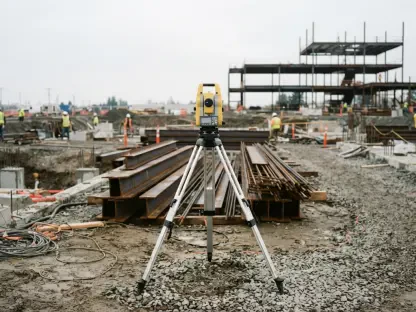
Perhaps the most potent and immediate tool established by the court is the mandate for the instantaneous stoppage of work at offending sites. The court has granted the BMC and local police the authority to halt construction activities the moment a violation of the decibel limits is confirmed. This directive eliminates the need for prolonged legal battles or administrative hearings for every individual violation, providing a streamlined path to enforcement. The threat of an immediate stop-work order is a powerful economic deterrent, as delays in construction can lead to massive financial losses for developers and investors. By making silence a prerequisite for continuing work, the court is forcing developers to integrate noise-mitigation strategies, such as sound barriers and quieter machinery, into their initial project planning. This proactive requirement ensures that the protection of the acoustic environment is not an afterthought but a central component of the construction process. The shift from post-facto punishment to immediate operational consequences represents a significant evolution in environmental law enforcement, providing authorities with the tools they need to ensure the city’s growth remains compatible with the well-being of its people.
Strengthening Accountability of Public Authorities
The Bombay High Court has been remarkably clear in its assessment that laws existing only on paper are insufficient for a city as dynamic as Mumbai. The judiciary has issued a stern reminder to the BMC and other state agencies that their responsibility does not end with the issuance of a construction permit or a commencement certificate. Instead, these authorities are now expected to maintain a continuous and proactive presence in the field. This shift necessitates the deployment of sophisticated noise-monitoring equipment and the consistent collection of data that can be used to trigger enforcement actions. The court’s directives emphasize that public authorities must move away from a complaint-driven model, which often places an unfair burden on residents to act as unpaid environmental monitors. By demanding that the state take an active role in surveillance, the court is reinforcing the idea that environmental protection is a core function of urban administration. This move is intended to close the gap between the standards set by the Noise Pollution (Regulation and Control) Rules of 2000 and the reality of life on the ground, ensuring that the regulatory landscape is defined by action rather than inertia.
While the court’s stance is firm, the Bench has taken pains to clarify that its directives are not intended to be “anti-development.” There is a clear recognition within the judgment that infrastructure renewal and the construction of new housing are essential for the future of Mumbai. However, the ruling establishes a non-negotiable hierarchy of values where the fundamental rights of citizens—specifically their health and their right to a peaceful environment—are placed above the economic speed of development. The court has argued that development must occur “within the boundaries established by law,” meaning the city’s progress must be sustainable in a human sense, not just an economic one. This balanced approach is intended to encourage a more sophisticated form of urban growth, one where developers are incentivized to innovate and find ways to build without degrading the quality of life in surrounding neighborhoods. By framing the issue as a matter of constitutional compliance rather than a simple zoning dispute, the judiciary is ensuring that the rule of law remains the guiding principle for Mumbai’s expansion, preventing the city’s physical growth from outstripping its moral and legal commitments to its residents.
Analyzing Trends in Environmental Jurisprudence
The ruling in the Pathare case is reflective of a broader, more aggressive trend in environmental jurisprudence that emphasizes preventive enforcement over compensatory measures. In the past, environmental law often focused on penalizing actors after a violation had already caused damage, a model that frequently failed to prevent the original harm from occurring. The Bombay High Court’s current approach—demanding undertakings and enabling immediate work stoppages—represents a shift toward a “precautionary principle” in the urban context. This model forces a change in the internal logic of the real estate industry, as developers must now account for the risk of a total operational shutdown if they fail to meet noise standards. By creating a localized, rapid-response mechanism that involves both the police and municipal authorities, the court has shortened the feedback loop between a violation and its consequences. This evolution in legal strategy acknowledges that in a high-density environment like Mumbai, the damage caused by noise pollution is often immediate and cumulative, requiring a response that is equally swift and decisive.
This judicial intervention also underscores a significant democratization of environmental rights in India. The court has reiterated that the “environment” is not a concept limited to distant forests or protected coastlines; it includes the very air and soundscapes of the urban streets where people live and work. By linking noise pollution to Article 21 of the Constitution, which guarantees the right to life and personal liberty, the court has empowered every citizen to see themselves as a stakeholder in the city’s environmental health. This perspective establishes that a pollution-free environment is an essential component of a dignified life, making the protection of peace a matter of fundamental human rights. As a result, any resident can now approach the judiciary with a high degree of confidence that their concerns regarding noise will be treated with the same seriousness as a violation of any other constitutional right. This framework not only streamlines the enforcement process but also builds a sense of collective responsibility, where the maintenance of a livable city becomes a shared goal between the judiciary, the state, and the citizenry.
Navigating the Future of Urban Compliance
As Mumbai moves further into 2026, the implications of this ruling are expected to reshape the practical realities of the construction industry. Builders are now looking toward advanced acoustic engineering solutions, such as localized sound-dampening enclosures for heavy generators and the use of vibration-reduction technology during piling operations. The necessity of staying below the 55-decibel limit in residential areas has turned noise mitigation into a competitive advantage for developers who can prove their ability to work within these strict parameters. Furthermore, the role of the local police has become more specialized, with officers increasingly trained to use decibel meters and coordinate directly with municipal environmental officers. This integrated approach to enforcement is creating a new blueprint for urban governance that could be replicated in other rapidly growing cities across the country. The focus is no longer just on what is being built, but on how it is being built, with a clear emphasis on minimizing the external costs that construction imposes on the public. This transition marks the beginning of a more mature phase of urban development, where the city’s growth is measured by the quality of life it provides rather than just the height of its skyline.
The decision of the Bombay High Court has successfully established a robust legal framework that transformed the way noise pollution is perceived and managed in a major metropolis. By requiring developers to submit formal undertakings and empowering authorities with immediate stop-work mandates, the judiciary provided the necessary tools to curb the roar of unchecked construction. The ruling forced the real estate industry to acknowledge that economic contribution does not grant immunity from environmental laws, ensuring that the rights of vulnerable populations—including students, the elderly, and the ill—were prioritized. As these directives were implemented, they fostered a more accountable and transparent relationship between the state, private entities, and the public. Moving forward, the success of this initiative will depend on the continued vigilance of local monitoring bodies and the willingness of developers to invest in quieter, more sustainable building technologies. This case proved that judicial oversight is essential in balancing the scales between the pressures of modernization and the enduring need for public health and peace. Ultimately, the ruling secured a future where Mumbai’s physical growth is consistently matched by its commitment to a livable and respectful urban environment.