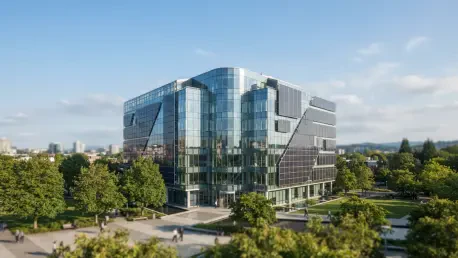

Integrating over 110,000 sensors and 3,200 network devices allows the Al Shera’a building to function as a fully autonomous cognitive environment. This architectural marvel, serving as the new headquarters for the Dubai Electricity and Water Authority, represents a massive paradigm shift in how urban spaces interact with both their inhabitants and the environment. By securing the world’s first SPIRE Diamond rating, the facility has transcended the traditional boundaries of smart infrastructure, setting an unprecedented benchmark for digital maturity. The certification, co-developed by UL Solutions and the Telecommunications Industry Association, validates the building’s excellence across six key categories, including life safety, health, and connectivity. Furthermore, its LEED Platinum status and Net-Positive designation confirm that it produces more energy than it consumes, a feat achieved through the masterful application of cutting-edge renewable technologies. This achievement underscores a commitment to creating sustainable, intelligent cities.
Digital Intelligence: Powering the Cognitive Core
The Infrastructure: Autonomous Systems and Real-Time Data
The operational soul of this landmark facility resides in its ability to process a staggering volume of data through advanced artificial intelligence and machine learning algorithms. Every square meter of the structure is saturated with connectivity, feeding information into a centralized brain that issues more than 1.9 million automated control commands daily. This constant stream of data ensures that lighting, cooling, and ventilation systems operate at peak efficiency, adjusting instantaneously to occupancy levels or external weather shifts. Instead of relying on manual oversight, the building leverages this cognitive framework to anticipate the needs of its occupants while minimizing waste. This shift from reactive management to proactive automation illustrates the potential for future urban developments to operate with minimal human intervention. By integrating nearly 100 independent systems into a unified smart application, the infrastructure eliminates silos and fosters a holistic ecosystem where every component works in perfect harmony.
Virtual Oversight: Digital Twin and Predictive Analytics
At the forefront of its technological arsenal is the sophisticated use of digital twin technology, which serves as a virtual replica of the entire physical structure. By merging Building Information Modeling with real-time big data analytics, engineers can perform complex simulations to identify potential bottlenecks before they manifest in reality. This predictive capability is essential for long-term asset management, as it allows for the proactive maintenance of mechanical and electrical systems, thereby extending their operational lifespan. Moreover, the digital twin provides a granular view of energy distribution, ensuring that every kilowatt generated by the on-site solar arrays is utilized or stored with clinical precision. This level of transparency across the building’s life cycle transforms how maintenance teams approach troubleshooting, moving away from scheduled checkups to condition-based interventions. The result is a highly resilient environment that maintains optimal performance levels regardless of the stresses placed upon the local utility grid.
Sustainable Architecture: A Global Benchmark for Urbanism
Resource Conservation: Net-Positive Energy and Design
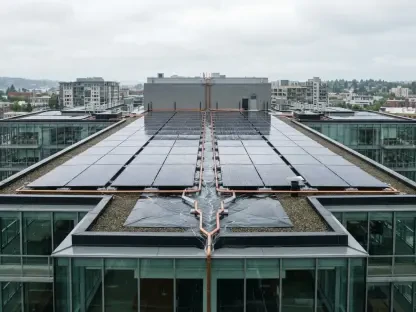
Sustainability in this context is not merely a design choice but a fundamental operational requirement that defines the building’s physical footprint. As the largest net-positive government building in the world, the facility utilizes high-efficiency solar panels integrated into its facade and rooftop to generate clean power that exceeds its annual requirements. This surplus energy is directed back into the municipal grid, supporting the broader mission of decarbonizing the city’s power sector. Beyond energy, the infrastructure incorporates advanced water recycling systems and high-performance insulation materials that dramatically reduce the overall environmental load. The design philosophy emphasizes a symbiotic relationship between high-tech solutions and nature, where the building itself contributes to the health of the surrounding urban area. By prioritizing the reduction of carbon emissions through structural efficiency, the project demonstrates that large-scale governmental operations can lead the charge in global climate action without compromising on functionality.
Global Evolution: Standardizing Intelligent Urban Development
The successful implementation of the Al Shera’a project established a definitive blueprint for the next generation of global smart cities. Urban planners and developers recognized that the integration of cybersecurity governance and resilient connectivity was no longer optional but central to the security of public assets. By demonstrating the viability of fully autonomous cognitive buildings, the initiative provided a clear path for other organizations to adopt standardized smart metrics like the SPIRE rating system. The project highlighted the necessity of moving toward data-driven energy policies that prioritize both human well-being and environmental stewardship. For future developments, the focus shifted toward scaling these localized successes into district-wide intelligent networks that shared resources and data dynamically. Investors and policymakers prioritized the upgrading of legacy systems to support these integrated frameworks, ensuring that sustainability became the default standard for all new construction. This transition proved that the convergence of AI and green tech was the only way forward.