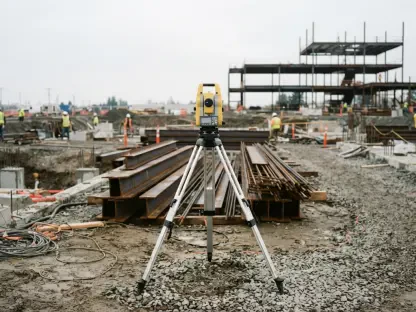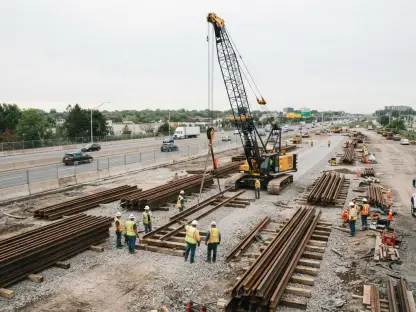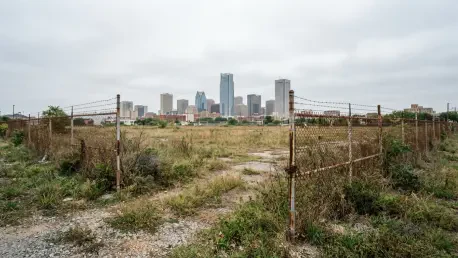

The shift into a hyper-supply phase has forced the Oklahoma City market into a period of absorption, halting the momentum of previous years. This atmospheric change in the local real estate climate has created a profound disconnect between the city’s glowing economic indicators and the visible stagnation of its downtown skyline. While municipal investments in a state-of-the-art NBA arena and a professional soccer stadium signal a robust future, the residential sector is struggling to keep pace. Specifically, over $200 million in planned multifamily developments have been abruptly shelved or canceled, despite a 90% occupancy rate in existing units. This development paralysis is not a reflection of a shrinking population but a symptom of a deeper financial freeze that has rendered large-scale urban projects nearly impossible to fund. As developers look at the empty lots in the Deep Deuce and Midtown districts, the contrast between the city’s civic ambitions and its private sector realities becomes increasingly stark for all observers. The current situation suggests that physical growth and economic health do not always translate into immediate construction activity when capital markets are in retreat.
Economic Pressures and Financial Bottlenecks
Why Institutional Investors Are Fleeing
The primary driver behind this construction halt is the extreme caution exhibited by institutional investors and national lenders who have historically fueled the city’s urban expansion. The transition from a low-interest-rate environment to one defined by elevated borrowing costs and general economic uncertainty has fundamentally broken the traditional multifamily business model that developers relied upon for the last decade. Large equity partners are currently facing what can be described as an appraisal gap that makes securing permanent financing a nearly impossible hurdle for new builds. In this environment, the perceived risk of urban apartment projects has skyrocketed, leading banks to tighten their lending criteria to levels not seen since the Great Recession. This massive withdrawal of capital is not necessarily a vote of no confidence in Oklahoma City specifically, but rather a broader retreat from the multifamily sector as a whole. As a result, projects that were once considered sure bets are now being viewed as liabilities that do not provide the necessary returns.
Securing the necessary equity for a $60 million or $80 million complex now requires developers to provide significantly more collateral while facing much stricter scrutiny of their projected rental income. Many developers find themselves in a situation where they can no longer bridge the gap between construction costs and the final valuation of the completed property. If a finished building only appraises at a fraction of its total development cost because of shifting market sentiment or projected rent plateaus, the bank may only offer a permanent loan that fails to cover the original construction debt. This underwater reality has caused traditional capital partners to flee the urban core in favor of safer or higher-yield investments, such as suburban ventures where costs are more manageable. Without a steady stream of institutional money, the ambitious vision for a denser, more walkable downtown remains largely on the drawing board. Developers are finding that the financial math simply no longer supports the heavy lifting required for vertical urban construction in the current market.
Learning From Failures in Peer Cities
Oklahoma City’s struggles are significantly exacerbated by a phenomenon known as market contagion, where the failures of other major secondary markets negatively impact local investment. Investors often group high-growth cities together, and the recent oversupply issues seen in places like Austin, Denver, and the Raleigh-Durham area have soured the national appetite for similar multifamily projects here. In those high-profile markets, a hyper-supply of luxury apartments led to a sharp collapse in projected rental income, leaving many developers unable to meet their financial obligations. Even though Oklahoma City hasn’t experienced that same level of saturation, institutional investors are applying the harsh lessons learned elsewhere to the local landscape. They fear that the dominant renter demographic—typically young, high-earning professionals—is not growing at a rate sufficient to justify a continuous wave of luxury high-rises. This regional skepticism has made it incredibly difficult for local developers to prove that their specific projects are immune to the trends.
The demographic shift has also played a role in this widespread investor caution, as the massive waves of corporate hiring seen in previous years have begun to stabilize. In the past, companies like Devon Energy and Chesapeake Energy were hiring thousands of young professionals at high salaries, creating immediate and intense demand for premium downtown living spaces. Without that specific type of explosive corporate job growth to act as a catalyst, investors are questioning whether the current population increase will translate into the high-rent tenants needed to sustain expensive construction. This uncertainty has created a feedback loop where the lack of new housing prevents more professionals from moving downtown, which in turn justifies the investor decision to withhold capital. The narrative surrounding secondary markets has shifted from one of unlimited potential to one of cautious wait-and-see. Consequently, Oklahoma City is being forced to wait for the national market to correct itself before it can resume its previous trajectory of rapid residential development.
Frequently Asked Questions About OKC Stagnation
Why Do Bank Appraisals Matter?
- The first stage of the process involves a developer taking out a short-term construction loan to fund the actual building phase of the project. This loan is usually temporary and is intended to be replaced once the building is finished and occupied.
- After the project reaches completion and a certain level of occupancy, the developer must seek a 30-year permanent loan to pay off the initial construction debt and provide a return to the original equity investors. This transition is the most critical moment in the entire lifecycle of a development project.
- Banks and financial institutions base the amount of the permanent loan on the building’s current appraised market value rather than the total amount of money spent on its construction. This value is determined by comparing the property to recent sales and current rental income in the surrounding area.
- If the final appraisal is lower than the total construction cost—a common occurrence in the current environment—the developer cannot secure enough funds to pay off the initial debt. This leaves the project in a precarious financial position that scares away potential investors and lenders.
The current appraisal crisis has become the single largest obstacle for developers who are trying to revitalize the urban core with high-density housing. When the market value of a completed project fails to meet the cost of the steel, labor, and land required to build it, the developer is essentially working at a loss from day one. This gap prevents the transition from construction financing to permanent financing, which is the mechanism that allows a project to be sustainable over the long term. Because banks are viewing the apartment sector as high-risk, they are offering much smaller loans that require developers to come up with even more cash upfront. This mismatch between cost and value has effectively frozen the development pipeline, as few firms are willing to risk millions of dollars on a project that might appraise for less than its cost upon completion. Until these valuations stabilize and the cost of capital decreases, the appraisal gap will continue to serve as a primary barrier to entry for any significant urban residential project.
How Much Has Construction Declined?
The impact of this financial freeze on the local economy is undeniably significant, with the latest data showing a 44% drop in apartment construction starts over the last twelve months. This sharp decline represents the loss of hundreds of millions of dollars in potential private investment and thousands of residential units that will no longer enter the downtown market. For a city that has spent decades trying to build a vibrant, 24-hour urban environment, this sudden halt in residential growth is a major setback to its long-term goals. The thousands of units that were canceled or delayed would have provided the critical mass of residents needed to support ground-floor retail, restaurants, and other small businesses. Instead, many of these planned projects have left behind empty lots or underutilized spaces that contribute nothing to the city’s tax base or urban vitality. The ripple effect of this decline is felt throughout the local economy, from architectural firms and construction crews to the suppliers of building materials.
Beyond the raw numbers, the stagnation of the residential skyline has physical and aesthetic consequences for the city’s ongoing revitalization efforts. Projects like the 1500 Broadway development were intended to be architectural landmarks that would enhance the walkability and character of the Midtown district. With its cancellation, the area loses a planned hub of activity that would have integrated townhomes with sophisticated retail spaces. Similarly, the halt of large-scale projects in Deep Deuce and NW 4th Street means that these neighborhoods will remain incomplete for the foreseeable future. The loss of these developments creates a sense of stasis that can discourage other types of investment, as businesses are often reluctant to open in areas where residential growth has stalled. While the city continues to see growth in terms of public infrastructure and suburban housing, the urban core is facing a period of architectural silence. This decline in construction activity serves as a stark reminder that municipal ambition alone cannot overcome the gravity of difficult global financial conditions.
What Is the Future Outlook?
While the current environment is often described as a dumpster fire for urban investors, the long-term fundamentals of Oklahoma City remain remarkably strong. The city’s ongoing economic expansion, combined with its status as a destination for major sporting events and new infrastructure, provides a solid foundation for an eventual recovery. Analysts believe that once the national interest rate environment stabilizes and the oversupply in peer cities is absorbed, the local market will once again become attractive to institutional capital. However, this recovery will likely require a shift in how projects are planned and executed to better align with the new financial reality. Developers may need to focus on smaller, more manageable projects or seek out alternative financing methods that do not rely solely on traditional bank loans. The future success of downtown housing will depend on the city’s ability to attract a more diverse range of residents beyond the high-earning luxury demographic. As the market corrects itself, the focus will likely shift toward providing a wider variety of housing types that can withstand economic fluctuations.
The era of rapid downtown expansion was characterized by a specific set of financial conditions that eventually evaporated, leaving the city to reconsider its path forward. Local stakeholders realized that maintaining urban momentum required more than just desire; it necessitated a closer synchronization of municipal policy, developer incentives, and global capital flows. Moving forward, the city could benefit from re-evaluating its building codes to allow for more cost-effective construction methods that still meet density goals. Providing targeted tax credits or infrastructure support could also help bridge the appraisal gap that has stalled so many projects. By taking these proactive steps, Oklahoma City can ensure that it is prepared for the next phase of the real estate cycle when it eventually arrives. The lessons learned during this period of stagnation will likely inform a more resilient and sustainable approach to urban development in the coming years. While the skyline may be static for now, the groundwork for the next wave of growth is being laid through more realistic planning and a renewed focus on economic stability.