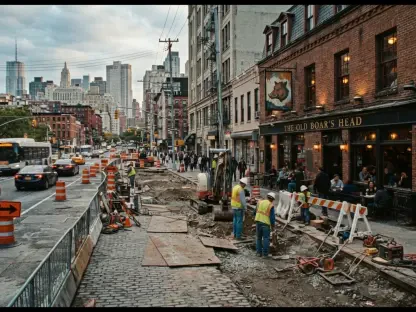

South Africa faces a daunting financial challenge as it seeks to bridge the massive investment gap required to meet its infrastructure goals by the end of the decade. The Department of Public Works and Infrastructure is executing a fundamental pivot in its operational philosophy, moving away from a legacy of centralized mega-projects that often failed to deliver immediate benefits to citizens. Under the guidance of Minister Dean Macpherson and the leadership of Infrastructure South Africa, the state is now prioritizing the rehabilitation and expansion of municipal-level utilities. This shift acknowledges that the true measure of governance is found in the consistency of water flow, the reliability of the power grid, and the efficiency of sanitation systems in local communities. By focusing on these essential services, the government aims to rebuild public trust and provide the necessary groundwork for private sector investment. This localized strategy ensures that infrastructure is a visible, functioning part of every South African’s daily life, fostering a resilient and economically active society from the ground up.
Economic Realities and the Move to the Local Level
Closing the Massive Investment Gap
To achieve the ambitious targets set by the National Development Plan 2030, the country must fundamentally alter its investment trajectory regarding gross fixed capital. Current data indicates that investment sits at roughly 13.75% of the Gross Domestic Product, yet the goal is to drive this figure toward 30% to stimulate sustainable economic growth. Infrastructure South Africa is leading the charge to close this gap by identifying and mobilizing an estimated R1.6 trillion in additional funding. This effort is not merely about accumulating capital but about ensuring that the deployment of resources occurs at a significantly faster pace than in previous administrative cycles.
The strategy involves an aggressive development pipeline that aims to push at least 20 major projects into the construction phase every year. This high-velocity approach is intended to provide a constant stimulus to the construction industry while addressing long-standing backlogs in critical areas. By maintaining a steady flow of projects from the planning stage to actual groundbreaking, the government hopes to create a predictable environment for contractors and laborers alike. This focus on throughput is essential for stabilizing the national economy and demonstrating that the state can deliver complex projects within reasonable timeframes, thereby attracting further domestic interest.
Prioritizing Visibility and Service Delivery
The government has recognized that the success of its current term will be judged by the tangible, day-to-day experiences of the population. Consequently, there is a renewed emphasis on the visibility of infrastructure improvements, moving projects out of abstract planning documents and into the physical reality of urban and rural neighborhoods. By focusing on municipal utilities, the state ensures that the most basic needs of citizens are met, which in turn provides a stable environment for local businesses to flourish. This is a pragmatic realization that large-scale national projects mean very little to a community that lacks consistent access to clean water or functional sewage systems.
Furthermore, this strategy involves a radical rethinking of how infrastructure projects are prepared and presented to stakeholders. It is no longer sufficient to simply allocate funds; the focus has shifted toward high-quality project preparation that ensures long-term sustainability and operational efficiency. By refining the preparation process, the government can guarantee that once a project is completed, it remains functional and beneficial for decades. This shift toward localized, visible delivery is intended to transform the relationship between the state and its citizens, creating a sense of progress that is felt at the household level rather than just reported in high-level economic briefings.
Innovative Mechanisms for Local Support
The Presidential Adopt-a-Municipality Initiative
A cornerstone of the new localized strategy is the Presidential Adopt-a-Municipality initiative, which functions as a specialized intervention to bypass traditional bureaucratic hurdles. This pilot program is strategically designed to target municipalities that possess a stable administrative foundation but struggle with the technical requirements of large-scale project management. By providing direct support in the drafting and submission of investment proposals, the national government can unlock local potential that has been dormant due to a lack of specialized expertise. This ensures that development is not stalled by red tape or a lack of technical personnel at the local level.
The initiative focuses on creating “ready-to-go” projects that can immediately attract funding and move into the execution phase. This approach prioritizes efficiency and practical outcomes over the long, drawn-out processes that have historically characterized municipal development. By selecting municipalities that are already well-run, the program minimizes the risk of financial mismanagement and ensures that resources are utilized effectively. This collaborative model between national and local government represents a significant shift toward a more agile and responsive infrastructure delivery system, aimed at creating immediate economic impacts in participating regions across the country.
Unlocking Capital Through Technical Packaging
The success of local infrastructure often hinges on the ability to translate technical needs into attractive investment opportunities for the financial sector. The uMshwathi Local Municipality serves as a benchmark for this approach, demonstrating how meticulous project packaging can lead to significant capital injections. By investing a modest amount into the technical preparation and financial structuring of its water programs, the municipality successfully secured R800 million in debt financing. This case proves that when projects are presented with clear risk profiles and robust technical data, they become highly viable options for institutional lenders and development banks.
This methodology emphasizes that the bottleneck in infrastructure delivery is often not a lack of money, but a lack of bankable projects. By focusing on the technical packaging of utilities, municipalities can tap into diverse funding streams that were previously out of reach. This approach empowers local leaders to take control of their developmental destiny by speaking the language of finance and engineering simultaneously. The government is now looking to replicate the uMshwathi model across other districts, encouraging a culture where local projects are prepared with the same rigor and sophistication as multi-billion-rand national contracts, thereby bridging the gap between local needs and global capital.
Strengthening Safety and Accountability
Digital Integration and Professional Verification
In response to recent structural failures that have highlighted gaps in oversight, the government is implementing a Central Digital Repository to modernize the regulation of the construction industry. This digital hub is designed to integrate data from various professional bodies and safety regulators, providing a single source of truth for project verification. Municipalities can use this platform to instantly check the credentials of engineering firms and ensure that all necessary safety permits have been obtained before any work begins. This level of transparency is intended to eliminate the presence of unqualified contractors who may otherwise exploit administrative silos.
Beyond simple verification, the repository serves as a proactive tool for monitoring project compliance throughout the construction lifecycle. By centralizing information, the state can identify patterns of negligence or identify firms that consistently fail to meet safety standards. This technological intervention represents a major step toward creating a safer built environment, where accountability is baked into the digital infrastructure of the state. The goal is to restore public and investor confidence in the safety and quality of South African construction, ensuring that the rapid pace of development does not come at the expense of human life or structural integrity.
Pursuing Criminal Liability for Structural Failures
The legal framework governing the construction industry is also undergoing a significant transformation through the Council for the Built Environment Amendment Bill. This legislation aims to introduce much harsher penalties for professional misconduct, specifically targeting negligence that leads to catastrophic structural failures. The government has taken a firm stance that administrative sanctions, such as deregistration from professional bodies, are no longer sufficient when lives are lost. Instead, the focus moved toward criminal prosecution, where gross negligence in design or construction was treated with the same severity as manslaughter or even murder in specific cases.
This hardline approach served as a clear signal to all professionals in the built environment that accountability must be absolute. By elevating the legal consequences of failure, the state sought to instill a culture of rigorous precision and ethical responsibility across the industry. The ultimate objective was to transform the nation into a high-speed construction site that operated with the highest possible safety standards. These measures ensured that the drive for rapid infrastructure development remained balanced with a commitment to public safety. Moving forward, the industry adopted these stringent standards as the new baseline, fostering an environment where technical excellence and legal accountability became inseparable components.