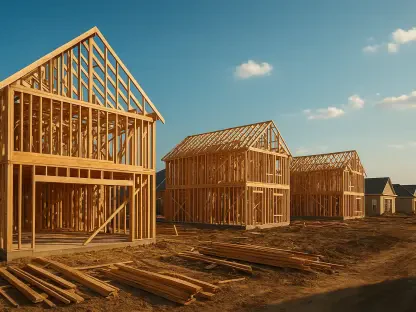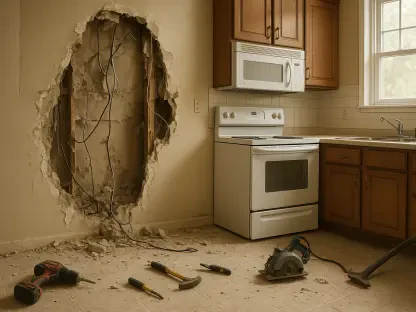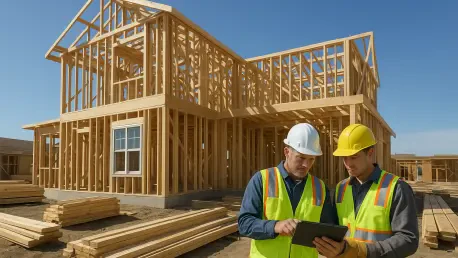

The dream of homeownership has increasingly felt like a moving target for millions of Americans who are navigating a market defined by record-high valuations and limited inventory. For decades, the narrative has persisted that the very rules designed to keep us safe are the primary drivers behind the skyrocketing cost of new construction. Critics often point to the International Residential Code as a cumbersome layer of red tape that adds tens of thousands of dollars to the price of a typical family home. However, this assumption is being challenged by rigorous economic analysis that looks beyond the surface-level stickers of building permits. Research conducted by Dr. Lawrence Powell tracks forty-five separate instances of code adoption to prove that regulatory compliance is a negligible factor in modern housing inflation. This revelation suggests that the real barriers to entry lie in more complex systemic issues rather than the structural integrity requirements that define modern residential architecture today.
Debunking the Myth: Construction Costs and Market Trends
Empirical Evidence: Data-Driven Insights from Alabama
The University of Alabama recently completed one of the most exhaustive longitudinal studies on the correlation between building standards and real estate pricing, covering a period that spans from 2026 back through the previous decade. By scrutinizing 2.7 million home sales across twenty-six states, the research team was able to isolate the specific impact of when a municipality or state adopted new iterations of the International Residential Code. Their findings directly contradict the long-standing industry talking point that every code update triggers a corresponding spike in market prices. In fact, the data demonstrated that there was no statistically significant upward trend in home prices immediately following the implementation of more rigorous safety standards. This empirical approach allowed researchers to filter out the noise of regional market booms, providing a clear view of how much—or how little—the price of compliance actually affects the final transaction between a builder and a buyer.
Identifying True Drivers: Macroeconomic Factors of Inflation
To understand why housing remains expensive, one must look toward the macroeconomic forces that truly dictate the trajectory of American real estate. The scarcity of buildable land in desirable metropolitan areas remains a massive hurdle, as zoning restrictions and land acquisition costs far outweigh the expenses associated with modern building updates. Furthermore, a persistent shortage of skilled labor has forced construction firms to offer higher wages to attract qualified tradespeople, which naturally increases the overhead for any new project. When combined with the volatility of mortgage interest rates, which have seen considerable fluctuations throughout the start of 2026, it becomes evident that the financial landscape of housing is shaped by factors far removed from technical specifications. These external pressures create a compounding effect on the total development cost, dwarfing the relatively minor administrative fees and material adjustments required by modern code.
Resilience: Redefining Value and Economic Safety
Redefining Affordability: Total Ownership Cost Analysis
A fundamental shift in how we define housing affordability is necessary to understand the true value of modern building codes. Many discussions focus exclusively on the initial sticker price, yet a house with a lower purchase price can quickly become an unmanageable financial burden if it is prone to frequent leaks, fire hazards, or structural failures. True affordability must account for the total cost of ownership over the lifespan of the property, including maintenance and emergency repairs. Modern codes serve as a vital safeguard, ensuring that a homeowner’s most significant investment remains a secure asset rather than a liability. By enforcing standards for energy efficiency and weatherproofing, these regulations actually lower the monthly operational costs for families, providing a more stable financial environment. Additionally, properties that meet the latest standards qualify for substantial insurance discounts, creating a measurable return on investment for the owner.
Strategic Solutions: Protecting Safety while Increasing Supply
The strategic response to the housing shortage in late 2026 involved a multifaceted approach that prioritized innovation without compromising on structural safety. Policymakers and developers shifted their focus toward stabilizing the broader economy to control inflation and mortgage costs, which were identified as the true barriers to affordability. By investing in the labor force and expanding financing options for low-income buyers, the industry successfully began creating a surplus of homes that were both inexpensive to purchase and built to last. It was recognized that modern building codes provided the essential foundation for these efforts, ensuring that new supply did not come at the expense of resident security. As communities moved forward, they embraced advanced construction techniques like modular building and increased urban density to meet demand. This shift ensured that the housing market remained resilient against future economic shocks while protecting the financial health of homeowners.