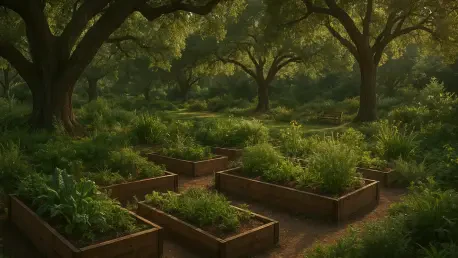

A strategic selection of California native and climate-adaptive species allows the garden to thrive in a low-light environment beneath the shade of heritage trees. This revitalized green space, now situated on the lawn of Kerckhoff Hall, emerged from a period of significant transition and community-led advocacy. When the original site faced closure in June 2025 due to university land management decisions, a swift response from students and local residents highlighted the deep necessity for urban sanctuaries. A petition gathering more than 1,300 signatures successfully pushed for the preservation and relocation of the initiative, proving that environmental stewardship is a non-negotiable priority for the university community. By moving to this more central and expansive location, the garden has evolved from a temporary experiment into a permanent fixture of campus life. It serves as a living response to the density of the urban landscape, offering a vital reprieve from the surrounding concrete.
Intentional Design for Mental Restoration
The origins of this project date back to 2022, when Camille Dieterle, an associate professor of clinical occupational therapy, recognized the severe impact of isolation and urban density on student health. Through a specialized grant, the garden was established to function specifically as a therapeutic landscape where the concept of “peace” was built into its very foundation. Following the move to Kerckhoff Hall, the design process incorporated extensive feedback from university stakeholders who emphasized the need for shaded reflection areas and sustainable landscaping. This collaborative approach ensured that the new quarter-acre site was not merely a replacement but an improvement over the original. By focusing on sensory experiences and quietude, the space addresses the unique psychological needs of a high-pressure academic environment. It represents a paradigm shift in how collegiate institutions view their physical grounds, moving away from purely aesthetic grass lawns toward functional, health-promoting ecosystems that support the long-term well-being of the population.
Designing the current layout required a sophisticated understanding of the local microclimate, particularly the challenges posed by the large heritage trees that dominate the Kerckhoff Hall lawn. These trees provide a natural canopy that is essential for cooling the urban environment, yet their extensive root systems and dense foliage create difficult conditions for traditional gardening. To address this, the planning team, which included graduate students in landscape architecture, selected a specific planting palette designed to thrive in partial shade with minimal water requirements. This strategy avoids the need for aggressive tilling that could damage existing roots while simultaneously promoting biodiversity. By utilizing climate-adaptive species, the garden actively reduces the university’s water footprint and maintenance costs, aligning with broader 2026 sustainability mandates. This careful integration of new flora with old growth illustrates a respectful approach to urban ecology, where historical campus elements are preserved while new, productive green spaces are woven into the existing fabric of the university campus.
Mindful Engagement Through Hands-on Stewardship
Central to the garden’s layout are 17 raised vegetable beds that serve as the primary site for food production and agricultural education. These structures are complemented by a rain garden system designed to capture and filter runoff from nearby residential buildings, showcasing regenerative water management in an urban setting. Despite these modern features, the daily upkeep of the space relies heavily on manual labor rather than automated irrigation. Choosing to water plants by hand is a deliberate pedagogical decision that forces participants to slow down and observe the subtle changes in each plant’s growth cycle. This tactile engagement provides a necessary contrast to the digital-heavy lives of students, fostering a sense of mindfulness that is often lost in fast-paced city environments. The inclusion of diverse textures and aromatic plants, such as various herbs and teas, enhances the sensory-rich nature of the site. This approach ensures that the garden is not just a place to observe nature but a place to actively participate in the rhythms of the natural world.
The operational success of the site is sustained through the President’s Sustainability Internship Program, which provides paid roles for students to lead environmental initiatives. These interns are responsible for a wide range of tasks, including soil preparation, crop rotation, and the coordination of community workshops. By placing students at the helm, the university ensures that the garden remains a dynamic space that evolves according to the interests and needs of the current student body. For those involved, the work provides a unique mental sanctuary that balances the rigors of academic life with physical, outdoor labor. Many participants report that the time spent in the garden helps them “unplug” from social media and academic stress, facilitating a deeper connection to the local environment. This hands-on model transforms the garden into a living laboratory where theoretical knowledge in urban planning and environmental science can be applied to real-world challenges. It creates a pipeline of future leaders who understand that urban wellness is deeply connected to how we manage our shared green spaces.
Future Pathways for Urban Agricultural Stability
Long-term viability for the garden depended on its ability to establish a permanent presence that was shielded from the fluctuating priorities of campus real estate development. The transition to the Kerckhoff Hall site marked a significant milestone in securing this future, as the university administration recognized the intrinsic value of maintaining urban farms. Stakeholders focused on developing a self-sustaining ecosystem where fruit trees and native groundcovers matured into a unified landscape. To ensure continued success, it was essential that the community remained vigilant in its advocacy for protected green zones. Future urban wellness initiatives were encouraged to prioritize the integration of these spaces into the core infrastructure of the city, rather than treating them as secondary amenities. Planners viewed the garden as a blueprint for scalable urban agriculture that could be replicated across other metropolitan campuses. By fostering an environment where natural growth and human activity coexisted, the project demonstrated that sustainability was a continuous process.
The evolution of the USC Peace Garden provided a clear roadmap for how urban institutions could reconcile the need for development with the necessity of environmental preservation. It was observed that the most successful spaces were those that invited organic community participation and prioritized the health of the ecosystem over aesthetic uniformity. Moving forward, the university explored ways to expand this model by incorporating more edible landscaping and biodiversity corridors throughout the campus. These efforts were supported by data showing that consistent access to green space significantly improved student retention and mental health outcomes. By maintaining a commitment to hand-stewardship and native planting, the garden established a precedent for mindful land use in Southern California. The project successfully bridged the gap between administrative policy and student-led activism, creating a collaborative framework for future sustainability goals. Ultimately, the garden’s journey emphasized that urban wellness was achieved through the persistent cultivation of both the land and the relationships that defined the campus community.