
The Council for the Regulation of Engineering in Nigeria has exonerated the building materials, shifting the focus of the tragedy toward errors in construction methodology. When a portion of the Gombe State House of Assembly Complex gave way on July 24, 2026, it immediately raised alarms regarding the safety of public infrastructure across the nation. The incident was not merely a structural failure but a human tragedy that resulted in the death of a construction worker and caused injuries to seven others. In the immediate aftermath, the Council for the Regulation of Engineering in Nigeria, commonly known as COREN, launched a forensic investigation to identify the technical and administrative lapses that occurred. This inquiry sought to provide a comprehensive roadmap for preventing similar disasters, focusing on whether the fault lay in the structural drawings, the quality of the concrete and steel, or the way the construction crew managed the site during the critical casting phase of the project.
Analyzing the Root Causes of Structural Failure
Surprisingly, the empirical evidence gathered by the COREN investigative panel, led by National Registrar Okorie Austin Uche, indicated that the fundamental structural integrity of the design was sound. Laboratory tests performed on samples from the site confirmed that the concrete possessed the necessary compressive strength to support the intended architectural loads, while the reinforcement bars matched the dimensions and grades specified in the original blueprints. Furthermore, the consulting structural engineer was found to be a fully qualified professional whose work had been properly sealed and verified by peer reviewers. This finding significantly narrowed the scope of the investigation, as it proved that the disaster did not stem from a flawed vision or the use of substandard raw materials. Instead, the focus turned toward the gap between the professional intent of the engineering drawings and the physical execution of those plans by the labor force on the building site.
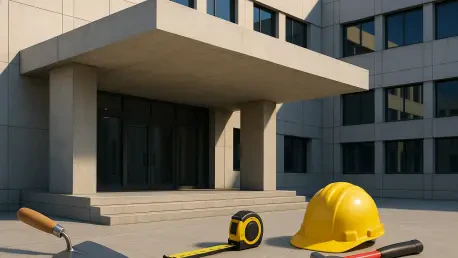
The investigation pinpointed the exact point of origin for the collapse at the reinforced-concrete cantilever entrance canopy, a feature that requires precise support during installation. It was discovered that the temporary formwork, which provides the necessary support for wet concrete until it reaches sufficient strength, was fundamentally inadequate for the task. Rather than utilizing a staged casting approach that would have allowed for a gradual distribution of weight, the contractor attempted to pour the entire canopy in a single, continuous operation. This decision placed an overwhelming amount of pressure on the temporary props, which were unable to sustain the massive weight of the fresh concrete. Consequently, the failure of these temporary structures led to the sudden and catastrophic descent of the canopy. This error underscores a critical misunderstanding of how temporary load-bearing systems must function during the most vulnerable stages of the construction process.
Oversight Gaps and State Intervention
Technical errors in formwork often reflect a deeper systemic issue regarding on-site management and the absence of qualified oversight. COREN’s report highlighted that the contractor failed to maintain a team of registered engineers to supervise daily operations, opting instead to leave a recent, unregistered graduate in charge of the site. This lack of professional experience meant that the warning signs of failing formwork and the risks of improper sequencing were overlooked until it was too late. Additionally, it was revealed that the working drawings used during the build had not received the final formal approvals from the relevant regulatory authorities, creating a dangerous disconnect between the design office and the field. Without the presence of a licensed professional to interpret the structural requirements and enforce safety standards, the project became a victim of procedural negligence that ultimately compromised the physical stability of the legislative complex.
In direct response to these revelations, the Gombe State Government, through Deputy Governor Manassah Jatau, has adopted a policy defined by the principle of safety over speed. While the contractor has been granted permission to resume the project, this continuation is strictly predicated on the adoption of a much more rigorous regulatory framework. The state has mandated the immediate appointment of a full suite of licensed professionals, including architects and structural engineers, to provide constant supervision of all remaining phases. This move is designed to ensure that every technical detail is executed according to the high standards required for a public landmark of this significance. By prioritizing structural integrity and professional accountability over the original completion schedule, the government is signaling that it will no longer tolerate the shortcuts that lead to such tragedies. This intervention serves as a necessary corrective measure to restore public confidence in state-funded building projects.
Building the Future: Lessons for the Construction Sector
The Gombe incident provides a stark case study for the wider construction industry in Nigeria, which has been plagued by a series of building collapses in recent years. COREN is utilizing the data from this specific failure to advocate for much stricter enforcement of professional registration laws and more frequent, unannounced site inspections by regulatory bodies. The investigation clearly demonstrates that a high-quality structural design is not a guarantee of safety if the people executing that design are unqualified or if the temporary support structures are treated as an afterthought. This case highlights a recurring vulnerability in the sector where the sophistication of engineering blueprints is undermined by the lack of technical competence at the labor level. Industry leaders are now being urged to reconsider how they manage project risks, moving away from a focus on minimizing costs toward a model that emphasizes the professionalization of every individual involved in the construction and supervision pipeline.
Looking forward, the Gombe Assembly Complex investigation established a vital precedent for how public works should be audited and managed to prevent future loss of life. The implementation of COREN’s recommendations was the first step in creating a more accountable environment where the safety of a structure was recognized as a shared responsibility between designers and site managers. Local authorities across the region began to integrate these findings into their own building codes, ensuring that formwork inspections became a mandatory requirement before any major concrete pours were authorized. The tragedy served as a catalyst for a national conversation about the necessity of bridging the gap between theoretical engineering and site-level application. By mandating the presence of registered professionals and verifying every stage of the build, the state ensured that the completed Assembly Complex stood as a testament to engineering excellence rather than a reminder of past failures. This systematic shift in oversight helped define a new era of infrastructure safety.