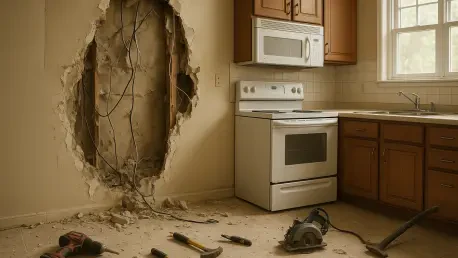

Despite the contractor’s claims that this was his first complaint, the family’s experience resulted in a formal recommendation for state investigation by the District Attorney. Tanya Hunsaker and her husband relocated from California to Blanchard, Oklahoma, seeking a fresh start through the purchase of a property that required extensive renovations. They hired Julian Collins of JC Construction to build a shop with living quarters and renovate their main home, investing nearly $70,000 into the project. However, the professional relationship dissolved as the contractor stopped appearing at the site, leaving the project in a state of dangerous disrepair. The financial impact was devastating, forcing the couple into debt and physical separation as the husband returned to California to earn enough to cover the mounting expenses. This case serves as a warning about the risks associated with large residential construction projects where trust is given without enough verification.
Failed Builds and Debt
Code Violations
The technical failures at the Hunsaker property were extensive, ranging from fundamental foundation errors to critical plumbing mistakes. While the contractor maintained that the project was nearly complete, subsequent municipal inspections told a very different story. Officials identified numerous code violations that rendered the new structures unsafe for occupancy, highlighting a profound disconnect between the contractor’s progress reports and the actual quality of the work. For a family that had invested their life savings into this transition, the discovery of these structural flaws was a crushing blow. The necessity of replacing improperly poured concrete and faulty wiring added tens of thousands of dollars to an already ballooning budget. Such failures illustrate the importance of third-party inspections during construction rather than waiting until the final stages. Relying on a contractor’s self-assessment led to hidden defects that jeopardized both safety and investment.
Family Separation
Financial fallout from the botched renovation extended far beyond the initial $70,000 investment. To address the immediate structural hazards and daily living costs, the Hunsaker family was forced to secure two additional high-interest loans, creating a cycle of debt that threatened their long-term stability. The emotional burden of this situation was compounded by the husband’s forced return to California for work, a move necessitated by the higher wage potential required to pay down the sudden liabilities. This separation left Tanya Hunsaker to manage the remnants of a construction site while struggling to meet basic needs alone. The narrative of a fresh start in Oklahoma shifted into a desperate attempt to survive a financial catastrophe. This scenario underscores the extreme vulnerability of homeowners who lack extensive legal protections when a professional agreement fails. The impact on the family’s domestic unity was as damaging as the physical defects left behind on their property.
Legal Steps and Recovery
State Investigations
In the wake of the failed project, legal mechanisms began to move toward holding the contractor accountable. A police report was filed detailing the discrepancies in the work performed versus the payments received, leading the District Attorney to recommend a full state-level investigation. Although the contractor defended his actions by citing scheduling conflicts, the consistency of the family’s documentation provided a compelling case for regulatory review. In the current year of 2026, consumers are increasingly utilizing digital paper trails and localized oversight boards to challenge professional misconduct. The Hunsaker case became a focal point for discussions regarding stronger licensing requirements and more aggressive enforcement of building codes in rural jurisdictions. While the legal process was notoriously slow, the formal involvement of the state signified a push for higher standards. Property owners remained vigilant by verifying all credentials and ensuring that every payment was tied to a milestone.
Restoration Work
Actionable change arrived for the Hunsakers through the generosity of Guss Elyassir, a local construction professional who chose to repair the damage at his own expense. He identified and corrected major structural errors, including faulty plumbing and foundation issues, effectively turning the nightmare back into a viable home. This intervention provided a clear roadmap for recovery, emphasizing the need for professional assessments from reputable firms when a project went awry. Homeowners were advised to prioritize transparent communication and never bypass the permitting process, which served as a vital safeguard against negligence. The Hunsakers eventually found a path toward stability, though the experience left them with a cautious perspective on professional trust. Future homeowners were encouraged to utilize performance bonds and comprehensive contracts that included specific clauses for arbitration. This resolution proved that while the legal system took time, community support and expert intervention mitigated the worst outcomes.