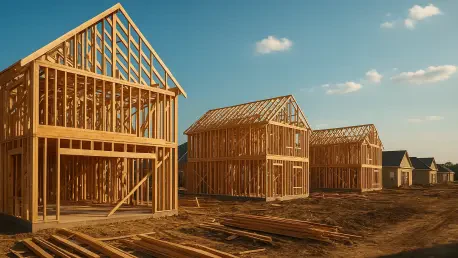

Modern housing policy must prioritize the physical attainability of modest homes over the complex manipulation of the national mortgage market. As 2026 unfolds, the United States continues to grapple with an affordability crisis that has fundamentally altered the path to middle-class stability for millions of working families. While federal efforts have historically pivoted toward demand-side financial instruments, such as credit score adjustments and interest rate subsidies, these mechanisms frequently bypass the core issue of inventory scarcity. The lack of entry-level housing has created a bottleneck that cannot be cleared through lending reform alone, as the demand for shelter far outstrips the available units. By focusing on the cost of borrowing rather than the cost of building, policymakers have inadvertently created a cycle of price appreciation that outpaced wage growth. To restore the dream of homeownership for the current generation, the emphasis shifted away from the financial engineering of debt toward the practical liberation of the construction industry from restrictive local regulations.
The Pitfalls: Why Financial Fixes Often Fail
Hidden Risks: Credit and Underwriting Reforms
One of the most significant risks associated with federal financial interventions involves the ongoing effort to streamline mortgage credit reporting by reducing the number of required reports. Current proposals suggest moving from a tri-merge system to a bi-merge or single-report model to save borrowers approximately one hundred dollars during the closing process. While this seems like a helpful cost-reduction measure on the surface, it introduces a dangerous level of uncertainty for mortgage-backed security investors who rely on comprehensive data. When lenders use fewer data points to assess risk, the potential for credit score discrepancies rises, leading investors to demand higher yields to compensate for the perceived volatility. Even a negligible one-basis-point increase in a mortgage interest rate can result in over one thousand dollars in additional interest costs over the life of a typical loan. Consequently, the attempt to provide minor upfront relief resulted in long-term financial burdens that far exceeded the initial savings.
Furthermore, the push to loosen underwriting standards in markets where credit is already highly accessible creates a feedback loop that actively harms affordability. In many regional markets, qualifying FICO scores are already as low as 620, with options for loans reaching 100 percent of the home value. Introducing even more permissive lending rules in high-cost areas does not magically create more houses; instead, it provides a larger pool of capital to chase an identical, limited supply of inventory. This dynamic leads to price capitalization, where the increased purchasing power of buyers is immediately absorbed by higher asking prices. Instead of helping a family buy a home they could not previously afford, financial engineering simply allowed them to take on more debt to purchase the same house that would have cost less under stricter credit conditions. This phenomenon reinforces the reality that manipulating the mortgage market is a zero-sum game that eventually enriches sellers at the expense of stability.
Market Dynamics: The Need for Physical Supply
Historical evidence, particularly from the pandemic-era surge, demonstrates that lower interest rates act as a catalyst for demand without addressing the underlying supply inelasticity. During that period, ultra-low rates significantly boosted consumer purchasing power, but because the construction of new homes cannot accelerate overnight to match sudden shifts in demand, the influx of buyers triggered a historic and rapid spike in property values. This surge proved that lowering the cost of borrowing without a corresponding increase in inventory fails to assist the buyer in any meaningful, lasting way. To combat this, the national focus returned to the production of starter homes, which are properties priced at less than four times a county’s median household income. Research highlights that these homes are still viable when built on smaller lot sizes, yet they remained legally prohibited in thousands of jurisdictions that prioritized large, expensive plots over dense, attainable residential developments.
To resolve the current deadlock, authority over land-use regulations moved from local municipalities to state legislatures, which began implementing legislative pre-emption strategies. By legalizing smaller lots in new subdivisions, states like Texas and Florida unlocked the potential for large-scale production of modest, owner-occupied units that met the specific needs of young families. This structural shift allowed the market to produce millions of additional units that were previously blocked by arbitrary density requirements and excessive minimum lot sizes. Policymakers ultimately realized that the path to stability required making it legal to build what people could actually afford, rather than subsidizing debt for what they could not. These actions ensured that the housing market operated on the principles of physical supply rather than financial manipulation. By removing the regulatory barriers to density, states provided a sustainable framework for future growth and successfully restored the promise of homeownership for citizens.