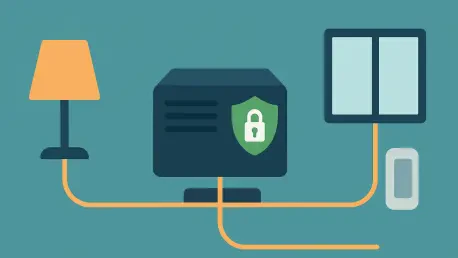

The HomeAgent acts as a centralized private cloud, utilizing three SATA 3.0 bays to provide secure local storage for high-definition camera footage and personal media libraries. This technological shift arrives at a pivotal moment when the modern smart home stands at a crossroads, caught between the sheer convenience of cloud-based assistants and a burgeoning demand for absolute digital sovereignty. For years, the industry’s most prominent players have relied heavily on remote servers to interpret voice commands and manage automation logic, a paradigm that essentially requires homeowners to trade their most intimate data for basic functionality. However, the emergence of high-performance local hubs is beginning to fundamentally challenge this long-standing status quo. By embedding sophisticated processing hardware directly within the home environment, these systems provide a seamless experience without requiring an external internet connection or falling prey to third-party data harvesting.
Building a Foundation for Autonomous Living
Local Intelligence: Hardware and Processing Power
Powering this move toward edge computing is the integration of specialized hardware designed to handle the heavy lifting of artificial intelligence without transmitting bits to a data center. The HA100 model exemplifies this trend, boasting a dedicated Neural Processing Unit capable of 26 teraops of AI processing power alongside 16GB of RAM. This robust foundation allows for the operation of Uliya, a proprietary local Large Language Model that serves as the central brain of the ecosystem, ensuring that sensitive conversations and daily behavioral patterns remain locked within the physical hardware.
Unlike traditional assistants that experience a round-trip delay when querying distant servers, local processing enables near-instantaneous responses to natural language commands and complex automation routines. This architecture significantly reduces the latency that often plagues voice-activated systems, creating a more fluid and responsive environment. By keeping operations local, the system remains fully functional even during internet outages, providing a level of reliability and security that cloud-dependent devices simply cannot match for homeowners prioritizing their digital safety.
Universal Connectivity: Protocol and Brand Integration
A truly effective local hub must transcend the limitations of brand-specific ecosystems by acting as a universal bridge between disparate manufacturers. To achieve this, the system incorporates comprehensive support for Matter, Thread, and Wi-Fi, allowing it to unify devices from diverse brands such as Philips Hue, Aqara, and Nanoleaf into a single, cohesive network. This level of interoperability is essential because it eliminates the need for multiple proprietary bridges that often clutter home networks and introduce potential security vulnerabilities or complex management hurdles.
By centralizing control through a single localized server, the system streamlines the user experience while maintaining a strict boundary between the home’s internal operations and the external world. This local coordination ensures that automated sequences—like safety sensors triggering emergency lighting—remain fully operational even during a total internet outage. Furthermore, removing the reliance on external servers protects the user from the subscription fatigue associated with premium cloud features, as advanced automation logic is processed by the hardware itself rather than a paywalled service.
Reshaping the Landscape of Personal Security
Storage Architecture: Private Cloud and Hybrid Functionality
Beyond its role as an AI coordinator, the integration of Network-Attached Storage functionality transforms the hub into a comprehensive private cloud. The device features two SATA 3.0 bays for general storage and a third specialized bay designed for Network Video Recorder setups, which handle high-definition security camera footage locally. Running on the UGOS Pro operating system, the unit functions as a high-speed media server and an encrypted vault for sensitive documents, effectively rivaling commercial services like Google Drive or Dropbox without the risks associated with third-party hosting.
This hybrid approach allows users to host their own media libraries and synchronize files across multiple devices without the burden of recurring monthly subscriptions. By keeping the physical storage under the user’s own roof, the risk of data being used for AI training by third-party corporations is effectively eliminated. Users retain full ownership over their digital assets, ensuring that historical records and personal memories are never subject to the changing terms of a service provider. This setup creates a secure environment for localized data that is accessible from anywhere but controlled by the owner.
Digital Independence: A Long-Term Strategic Outlook
The transition toward decentralized smart homes successfully demonstrated that local AI was no longer a theoretical concept but a viable alternative to the cloud-centric status quo. This shift offered unparalleled privacy but also placed the responsibility of maintenance and firmware security squarely on the shoulders of the homeowner. To maximize the benefits of this technology, users had to adopt a proactive stance toward network hygiene, ensuring that local routers were hardened against intrusion and that hardware updates were applied consistently to protect the internal data from external threats.
Moving forward, the industry might see a further bifurcation between low-cost, data-dependent devices and professional-grade systems that prioritize long-term autonomy. For those seeking to reclaim their privacy, the investment in local intelligence served as a critical first step toward a more secure digital future. To successfully navigate this change, consumers should evaluate their hardware based on protocol support and processing power rather than just initial price. By choosing hardware that functioned independently, homeowners ensured that their houses remained private sanctuaries for years to come.