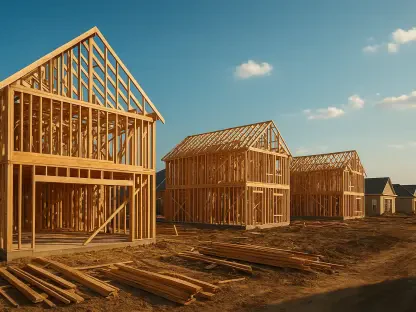

The Australian construction sector has seen a staggering 53% decline in the number of homes completed per hour worked, prompting calls for a radical regulatory overhaul. This alarming statistic, highlighted in the August 2026 interim report from the Australian Senate Productivity Committee, underscores a deepening crisis that threatens the very foundation of the nation’s housing market. For years, the industry has struggled under the weight of an increasingly dense National Construction Code, which has ballooned to over 2,200 pages of intricate and often contradictory requirements. This regulatory bloat is now identified as a primary driver behind the severe shortage of affordable dwellings, as the time and cost required to navigate these rules have made many residential projects financially unviable. The committee’s findings suggest that the current system acts as an anchor on progress rather than a safeguard for quality, necessitating a complete rethink of how the country manages its built environment. By proposing a move away from this labyrinth of rules, the government aims to restore a sense of balance that prioritizes both safety and the urgent need for a massive increase in housing supply to meet targets set for 2029.
Addressing the Crisis of Regulatory Complexity
The primary motivation for this systemic reform is the recognition that the current regulatory landscape has created a fragmented and slow-moving environment for builders and developers. As the building code expanded over the last decade, the administrative burden on small and medium-sized construction firms became nearly insurmountable. Every additional page of regulation introduces new layers of compliance, inspection, and documentation that do not always correlate with improved living standards for the end-user. This phenomenon has led to what economists are calling an affordability trap, where the cost of complying with every minor rule outweighs the actual functional benefits to the homeowner. By streamlining these regulations, the government believes it can remove the unnecessary friction that currently delays projects by months or even years. The goal is to strip back the bureaucracy to ensure that the process of building a home is as efficient as the modern manufacturing techniques that the industry is beginning to adopt in other parts of the world.
Furthermore, the complexity of the existing code has stifled innovation by forcing builders to adhere to rigid, prescriptive methods rather than allowing for creative engineering solutions. When a code is thousands of pages long, the fear of non-compliance often leads professionals to stick with traditional, slower building techniques simply because they are “safe” from a legal standpoint. This risk-aversion has prevented the widespread adoption of new materials and rapid assembly methods that could significantly lower the cost of entry for first-time buyers. The Senate committee argues that by simplifying the rulebook, the government can foster a more dynamic market where competition is based on efficiency and value rather than the ability to navigate a complex legal framework. This shift is seen as a necessary step to reverse the downward trend in labor productivity and ensure that the construction industry can keep pace with the growing demand for residential space across the continent.
Implementing the Basic Australian Standard
The proposed overhaul involves a dramatic reduction in the mandatory core of the building code, shrinking it from its current massive volume to a lean document of approximately 80 or 90 pages. This new framework, referred to as the Basic Australian Standard, focuses exclusively on the non-negotiable elements of residential construction. These essential requirements cover structural integrity, fire safety, and fundamental health standards such as proper sanitation and weatherproofing. By concentrating on these critical areas, the government intends to provide a clear and concise set of rules that every builder must follow, regardless of the project’s scale or location. This lean approach is designed to mirror successful regulatory models used in previous generations and in neighboring jurisdictions, where simpler codes have historically led to higher rates of home ownership and faster construction cycles without compromising the safety of the occupants.
Under this proposed two-tiered system, requirements that fall outside the core safety standards would be moved into optional modules. This means that high-level energy efficiency targets, advanced accessibility features, and specific aesthetic guidelines would no longer be mandatory for every single residential project. Instead, developers and homeowners would have the flexibility to adopt these modules based on their specific needs and budget constraints. Additionally, the government plans to introduce a National Pattern Book, which would serve as a library of pre-approved home designs and modular templates. Builders who utilize these pre-certified designs would be able to bypass many of the traditional, lengthy approval processes, as the engineering and safety checks would have already been completed at the national level. This move toward standardization is expected to be a game-changer for the affordable housing sector, allowing for the rapid deployment of high-quality homes at a fraction of the current administrative cost.
Navigating the Conflict Between Speed and Standards
The proposal to simplify the building code has sparked a significant and necessary debate among industry stakeholders regarding the inherent trade-offs between construction speed and long-term quality. Industry groups representing major home builders have largely thrown their support behind the changes, arguing that cutting red tape is the only viable path to lowering costs for consumers. They contend that the current system has become so restrictive that it effectively prevents the construction of basic, entry-level housing, forcing builders to focus on high-end projects to cover their overhead. From their perspective, a more flexible and simplified code will allow for faster innovation and a significantly higher volume of residential construction. These proponents believe that the market is capable of regulating secondary features like energy efficiency through consumer demand rather than through heavy-handed government mandates that drive up the initial purchase price.
On the other hand, environmental advocates, building surveyors, and some community groups have expressed deep concerns about what they describe as a potential race to the bottom. They worry that by making energy efficiency and accessibility features optional, the government may be encouraging the creation of a new generation of lower-quality housing that is more expensive to maintain in the long run. Critics argue that homes built without these features will be more costly to heat and cool, eventually placing a financial burden on future residents and increasing the overall environmental footprint of the housing sector. There is also a concern that a simplified code might lead to a decline in the rigorous oversight provided by building surveyors, potentially resulting in structural issues that only become apparent years after a project is completed. Balancing the immediate need for a high volume of affordable homes with the long-term goals of sustainability and durability remains the most challenging aspect of this proposed regulatory shift.
Redefining Professional Responsibility and Risk
The transition to a performance-based regulatory model will fundamentally change the day-to-day operations of building certifiers, engineers, and architects. In a simplified system, these professionals will be required to rely more heavily on their own expert judgment and technical expertise rather than simply following a prescriptive manual. While this shift offers a significant degree of freedom to innovate and tailor solutions to specific site conditions, it also carries a higher level of professional risk. Without the “shield” of a 2,200-page code to justify every decision, engineers and certifiers may find themselves more exposed to legal liability if their professional choices are challenged in court. This will likely necessitate a more robust system of peer review and a greater emphasis on continuing education to ensure that all industry practitioners are equipped to handle the increased responsibility that comes with a more flexible regulatory environment.
Architects, too, are facing a period of significant transition as the industry moves toward modern manufacturing methods and the use of the National Pattern Book. The role of the residential architect may shift from designing unique, one-off homes to developing the modular systems and templates that will define the next generation of affordable housing. While some in the profession worry that this move toward standardization could stifle architectural creativity, others see it as an opportunity to influence housing at a much larger scale. By creating high-quality, pre-approved designs, architects can ensure that even the most budget-conscious projects benefit from thoughtful layout and sustainable design principles. This transition marks a pivot in how design services are valued, moving away from individual project management and toward the creation of scalable systems that can be deployed across the country to solve the housing shortage.
Establishing a Resilient Framework for the Future
The Senate Productivity Committee thoroughly evaluated the successes of leaner regulatory models from neighboring jurisdictions and concluded that the previous prescriptive approach failed to deliver the necessary efficiency. It was determined that the old framework prioritized rigid adherence to secondary standards over the primary goal of providing functional shelter for the population. By analyzing the historical data on housing completions and regulatory expansion, the committee confirmed that the constant addition of new rules had reached a point of diminishing returns. The findings suggested that the most effective way to restore productivity was to return to a core set of standards that ensured safety while allowing the market to handle non-essential features. This retrospective analysis provided the necessary evidence to move forward with a proposal that sought to decouple basic structural requirements from complex environmental and social mandates.
Moving forward, the successful implementation of this new building code will require a coordinated effort between federal and state governments to ensure consistency across all regions. The next logical step involves the establishment of pilot programs in key growth corridors, where the Basic Australian Standard can be tested in real-world conditions. These pilots will provide critical data on the speed of construction and the actual cost savings achieved through the use of the National Pattern Book. Additionally, the insurance sector must work closely with regulators to develop new products that specifically cover modular and factory-built homes, addressing a current gap in the market that often hinders the financing of innovative projects. By focusing on these actionable steps, the industry can create a more resilient and productive housing sector that is capable of meeting the 2029 targets and providing a stable foundation for the nation’s future growth.