
Smart outdoor string lights now require robust Wi-Fi connectivity and weather-resistant controller modules to function reliably in garden environments. As residential landscape architecture continues to evolve, these lighting systems have transitioned from seasonal novelties into fundamental structural components that define the nocturnal character of modern homes. In the current market, the integration of illumination into patios, decks, and pergolas is no longer an afterthought but a primary consideration for property owners looking to extend their living spaces. The demand for durability has never been higher, leading to a sophisticated marketplace where material science meets aesthetic grace. Homeowners are now seeking solutions that can withstand the increasingly erratic weather patterns of 2026 while offering the precision control typical of high-end interior smart home systems. This shift has necessitated a move away from fragile, high-maintenance components toward robust, industrial-grade materials that provide consistent performance throughout the year. Consequently, the selection process involves a nuanced understanding of wattage, lumen maintenance, and material resilience to ensure that the chosen system provides both safety and style.
Standard Bearers: The Evolution of the G40 LED
The Brightown G40 LED set currently represents the industry benchmark for general-purpose residential applications, striking an ideal balance between nostalgic design and contemporary efficiency. These lights utilize a spherical globe shape that has become synonymous with upscale café culture, yet they are engineered with advanced internal circuitry that minimizes heat output and maximizes lifespan. The 2700K color temperature is specifically calibrated to produce a warm white glow that mimics traditional incandescent filaments, providing a level of comfort that is often missing from cheaper, blue-tinted alternatives. Because these units are designed with high-density LED filaments, they consume a fraction of the power required by older models, allowing for extensive 100-foot runs that do not significantly impact the household electric bill. The physical construction of the strand incorporates integrated hanging clips that simplify the mounting process, reducing the need for additional hardware and minimizing the risk of damage during installation.
Beyond basic functionality, the current iteration of the G40 standard includes significant improvements to the flexibility of the power delivery system. Modern sets are fully compatible with high-precision dimming modules, enabling users to shift the atmosphere from bright task lighting for outdoor cooking to a soft, romantic shimmer for evening relaxation. This versatility is essential in a landscape where multifunctional spaces are the norm, and the ability to adjust light intensity on the fly adds a layer of sophistication to the environment. While the length of these strands provides impressive coverage for large estates, testers have observed that the increased weight of commercial-grade cabling requires more substantial mounting points than the lightweight seasonal lights of the past decade. The trade-off for this added weight is significantly improved resistance to wind-induced swaying and electrical fatigue, ensuring that once the lights are installed, they remain operational regardless of the environmental stresses they face during the changing seasons.
Materials Science: The Shift to Shatterproof Acrylics
The most significant advancement in the 2026 lighting market involves the near-universal adoption of high-impact acrylics and polycarbonates in place of traditional glass bulbs. This transition was driven by the inherent vulnerability of glass in outdoor settings, where falling branches, hail, and high-velocity winds frequently caused catastrophic failures. Current top-performing models, such as the Enbrighten Vintage series, utilize solid acrylic bulbs that are virtually indestructible under normal residential conditions. In rigorous impact testing, these bulbs remained fully functional even after being dropped from significant heights onto concrete surfaces, showing no signs of cracking or internal structural damage. This level of durability is critical for families with children or pets, as it eliminates the hazard of broken shards in high-traffic areas like pool decks and dining patios. Furthermore, these modern plastics are treated with UV-resistant coatings that prevent the yellowing or clouding that plagued earlier generations of synthetic materials.
This shift in material composition has also allowed manufacturers to innovate in the realm of bulb geometry and internal aesthetics. Because acrylic can be molded with greater precision and thickness than glass, designers are creating “vintage” bulbs with complex interior textures that diffuse light more evenly, reducing glare and creating a more sophisticated visual profile. These bulbs are often hermetically sealed to the socket, preventing the ingress of moisture that traditionally led to corrosion and electrical shorts. By creating a unified, moisture-proof unit, manufacturers have significantly extended the maintenance intervals for these systems, with many sets now rated for tens of thousands of hours of continuous operation. The resulting reliability has fundamentally changed how homeowners approach their exterior design, moving away from temporary setups toward permanent, high-value installations that improve property value and safety. This marriage of advanced chemistry and practical design ensures that the ambiance of a space is never compromised by the failure of a single fragile component.
Permanent Installations: The Rise of Eave-Mounted Systems
Architectural lighting has seen a revolutionary shift with the introduction of permanent eave-mounted systems like the Enbrighten Eternity series, which provides a seamless look during the day and powerful illumination at night. Unlike traditional hanging strands that can look cluttered or out of place when turned off, these low-profile LED modules are designed to snap into tracks that are color-matched to the home’s trim or gutters. This “invisible” design allows the hardware to blend into the roofline, maintaining the clean aesthetic of the building’s architecture while remaining ready for instant activation. When illuminated, these lights provide a dramatic downlighting effect that highlights the textures of the home’s siding and provides a secure, well-lit perimeter. The installation of such systems marks a departure from DIY seasonal projects toward professional-grade upgrades that are intended to last for the home’s lifespan, reflecting a broader trend toward permanent landscape integration.
The technical complexity of these permanent systems is managed through centralized control hubs that integrate directly with the home’s smart infrastructure. This connectivity allows for granular control over individual segments of the roofline, enabling homeowners to create custom lighting scenes for different areas of the property. For instance, the lighting above a primary entrance can be set to a brighter, neutral white for security purposes, while the segments bordering a backyard lounge can be tuned to a warmer, softer glow. Because these systems are hardwired into the home’s electrical system, they eliminate the need for visible extension cords and exterior outlets that can be prone to weathering. The robust nature of the eave-mounted hardware also means that these lights are largely immune to the wind and ice damage that often plagues hanging strands, making them the preferred choice for homeowners living in regions with severe winter weather or high-wind environments.
Smart Ecosystems: Connectivity and App Integration
In 2026, the performance of outdoor lighting is as much about software stability as it is about physical hardware, with advanced app integration becoming a non-negotiable feature for high-end systems. Modern string lights often utilize a hybrid connectivity approach, combining Bluetooth for local, low-latency control with Wi-Fi for remote access and smart home automation. This dual-layered strategy ensures that the lights remain responsive even if the home’s main internet connection experiences a temporary outage. Brands like Govee have perfected this interface, offering intuitive smartphone applications that allow users to map their light strings and apply complex color gradients with a single tap. The ability to group multiple sets of lights across a large property into a unified “zone” has simplified the management of complex landscape designs, allowing for synchronized transitions that were previously only possible with professional theatrical equipment.
The integration of these systems into broader smart home ecosystems, such as Matter or advanced proprietary platforms, has enabled sophisticated automation routines that respond to real-world triggers. For example, lighting systems can now be programmed to brighten automatically when a smart doorbell detects motion or to shift toward a warmer amber hue as the sun sets, following the natural circadian rhythms of the residents. Furthermore, these apps provide valuable diagnostic information, such as real-time power consumption data and notifications if a specific strand or bulb requires attention. This level of oversight ensures that the lighting system operates at peak efficiency and allows for proactive maintenance before a minor issue becomes a total system failure. As software continues to play a larger role in exterior design, the focus has shifted toward creating user experiences that are both powerful and accessible, ensuring that the technology enhances the outdoor environment rather than complicating it.
Entertainment Features: Music Synchronization and Color Pulsing
For homeowners who prioritize social gatherings and festive atmospheres, the latest generation of smart string lights offers dynamic entertainment features that transform a simple backyard into a high-energy event space. Systems now come equipped with sophisticated microphones and digital signal processors within the controller modules, allowing the lights to analyze ambient sound and synchronize their patterns with the rhythm of the music. This music synchronization goes beyond simple flashing; modern processors can distinguish between bass and treble frequencies, assigning different colors or brightness levels to specific parts of the audio spectrum. The result is an immersive sensory experience where the environment pulses in harmony with the playlist, creating a professional, concert-like atmosphere for parties and celebrations. This technology has become increasingly popular for holiday displays, where synchronized light and sound can be used to create themed shows that entertain neighbors and guests alike.
In addition to audio reactivity, these systems offer a vast palette of millions of colors that can be customized down to the individual bulb. Users are no longer limited to a single static color or a few basic presets; they can now design intricate patterns that flow across the yard like a digital aurora. This capability is particularly useful for themed events, such as sporting celebrations, weddings, or national holidays, where specific color schemes are required to set the mood. The sophistication of the pulsing effects has been refined to ensure that transitions are smooth and fluid, avoiding the jarring stroboscopic effects that were common in early versions of the technology. By providing a platform for creative expression, these entertainment-focused lights allow homeowners to reinvent their outdoor spaces on a nightly basis, ensuring that the landscape remains as dynamic and vibrant as the people who inhabit it.
Sustainable Power: Advancements in High-Efficiency Solar
Solar-powered string lights have undergone a dramatic transformation, reaching a point where they can now compete directly with traditional corded systems in terms of brightness and reliability. The 2026 models use high-efficiency monocrystalline solar panels capable of generating significant power even on overcast days or in partially shaded environments. These panels are paired with high-capacity lithium-iron-phosphate (LiFePO4) batteries, which offer superior longevity and safety compared to older battery chemistries. This advancement means that a single day of sunlight can provide enough energy to power a 30-foot strand of shatterproof LED bulbs for up to 12 hours, effectively providing illumination from dusk until dawn. This independence from the power grid makes solar sets like the Brightech Ambience Pro an ideal solution for remote areas of a property, such as woodland paths or docks, where running high-voltage wiring would be prohibitively expensive or disruptive to the landscape.
The integration of intelligent power management systems has further enhanced the utility of solar lighting by automatically adjusting the brightness based on the remaining battery charge. On nights following a particularly cloudy day, the system can subtly dim the lights to ensure that the illumination lasts through the night, rather than cutting out abruptly. This “smart-dim” technology ensures that the lights are always available when needed, providing a reliable source of security and ambiance without any ongoing utility costs. Furthermore, the installation of solar lights is remarkably simple, as it requires no proximity to a power outlet and no complex wiring. This portability allows renters and homeowners to experiment with different lighting layouts without making permanent changes to their property. As sustainability becomes a core value in modern home design, these high-efficiency solar solutions offer a guilt-free way to enhance the beauty of the outdoors using nothing but the power of the sun.
Specialty Aesthetics: Flickering Flames and Cafe Shading
For those who seek a more nuanced or thematic approach to their landscape lighting, the market now offers specialty designs that mimic natural phenomena or historic architectural styles. Flickering flame bulbs, for instance, use complex internal LED arrays and logic controllers to replicate the organic movement and warm color spectrum of a real fire. These lights are particularly effective in fire pit areas or around rustic cabins where the presence of an actual open flame might be restricted or unsafe. The simulation is remarkably realistic, capturing the subtle dances of light and shadow that define a campfire atmosphere without the associated smoke or maintenance. This aesthetic choice provides a unique focal point for the garden, drawing the eye and creating a sense of timeless comfort that high-tech white LEDs often struggle to achieve.
In contrast, for a more structured and architectural look, many premium string light sets now offer compatible metallic shades, such as oil-rubbed bronze or brushed aluminum hoods. These shades serve a dual purpose: they elevate the visual appeal of the strand, giving it a high-end “Tuscan cafe” or “industrial chic” vibe, and they provide functional light control. By shielding the bulb from the top and sides, these shades direct the light downward onto the tables and walkways where it is needed most, while reducing upward light pollution and glare. This focused illumination is ideal for outdoor dining areas where guests need to see their food clearly but wish to avoid the blinding effect of an exposed bulb at eye level. The combination of these specialty aesthetics allows for a highly personalized lighting design that reflects the specific character of the home, proving that modern lighting technology can be as much about artistic expression as it is about functional utility.
Quality Control: Rigorous Durability and Impact Testing
The reliability of modern string lights is the result of standardized testing protocols that simulate the harshest environmental conditions imaginable. Every top-tier product in 2026 undergoes a “drop test,” where the bulbs and strands are subjected to multiple falls onto hard surfaces to ensure that shatterproof claims are rooted in reality. This testing is essential because string lights are frequently exposed to high winds that can whip the strands against siding or fences, and accidental falls during installation are a common occurrence. Models that pass these tests are constructed with thicker exterior shells and internal vibration-dampening components that protect sensitive LED filaments from mechanical shock. This structural integrity ensures that a single mishap does not result in a broken bulb and a hazardous cleanup process, providing peace of mind to property owners.
Environmental testing also extends to moisture resistance, with units subjected to high-pressure water jets and prolonged submersion to earn their IP (Ingress Protection) ratings. Special attention is paid to the “drop socket” design, where the bulb hangs several inches below the main electrical wire. This configuration prevents water from tracking along the wire and pooling inside the socket, which was the primary cause of short circuits in legacy designs. Testers also verify the performance of the lights in extreme temperatures, ensuring that the plastic casing does not become brittle in freezing cold or soft in intense summer heat. By quantifying these performance metrics, the industry has established a clear hierarchy of quality, allowing consumers to distinguish between temporary decorative items and true professional-grade equipment. This commitment to rigorous quality control has elevated the entire category, making modern string lights some of the most durable and reliable components of a home’s exterior.
Technical Specifications: Wire Gauge and Electrical Safety
A critical but often overlooked aspect of high-quality string lighting is the gauge and composition of the electrical wiring itself. Commercial-grade sets in 2026 typically utilize 14AWG or 16AWG copper wiring, which is significantly thicker and more conductive than the thin wires found in discount sets. This heavy-gauge wire is necessary for two reasons: it allows for longer continuous runs without a drop in voltage, ensuring that the last bulb on the strand is just as bright as the first, and it provides the physical strength required to support the weight of the bulbs over long spans. Expert installers emphasize that using undersized wire can lead to overheating and premature failure, especially when multiple strands are linked together. The insulation on these wires is also specialized, featuring heavy-duty rubber or PVC jackets that are treated to withstand decades of sun exposure without cracking or leaking.
Electrical safety remains the foundation of all lighting projects, and current standards require that all outdoor systems be integrated with Ground Fault Circuit Interrupter (GFCI) technology. This safety mechanism is designed to detect even the slightest current leak—such as what might occur if a wire is accidentally cut or if moisture enters a connection—and shut off power in a fraction of a second. In 2026, many high-end string light sets include a portable GFCI built directly into the plug, providing an extra layer of protection even if the home’s outlet is not modern. Furthermore, the transition to low-voltage LED systems has inherently increased safety, as these systems operate on currents that are much less likely to cause injury in the event of an accident. By adhering to these strict technical specifications and safety protocols, homeowners can enjoy their illuminated gardens with the confidence that their systems are built to the highest possible engineering standards.
Atmosphere and Design: Kelvin Ratings and Visual Comfort
The psychological impact of lighting is largely governed by its color temperature, measured in Kelvins, and the 2026 market offers a level of precision previously reserved for professional lighting designers. For most residential settings, the goal is to create a “warm” atmosphere that encourages relaxation and social interaction, which is why the 2700K to 3000K range remains the industry standard. This temperature range provides a golden, candle-like glow that complements natural skin tones and enhances the warm colors of wooden decks and stone patios. In contrast, higher Kelvin ratings, such as 5000K, produce a stark, blue-white light that is often perceived as clinical or harsh. While these “cool” temperatures are useful for security or task-oriented areas like a garage or a tool shed, they are generally avoided in lounge areas because they can suppress the body’s production of melatonin and disrupt the tranquil feel of the evening.
Visual comfort is further enhanced by the strategic use of lumens, which measure the total amount of visible light emitted by a source. The modern approach to string lighting favors a “layered” effect, where multiple low-lumen sources work together to provide comprehensive coverage without creating a single point of intense glare. Many high-quality sets now include advanced diffusion techniques, such as frosted bulb interiors or multifaceted lenses, that spread the light over a larger area to reduce eye strain. This focus on “soft” lighting ensures that the backyard remains an inviting space where guests can converse comfortably without having to squint against bright, unshielded bulbs. By balancing color temperature with controlled light output, homeowners can create a sophisticated nocturnal environment that feels both expansive and intimate, proving that the best lighting designs are those that focus on the human experience.
Professional Implementation: Tension Cables and Guide Wires
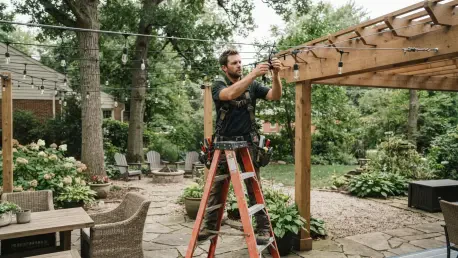
The final step in achieving a truly durable and professional-looking lighting installation involves using specialized support hardware designed to handle the physical stresses of the outdoors. For any span of string lights exceeding 15 feet, professionals in 2026 consistently used stainless steel tension cables, also known as guide wires, to provide structural reinforcement. The string light strand was then attached to this steel cable using specialized clips or UV-rated ties, rather than being pulled tight on its own. This method was crucial because it transferred the mechanical tension—caused by the weight of the lights and the force of the wind—away from the delicate copper wiring and onto the robust steel cable. This prevented the electrical cord from stretching or snapping over time, ensuring a straight, sag-free installation that maintained its aesthetic integrity for years.
The choice of mounting hardware was equally important in ensuring the longevity of the lighting system. Instead of relying on plastic adhesive hooks that could degrade in the sun or fail in the heat, researchers found that the most successful installations utilized stainless steel eyebolts and masonry anchors secured directly into the building’s structure. These heavy-duty mounting points provided a secure foundation that could withstand the significant “sail effect” created when high winds hit a long string of bulbs. By treating the installation as a serious engineering task, property owners avoided the common pitfalls of sagging lines and fallen strands that often occurred with more casual setups. The use of turnbuckles at the ends of the guide wires allowed for precise tension adjustment, enabling the lights to be tuned for a perfect visual line. This professional approach to installation ensured that the investment in high-quality hardware was protected by a mounting strategy that was equally robust and reliable.