
The global construction sector remains one of the most significant contributors to environmental degradation, currently accounting for more than one-third of total energy demand and associated greenhouse gas emissions. To address this pressing challenge, the COP31 International Sustainable Buildings Competition has emerged as a critical platform for showcasing architectural resilience and efficiency. Spearheaded by the UNEP-hosted Global Alliance for Buildings and Construction in collaboration with the COP31 Presidency of Turkey, this initiative serves as a bridge between conceptual design and measurable environmental impact. The competition is intentionally divided into two distinct tracks: the YeS Honor Awards, which celebrate excellence in sustainable design and facility management, and the World Championship for Energy Savings, which utilizes verified data to validate the performance of both new and retrofitted structures across various international climate zones.
Scaling Proven Technologies Through Design Excellence
Industry experts and representatives from Action for Market Transformation have reached a consensus that the primary obstacle to a greener future is not a lack of technology but the speed of adoption across global markets. The YeS Honor Awards successfully identified several pioneers who have mastered the art of integrating these existing solutions into complex architectural frameworks. For instance, the Passivistas project in Greece demonstrated that even an aging residential property can be transformed into a high-efficiency model through strategic retrofitting techniques that drastically lower thermal loss. Similarly, Okayama City Hall in Japan set a new standard for public infrastructure by achieving an impressive 53% reduction in energy consumption compared to national benchmarks. These examples highlight a shift toward utilizing localized data and specific environmental conditions to optimize mechanical systems and insulation strategies, proving that high-performance buildings are achievable in diverse urban settings.
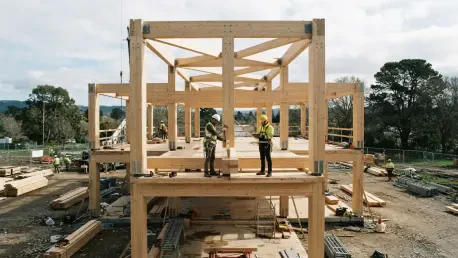
Beyond mechanical efficiency, the competition emphasized the importance of sustainable building materials and on-site energy generation as cornerstones of modern architecture. Monaco’s Villa Carmelha served as a prime example of this trend, utilizing a sophisticated timber structure to minimize the embodied carbon typically associated with steel and concrete construction. This project demonstrated that high-density urban housing could prioritize natural materials without compromising structural integrity or aesthetic appeal. In the United Arab Emirates, the Al Shera’a office building took this concept even further by achieving LEED Platinum status and designing for net-positive energy output. By incorporating extensive solar arrays and advanced water recycling systems, the facility provides more energy than it consumes, illustrating a transition from buildings that merely reduce harm to structures that actively contribute to the local grid. This movement toward carbon-sequestering materials and decentralized power production represents a fundamental change in how global developers perceive the long-term value of their assets.
Leveraging Empirical Data for Performance Verification
While design awards often focus on potential, the World Championship for Energy Savings provides the empirical evidence necessary for governments to modernize their building codes and environmental regulations. This track of the competition prioritizes measurable performance data, ensuring that theoretical efficiency translates into real-world operational savings. The Royal College of Surgeons in Ireland illustrated the effectiveness of this data-driven approach by securing a 40% reduction in energy use through refined control systems and operational improvements. Interestingly, this project utilized a performance-based financing model where the service provider receives payment directly from the energy savings achieved, removing the financial risk often associated with large-scale upgrades. Such models are vital for the widespread adoption of green technologies because they align financial incentives with environmental goals. By proving that energy efficiency can pay for itself through reduced utility costs, these initiatives offer a clear roadmap for institutional owners looking to decarbonize their portfolios while maintaining fiscal responsibility.
The global reach of the competition was further evidenced by achievements in the industrial and technological sectors of emerging economies, where rapid urbanization often clashes with sustainability targets. In Bangladesh, HAMS Garments Limited achieved a remarkable 78% reduction in operational carbon dioxide emissions, showcasing that manufacturing facilities can lead the way in environmental stewardship through smart resource management. Meanwhile, the CCFED Sci-Tech Innovation Building in China managed to keep its total energy consumption significantly below its strict allocated budget by leveraging passive ventilation and integrated solar power systems. Stakeholders in the global construction industry took significant steps toward a decarbonized future by adopting the verified methodologies showcased throughout the competition. Architects and engineers shifted their focus toward integrated design processes that prioritized early-stage energy modeling and material life-cycle assessments. Financial institutions also played a crucial role by expanding green lending programs that rewarded projects with high environmental performance ratings. To maintain this momentum, professional organizations emphasized the need for continuous workforce training in new installation techniques and digital monitoring tools.