
The Metropolitan Washington Airports Authority has fundamentally altered the trajectory of regional transit by awarding a $150 million contract to industry giants Jacobs and TYLin for the revitalization of Dulles and Reagan National. This strategic partnership serves as the operational engine for a multi-billion dollar modernization program designed to streamline passenger flow. As air travel demand hits record-breaking levels in 2026, this agreement provides the necessary staffing and oversight to transform these aging gateways into sophisticated, high-capacity international hubs. By exploring the scope of this massive investment, we can see how federal funding and private expertise converge to redefine the D.C. travel experience.
The Foundation: Why D.C. Air Infrastructure Needs to Evolve
For decades, Dulles and Reagan National have operated under the strain of outdated designs and increasing traveler volumes. While previous expansion efforts offered temporary relief, they often failed to address the deeper systemic inefficiencies of mid-20th-century terminal layouts. This $150 million agreement, which includes provisions to potentially reach $300 million from 2026 to 2036, represents a definitive move away from reactionary maintenance. It acknowledges that the D.C. region must evolve its physical and digital architecture to maintain its status as a premier global destination and a vital corridor for international diplomacy.
Strategic Modernization and Structural Overhauls
The collaboration between the airports authority and its private partners signifies a departure from traditional maintenance toward a philosophy of comprehensive facility renewal. This approach utilizes large-scale capital to address the bottlenecks of the past while preparing for the technical requirements of the next decade.
Enhancing Connectivity: The Impact of Package T at Dulles
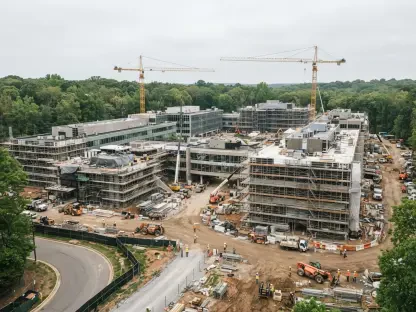
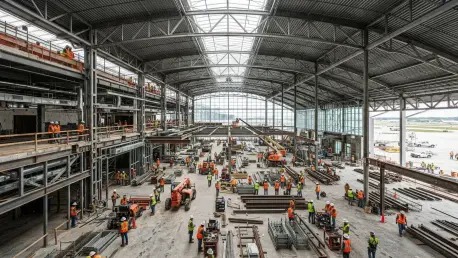
A cornerstone of the work at Washington Dulles is the ambitious Package T initiative, a project centered on expanding the airport’s underground transit network. This phase involves the construction of new concourse connectors and additional gate areas to bridge the gap between existing terminals and future expansion zones. By optimizing the physical layout, the airport aims to reduce walking distances and minimize the time spent in transit between connecting flights. These structural changes prioritize fluidity, ensuring the facility can handle the rising influx of international travelers with ease.
Integrated Mobility: Deploying Advanced Automation
Beyond traditional construction, the partnership prioritizes the deployment of smart mobility solutions to redefine the passenger journey. Plans include the installation of high-speed moving walkways and the integration of autonomous shuttle technologies designed to move travelers across the airport campus with minimal friction. This shift toward a smart airport model utilizes digital systems to manage congestion and provide real-time updates. By adopting these cutting-edge tools, the region is setting a new standard for how technology can alleviate the inherent stress of navigating sprawling aviation facilities.
Operational Oversight: Navigating Complex Project Management
Executing a multi-billion dollar overhaul requires oversight that transcends standard engineering, demanding specialized staffing and risk mitigation. The contract ensures that expert teams manage complex timelines and strict environmental regulations while keeping the airports fully operational. Challenges such as supply chain volatility remain persistent threats to large-scale infrastructure projects. However, a centralized management framework allows for better resource allocation and proactive troubleshooting, ensuring that federal investments translate into resilient, long-lasting transit assets.
The Future: Trends in American Aviation Infrastructure
The D.C. project is indicative of a massive wave of reinvestment across the entire American aviation landscape. From 2026 to 2028, major markets like Minneapolis-Saint Paul and Baltimore are seeing hundreds of millions in upgrades, while the Port Authority of New York and New Jersey manages a staggering budget for JFK and Newark. These investments highlight a national consensus that aviation hubs are the lifeblood of modern commerce. Future developments will likely focus on deep sustainability measures and biometric security integration to create a more seamless and secure global network.
Strategic Implementation: Lessons for Infrastructure Stakeholders
For those in the industry, the D.C. modernization project offers a blueprint for successful large-scale facility management. Long-term contracts with performance-based extensions provide the stability needed for decade-long projects, allowing teams to build institutional knowledge. Moreover, integrating technology at the design phase ensures that airports remain relevant as passenger expectations shift toward digital-first experiences. Stakeholders should prioritize modular growth and scalable systems to adapt to future innovations without requiring total terminal reconstructions.
Securing the Legacy: A Transformation Realized
The strategic allocation of this contract established a new precedent for how urban transit hubs transition into the smart-facility era. By prioritizing modular design and integrated staffing, the project solved the historical problem of operational silos. These advancements moved the D.C. region into a period of sustained growth, where efficiency and technology dictate the traveler experience. The initiative effectively transitioned Dulles and Reagan National into high-performance assets that redefined the standards of American aviation management.