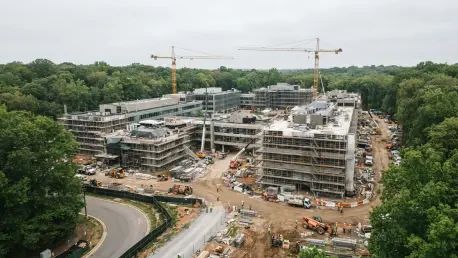

A sophisticated combination of senior debt, mezzanine financing, and historic tax credits is revitalizing underutilized corporate infrastructure in one of New Jersey’s wealthiest counties. The financial closing of this $63.6 million construction loan represents a pivotal moment for Peapack-Gladstone, where the former regional headquarters of Pfizer is being transformed into CopperWood Senior Living. This project is not merely a residential development but a strategic repurposing of a massive six-building corporate campus into a luxury community designed for an aging but affluent demographic. The sponsorship team, a collaborative joint venture between Distinctive Healthcare Capital Partners, Melillo Equities, and Pointsfive, identified a significant void in the local market for high-end senior housing options that offer both historical character and modern utility. By securing this multi-tiered capital stack, the developers have ensured that this legacy infrastructure will serve a renewed purpose as a premier residential destination in the Somerset County area.
The Financial Framework of Adaptive Reuse
The $63.6 million financing package was meticulously structured to address the complexities of a large-scale adaptive reuse project through several layers of capital. Aquarian Real Estate Partners, Lionheart Strategic Management, and Schroders Capital collaborated to finalize this arrangement, which includes a $49.3 million senior construction loan provided by clients of Aquarian Real Estate Partners. To bridge the remaining requirements, a $14.3 million mezzanine loan was issued by clients of both Lionheart and Schroders Capital, marking a significant first-time partnership between these institutional lenders. This transaction highlights a growing appetite among specialized lenders to fund niche residential assets, particularly those that involve converting established commercial real estate into alternative uses. The consensus among these financial entities underscores the viability of high-barrier-to-entry markets where luxury senior housing demand remains resilient despite broader economic fluctuations in the national real estate landscape.
Beyond the traditional debt layers, the project utilizes historic tax credit financing to preserve the unique architectural heritage of the 100-200 Essex Boulevard site. PNC Bank stepped in as the equity investor for these tax credits, while Midland Bank provided the necessary bridge financing to facilitate the early stages of construction. This integration of public incentives with private capital is essential for projects that aim to maintain the aesthetic integrity of legacy structures while updating them to meet current safety and hospitality standards. The use of such credits often serves as a catalyst for revitalizing entire neighborhoods, as it encourages developers to choose preservation over demolition. By leveraging these financial tools, the CopperWood development team is able to offset some of the inherent costs associated with retrofitting older corporate buildings, ensuring that the final product retains a sense of place and history that new construction projects often struggle to replicate in competitive high-end markets today.
Architectural Transformation and Community Standards
The physical transformation of the former Pfizer headquarters involves a comprehensive reimagining of six distinct buildings, which will eventually house a total of 129 units. Among these, the development plans include 118 independent living residences and 11 fully furnished units specifically designed for extended-stay residents. This unit mix is intended to cater to different levels of independence and personal preference, allowing residents to transition within the community as their needs evolve over time. Distinctive Healthcare Capital Partners will take the lead in overseeing the daily operations and management of the facility, ensuring that the high standards of luxury and care promised during the planning phase are maintained. The project represents a sophisticated shift in how developers view large-scale office parks, seeing them as potential canvases for residential innovation rather than obsolete liabilities. This approach preserves the existing footprint while significantly increasing the utility and density of the local land.
The completion of this financing phase for CopperWood served as a clear indicator of the robust demand for specialized senior living assets within the regional real estate market. To replicate this success, developers were advised to prioritize early engagement with historic preservation experts and tax credit investors, which optimized the financial efficiency of this particular transaction. The joint venture team successfully navigated the complexities of zoning and architectural design to reach this definitive construction milestone, proving that legacy assets were among the most valuable resources in the Somerset County landscape. As the initiative transitioned from a theoretical plan to a fully funded construction endeavor, it confirmed that the intersection of luxury hospitality and senior healthcare offered a stable path for long-term institutional growth. Property owners with underutilized office parks were encouraged to evaluate adaptive reuse as a primary strategy, ensuring future projects aligned with the lifestyle demands of an affluent population.