
The landscape of Puerto Rico is currently undergoing a radical transformation as the local government initiates a massive thirty-two-million-dollar federal investment strategy aimed at rectifying the lingering scars left by past environmental disasters. Governor Jenniffer González-Colón recently confirmed the obligation of these funds from the Federal Emergency Management Agency, signaling a new chapter in the island’s recovery journey. This financial injection specifically targets twenty-two distinct projects that span the breadth of the archipelago, addressing damages from Hurricane Maria, the 2020 earthquakes, and the more recent Tropical Storm Ernesto. By focusing on a multi-hazard approach, the administration seeks to move beyond temporary fixes toward a model of permanent stability. This allocation is not merely a budgetary line item but a strategic deployment of resources designed to harden public infrastructure, safeguard critical healthcare facilities, and stabilize the electrical grid against future threats.
Rebuilding Critical Infrastructure and Health Services
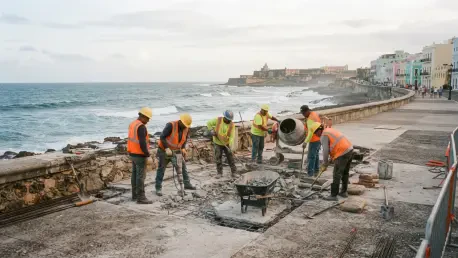
A significant portion of the newly released funds has been earmarked for the Department of Transportation and Public Works, with nearly twelve million dollars dedicated specifically to the restoration of the recreational promenade in Puerta de Tierra. This area in San Juan serves as a vital corridor for both residents and visitors, making its full rehabilitation a cornerstone of the broader infrastructure initiative. Beyond simple aesthetics, the project involves structural reinforcements that will allow the coastal walkway to withstand the increasing intensity of storm surges and erosion. The commitment to this specific site reflects a broader policy of reclaiming public spaces that were previously left in a state of disrepair. By revitalizing such a prominent landmark, the government aims to stimulate local economic activity and provide a safer environment for pedestrian traffic. This effort represents the single largest expenditure within the current obligation, underscoring its priority.
The healthcare sector remains a top priority in the current reconstruction phase, with the Menonita Hospital System receiving over six million dollars to fortify its facilities. These funds are being utilized to implement sophisticated impact-resistant upgrades across key locations in Aibonito and Caguas, as well as at Hospital CIMA. The primary goal is to ensure that medical services remain uninterrupted even during the peak of hurricane season when the demand for emergency care is highest. By installing reinforced roofing systems and hurricane-grade windows, these hospitals are transforming into resilient hubs capable of weathering extreme environmental pressure. This investment is crucial because it addresses the vulnerability of the island’s health infrastructure, which was exposed during previous seismic and atmospheric events. Ensuring that these buildings remain operational is a matter of public safety that transcends basic facility maintenance, providing security for the population.
Optimizing Energy Reliability and Academic Oversight
Parallel to healthcare improvements, the stabilization of the electrical grid is being addressed through a strategic allocation of nearly three million dollars to the Puerto Rico Electric Power Authority. These resources are specifically directed toward aggressive vegetation management in the Ponce region, a proactive measure designed to prevent tree limbs and foliage from interfering with high-voltage power lines during high winds. Historically, overgrown vegetation has been one of the primary causes of widespread outages following tropical storms, and this targeted maintenance program aims to mitigate that risk significantly. By clearing corridor zones and implementing regular maintenance schedules, the utility company can improve the overall reliability of the distribution network. This localized effort in the southern part of the island serves as a vital component of the broader grid modernization strategy, reducing the frequency of power failures while protecting the operational integrity of regional systems.
Educational institutions are also playing a central role in the reconstruction narrative, with the Pontifical Catholic University of Puerto Rico receiving over two million dollars. This funding is split between the implementation of emergency measures related to earthquake damage and the professional management of long-term recovery projects. By involving academic institutions in the recovery process, the administration is leveraging local expertise to ensure that project management standards are met with precision. This partnership highlights the importance of technical oversight in the execution of complex infrastructure repairs. Furthermore, the focus on seismic mitigation within the university system acknowledges the persistent geological risks that the island faces. Strengthening these educational environments ensures that the next generation of professionals can learn and work in facilities that meet the highest safety standards, fostering a more resilient academic community.
Implementing Long-Term Resilience and Global Cooperation
The administration transitioned away from reactive repairs and instead prioritized a sophisticated philosophy of long-term hazard mitigation across all twenty-two projects. Rather than returning infrastructure to its pre-disaster state, engineers and planners utilized federal resources to significantly harden facilities against future atmospheric and seismic events. This strategic shift meant that the new structures were designed to exceed current safety codes, providing a permanent solution rather than a temporary fix. Officials analyzed the specific failures seen during Hurricane Maria and the 2020 earthquakes to ensure that the same vulnerabilities were not repeated in the modern reconstruction phase. By investing in higher-quality materials and more robust engineering standards, the government successfully reduced the potential for future property damage and loss of life. This proactive stance on mitigation saved the island from the repetitive cycle of destruction, safeguarding the federal investment.
Continuous intergovernmental cooperation served as the essential mechanism for translating these massive federal obligations into tangible physical improvements for the residents. Governor González-Colón and the Puerto Rico Federal Affairs Administration established a transparent oversight framework that fostered a strong working relationship with federal authorities. This collaboration ensured that projects moved through the regulatory pipeline with efficiency, allowing for a steady flow of resources to the communities that needed them most. Looking forward, the focus shifted toward incorporating smart technology and sustainable energy solutions into the island’s newly reinforced foundation. These next steps involved the deployment of microgrids and the expansion of digital monitoring systems to provide real-time data on infrastructure health. The successful completion of these initiatives proved that a unified approach to recovery could provide a stable platform for future growth, preparing the island for both environmental and technical challenges.