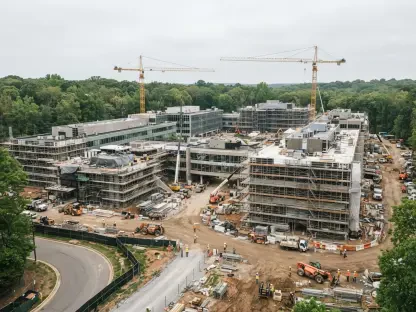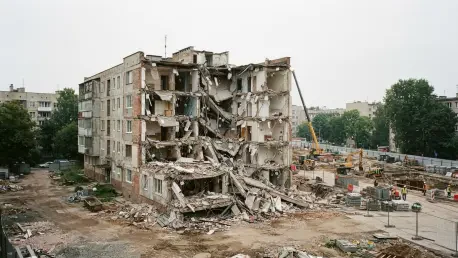

Despite the issuance of a stop-work order in May for deviating from approved plans, construction activity continued at the site directly adjacent to the fallen building. The catastrophic failure of the residential structure at 1321 Flatbush Avenue has sent shockwaves through the Brooklyn community, serving as a visceral demonstration of the lethal intersection between aging urban infrastructure and aggressive redevelopment. This disaster, occurring on a busy mid-week afternoon, claimed the lives of eight individuals and left eighteen others grappling with life-altering injuries and trauma. In the immediate aftermath, the focus has shifted from emergency rescue operations to a complex legal battle aimed at identifying the specific entities responsible for the structural compromise. The first significant civil action, initiated by resident Dengane Omari Jack, provides a detailed roadmap of the alleged negligence. Jack, a professional disc jockey known as Roots Outernational, returned to find his home reduced to rubble and his career-defining collection of rare reggae vinyl, valued at over $100,000, completely destroyed. His litigation against the property owners and neighboring developers highlights a cascade of ignored warnings and administrative failures that suggest this tragedy was not an unpredictable accident but a foreseeable consequence of systemic neglect. As the investigation widens, the legal system must now untangle the web of liability involving property management firms, engineering consultants, and construction contractors who allegedly prioritized project timelines over the safety of the residents living next door.
Management Negligence and the Failure to Maintain
A central pillar of the ongoing litigation involves the documented warnings provided by residents months before the building finally gave way. According to court filings, residents of 1321 Flatbush Avenue had observed significant structural fissures appearing near the building’s entrance as early as the previous autumn. Dengane Omari Jack reportedly took photographs of these worsening cracks and presented them to the property management, specifically naming Olufemi Falade as the recipient of these concerns. The lawsuit alleges that these warnings were met with indifference, with management claiming the issues were either beyond their responsibility or simply too difficult to repair. This dismissive attitude toward structural integrity is a recurring theme in high-density urban environments where property owners may feel insulated from the immediate consequences of deferred maintenance. By failing to conduct a professional structural assessment after being notified of visible damage, the management effectively allowed the building’s primary support system to continue deteriorating in secret. The legal argument asserts that this inaction constituted a fundamental breach of the landlord’s duty of care, creating a hazardous environment for every tenant under their roof. This failure to act is being presented not as a simple oversight but as a conscious decision to ignore clear physical indicators of structural distress, making the eventual collapse a result of long-term indifference to the residents’ basic right to a safe living environment.
The historical context of the management’s reputation adds a layer of systemic failure to the case, as the individuals involved have a long-standing record of regulatory scrutiny. Olufemi Falade, the property manager identified in the lawsuit, has been a frequent fixture on the Public Advocate’s “Worst Landlord” watch list, appearing on the registry six times within the last decade. This history of mismanagement suggests that the conditions at 1321 Flatbush Avenue were part of a broader pattern of neglect rather than an isolated incident at a single property. For years, Isolag Realty Group and its representatives allegedly operated with a philosophy that marginalized tenant safety in favor of minimizing operational costs. Such a track record is often used in civil litigation to establish a pattern of conduct, arguing that the defendants were aware of their obligations but chose to ignore them consistently. In the eyes of the law, this documented history of violations across multiple properties provides a compelling narrative of gross negligence. It underscores the reality that the collapse was the predictable endgame of a management style that prioritizes profit margins over the basic structural maintenance required for safe habitation. The lawsuit seeks to hold these entities accountable for their long-term refusal to adhere to the safety standards mandated for New York City residential buildings, using their past history as evidence that the tragedy at 1321 Flatbush was the culmination of a decade of administrative apathy.
Mechanical Stress and Improper Engineering Oversight
The physical catalyst for the collapse is increasingly being linked to the heavy excavation and construction activities occurring at the adjacent lot, 2625 Bedford Avenue. The lawsuit names several engineering and construction firms, including Townhouse Builders and LMW Engineering Group, alleging that their operations directly destabilized the soil and foundation of the neighboring residence. Modern urban construction frequently requires deep excavation for foundations and utility systems, which can exert immense pressure on the surrounding earth. If not properly shored or monitored, these vibrations and soil shifts can easily compromise the integrity of older structures nearby. The legal complaint points out that the contractors were utilizing heavy machinery and performing extensive soil displacement in a manner that was “proximate and substantial” to the structural failure. This highlights a critical tension in urban development where new projects are shoehorned into narrow lots between historic buildings that were never designed to withstand the stresses of modern construction techniques. The core of the liability claim rests on the idea that the construction teams failed to implement sufficient protective measures for the neighboring building, despite the inherent risks involved in such a dense urban environment. This lack of protection suggests a failure to recognize that the ground beneath a city is a shared resource, and any disruption to it carries an obligation to safeguard the stability of the entire neighborhood.
The vulnerability of the building was not an unknown factor, as pre-construction surveys had explicitly flagged the facade and general condition of 1321 Flatbush Avenue as being in “poor” status. This documentation is crucial because it establishes that the engineering and construction teams possessed “actual or constructive notice” of the building’s fragility before they began their work. Despite this knowledge, the lawsuit alleges that the defendants proceeded with high-impact excavation without providing the necessary structural reinforcement or shoring that a compromised building requires. Professional engineering standards dictate that when a neighboring structure is identified as being at risk, additional safety protocols must be integrated into the construction plan. By continuing with the project without these safeguards, the firms involved are accused of professional negligence and a failure to adhere to the standard of care expected in the industry. This level of failure is particularly egregious when the documentation confirming the building’s instability was already in the hands of the developers. The legal argument maintains that the contractors had a professional and ethical obligation to halt or modify their work to protect the lives of the residents next door, yet they chose to proceed with their original, more aggressive timeline. Consequently, the focus of the litigation is not just on what happened during the excavation but on the decision-making process that allowed hazardous work to continue despite the documented fragility of the adjacent structural supports.
Regulatory Gaps and the Defiance of Stop-Work Orders
The administrative history of the 2625 Bedford Avenue site reveals a disturbing pattern of non-compliance with city-mandated safety regulations. In the months leading up to the disaster, the Department of Buildings issued multiple citations and stop-work orders for various safety violations, including the failure to provide adequate netting and sidewalk protection. Despite these official interventions, the construction crew reportedly continued their activities in open defiance of the city’s directives. This trend illustrates a broader issue within the urban construction industry where developers may treat fines as a predictable “cost of doing business” rather than as urgent mandates to address life-threatening hazards. When financial penalties are minor compared to the potential profits of early project completion, the deterrent effect of city regulations is severely diminished. The lawsuit highlights how this culture of defiance created an environment where safety protocols were viewed as optional hurdles rather than essential protections. This administrative arrogance meant that the warnings issued by the city were ignored just as casually as the warnings issued by the tenants, culminating in a situation where the regulatory system was functionally bypassed by those it was meant to oversee. The lawsuit argues that this disregard for legal authority was a major contributing factor, as it allowed the conditions that eventually caused the collapse to remain unaddressed for an extended period.
The timeline immediately preceding the collapse is particularly damning, as a major stop-work order was issued just a week before the building fell. This order was specifically related to the project deviating from the approved engineering plans, a violation that typically indicates a significant risk to the structural stability of the site and its surroundings. However, the work resumed shortly thereafter, leading many to question the efficacy of the city’s enforcement mechanisms. The consensus among safety experts is that if the stop-work order had been properly enforced and the deviations corrected, the collapse might have been avoided entirely. The fact that the site was allowed to remain active after repeated serious violations points to a systemic breakdown in the oversight process. While the city itself is not the primary target of this specific litigation, the details provided in the lawsuit paint a picture of a regulatory environment that lacked the necessary teeth to prevent a foreseeable disaster. This failure of the safety net allowed a dangerous situation to escalate from a series of paperwork violations into a lethal structural failure. The legal proceedings will likely scrutinize how and why the work was permitted to continue when the risks were so clearly documented in the Department of Buildings’ own records, suggesting that administrative failures were just as responsible for the tragedy as the physical actions of the contractors on the ground.
Systemic Reforms: Moving Toward Structural Accountability
Beyond the technicalities of building codes and engineering plans, the human cost of the collapse remains the most poignant aspect of the tragedy. For residents like Dengane Omari Jack, the event resulted in the total destruction of their personal history and professional future. Jack’s collection of rare reggae vinyl was not just property; it was a curated archive of cultural heritage that formed the basis of his livelihood. The total loss of his home and records exemplifies the profound displacement felt by all eighteen survivors, many of whom were left with nothing but the clothes on their backs. The community’s response, including a fundraising campaign that raised over $12,000 for Jack, reflects a collective recognition of the injustice faced by the victims. However, financial charity cannot replace the lives lost or the sense of security that was shattered when their homes crumbled. The litigation seeks to address this by pursuing not just compensatory damages for property loss but also punitive damages to penalize the defendants for their reckless disregard for human life. The legal battle serves as a voice for the displaced, ensuring that their suffering is not categorized as a mere statistic in a city report but is recognized as the result of catastrophic corporate and administrative failure, pushing the courts to establish a precedent that prevents similar disregard for tenant safety in the future.
The litigation against the entities involved proved to be a watershed moment for Brooklyn’s housing laws, signaling a shift toward more aggressive enforcement of structural safety. The legal landscape surrounding the 1321 Flatbush Avenue disaster evolved into a dual-pronged effort for accountability, involving both civil litigation and a criminal inquiry by the Brooklyn District Attorney. This comprehensive approach indicated that the justice system viewed the event as more than a matter of insurance settlements; it was treated as a potential crime involving criminal negligence. Moving forward, the industry must adopt more stringent protocols for pre-construction surveys, ensuring that they are not merely checked boxes but are active guides that dictate specific safety requirements for fragile neighboring structures. Developers and contractors should expect increased scrutiny and significantly higher penalties for ignoring stop-work orders, as the current system proved insufficient to protect public safety. There is a pressing need for a centralized, real-time monitoring system that links structural sensors on at-risk buildings directly to city enforcement agencies, providing an early warning system that does not rely on landlord cooperation. The tragedy demonstrated that the safety of the city’s aging infrastructure cannot be left solely to the discretion of those with a financial interest in the speed of development. In the years following this event, the focus remained on transforming these hard-learned lessons into enforceable mandates that prioritize the preservation of human life over the expansion of the urban skyline.