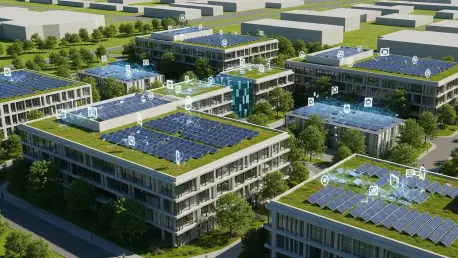

The sustainable construction industry stands at a pivotal juncture as the rollout of LEED v5 begins to reshape how stakeholders perceive and validate environmental excellence across the built environment. For years, building owners and developers have operated under a paradigm where certification was treated as a static achievement—a goal reached at the moment of construction completion and rarely revisited with technical rigor. However, as energy demands and climate commitments intensify throughout 2026, the utility of traditional certification frameworks is being scrutinized by institutional investors and regulatory bodies alike. The transition away from the established LEED v4 protocols signifies more than just a routine update; it represents a fundamental pivot toward operational accountability and long-term transparency. Organizations are now looking beyond the prestige of a physical plaque to determine if their assets are truly delivering on the efficiency promises made during the initial design phases. This evolution is essential for aligning architectural innovation with the practical, day-to-day requirements of a carbon-conscious economy that no longer accepts theoretical excellence as a substitute for measurable results.
The Limitations of Prescriptive Certification
Part 1: The Evolution of Design Standards
Historically, certification systems like LEED Building Design and Construction (BD+C) provided a necessary roadmap for a market that lacked a unified language for green development. These models successfully established a baseline for environmental responsibility by rewarding specific design choices, such as the selection of low-flow fixtures, high-performance glazing, and the use of recycled materials. This prescriptive approach was instrumental in educating the industry and creating a standard of care that did not exist previously. However, as the industry has matured, these requirements have occasionally become overly granular, leading to a focus on individual components rather than the holistic performance of the building. The result is often a “check-the-box” mentality where the primary goal is to satisfy a list of specific requirements to earn points, regardless of whether those choices actually lead to the most efficient outcome for that specific project or climate zone.
This focus on predefined standards has created a gap between what is modeled during the design phase and what is actually observed once the building is occupied and operational. In many cases, a project might achieve a high certification level based on its architectural intent, only to underperform significantly due to poor systems integration or unexpected occupant behavior. The prescriptive model essentially asks “did you install the right things?” whereas the market is now asking “does it actually work?” This disconnect has led some critics to argue that the administrative burden of documenting compliance with prescriptive credits can divert resources away from more impactful energy-saving strategies. As building technology becomes more sophisticated, the limitations of these static frameworks become more apparent, necessitating a shift toward more flexible, results-oriented evaluation methods that better reflect the complexities of modern engineering.
Part 2: Addressing the Administrative Burden
The administrative weight of traditional certification has often been cited as a major hurdle for project teams, where the process of validating effort becomes as time-consuming as the design work itself. Verifying the specific designations of every piece of equipment or the exact chemical composition of every sealant requires exhaustive documentation that can overwhelm small teams and inflate project costs. While these details are important for material health and basic efficiency, the sheer volume of paperwork required by older versions of LEED has sometimes obscured the broader goal of significant carbon reduction. Savvy building owners have begun to realize that a high point total does not always equate to a lower utility bill or a more comfortable indoor environment. When the “paper trail” becomes the primary focus, the actual environmental progress can become a secondary concern, leading to a loss of value for those who view certification as a strategic investment rather than a marketing exercise.
Furthermore, the prescriptive trap often discourages innovative solutions that do not neatly fit into existing credit categories. For instance, a project team might want to implement a novel passive cooling strategy that significantly reduces energy use but finds it difficult to earn points because the strategy does not align with the specific equipment requirements of the current rating system. This creates a rigid environment where teams are incentivized to stick to proven, credit-yielding technologies rather than pushing the boundaries of what is possible. To maintain its relevance, the certification process must evolve to prioritize actual environmental impact over the mere fulfillment of administrative criteria. By moving toward a model that values performance over documentation, the industry can reduce the “soft costs” of green building and redirect those funds into the implementation of advanced technologies and better building management practices.
Modern Frameworks for Verifiable Success
Part 1: Transitioning to Performance-Based Metrics
Industry leaders are increasingly adopting outcomes-based frameworks that verify how a building performs in the real world rather than relying solely on design-phase predictions. A prominent trend involves applying LEED Operations & Maintenance (O+M) principles to new construction projects, effectively bridging the gap between design and reality. Under this approach, building owners may receive an initial certification, but final validation is withheld until at least one full year of operational data—covering energy, water, and waste—is collected and analyzed. Supported by digital monitoring tools like the Arc platform, this methodology ensures that the efficiency promised in the blueprints is actually realized in the mechanical room. This shift creates a much higher level of accountability for the design and construction teams, as their success is tied to the long-term functionality of the building rather than just the handover of the keys.
This movement toward verifiable data is also reflected in how projects utilize real-time monitoring to adjust building systems on the fly. Instead of a “set it and forget it” mentality, performance-based tracking encourages ongoing commissioning and active management of building assets. By integrating smart meters and IoT sensors directly into the certification process, owners can receive constant feedback on their progress toward sustainability goals. This data-driven environment allows for the identification of inefficiencies almost as soon as they occur, preventing minor maintenance issues from spiraling into major energy drains. The use of platforms like Arc enables building managers to compare their performance against global benchmarks, providing a clear picture of how their asset stacks up against similar structures worldwide. This level of transparency is becoming a requirement for institutional investors who want to ensure that their real estate portfolios are truly meeting the environmental, social, and governance (ESG) criteria they report to their shareholders.
Part 2: Verifying Health and Wellness Standards
The evolution toward performance-based tracking is not limited to energy and water; it has also transformed how the industry approaches human health and wellness. The WELL Performance Rating serves as a prime example of this shift, offering a streamlined, data-heavy alternative to traditional documentation-heavy standards. Rather than focusing on the “potential” for a healthy environment through specific architectural features, the WELL Performance Rating emphasizes tangible, measurable factors like indoor air quality, acoustics, and lighting through rigorous field testing. This approach uses specialized sensors and third-party verification to prove that the interior environment is healthy at any given moment. For occupants, this provides a much higher degree of confidence, as they are no longer relying on a design-phase promise but on real-time evidence that the air they breathe and the light they work under are optimized for their well-being.
Moving away from theoretical modeling and toward empirical evidence ensures that the health benefits of a building are not just architectural intent but a living reality. For instance, instead of merely checking if high-efficiency air filters were installed, performance-based standards require testing the actual particulate matter and volatile organic compound levels in the air during typical occupancy hours. This level of scrutiny forces a more disciplined approach to building operations, ensuring that ventilation systems are functioning correctly and that cleaning protocols are effective. This transition is particularly significant in the wake of increased public awareness regarding indoor environmental quality, as tenants and employees now demand proof of a safe and healthy workplace. By prioritizing field-tested results, these frameworks provide a robust and defensible way for building owners to demonstrate their commitment to occupant health, turning “wellness” from a vague concept into a quantifiable asset.
Strategic Outlook for Institutional Owners
Part 1: Integrating Design and Operations
For large-scale institutional owners, such as university systems and healthcare networks, the shift toward outcomes-based validation offers substantial long-term operational advantages. These organizations typically hold onto their assets for decades, meaning that the lifecycle cost of a building is far more important to them than the initial construction budget. Frameworks that prioritize performance encourage the early involvement of building operators during the design phase, creating a crucial feedback loop that continues long after the construction crew has departed. This integrated approach ensures that the facilities teams who will eventually manage the building have a say in the selection of systems, making the structure easier and cheaper to maintain over its lifetime. By aligning the goals of the architects with the needs of the operators, institutional owners can avoid the common pitfalls of over-complicated designs that are difficult to manage in practice.
Furthermore, this integration allows organizations to identify and address underperforming assets across an entire real estate portfolio rather than focusing on a single high-profile project. When data is collected consistently across multiple buildings, it becomes possible to identify patterns and scale successful efficiency strategies that have proven effective in the field. For a university with dozens of buildings, the ability to see which HVAC configurations are actually delivering the best results—and which are failing to meet expectations—is invaluable for making informed capital improvement decisions. This data-driven management style transforms building certification from a one-time event into a continuous improvement process. Ultimately, the goal for institutional owners is to create a self-sustaining cycle where performance data informs future design standards, leading to a portfolio of buildings that are increasingly efficient, resilient, and cost-effective to operate.
Part 2: Enhancing Asset Value through Performance
The sunset of LEED v4 and the emergence of LEED v5 provide a strategic opportunity for organizations to rethink their internal design and construction guidelines. While traditional certification remains a powerful marketing tool for commercial developers looking to attract high-end tenants, institutional owners are finding more practical value in frameworks that prioritize operational excellence over mere prestige. In the current economic climate, an asset that is certified as “green” but remains expensive to operate is seen as a liability rather than a success. By shifting the focus to measurable outcomes like carbon reduction and water stewardship, owners can prove their sustainability commitments through a more flexible and accountable model that directly impacts the bottom line. This focus on performance helps to future-proof assets against rising energy prices and tightening environmental regulations, ensuring that buildings remain competitive and compliant for years to come.
As the industry continues to mature, the primary measure of success is increasingly becoming the actual, measurable impact a building has on its community and the natural environment. This shift toward performance-based certification was a necessary evolution that addressed the shortcomings of earlier, more rigid models. The adoption of LEED v5 represented a broader commitment to data integrity and a recognition that the true value of a green building lies in its daily operation rather than its initial blueprints. By embracing these modern frameworks, project teams and owners moved toward a more transparent and results-oriented future where sustainability was no longer just a label but a proven characteristic of the built environment. Strategic planning now involves a deep dive into the specific key performance indicators that matter most to an institution, allowing for a bespoke approach to sustainability that is both effective and verifiable. Ultimately, the industry reached a point where high performance became the expected standard, and success was defined by the tangible benefits delivered to occupants and stakeholders alike.