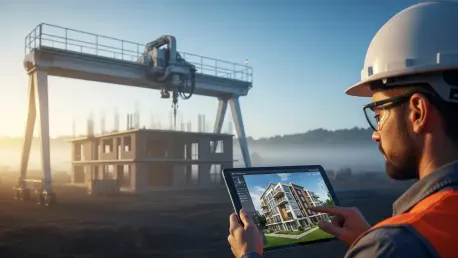

The global construction industry is currently undergoing a radical transformation as the demand for affordable and eco-friendly housing solutions reaches a critical peak, necessitating the rapid adoption of automated technologies such as 3D concrete printing. While the hardware for these large-scale additive manufacturing systems has advanced significantly, the primary bottleneck remains a severe shortage of technicians who are proficient in operating complex robotic gantries and managing specialized material extrusions. Traditional apprenticeship models, which often require years of on-site experience and the consumption of expensive raw materials, are proving inadequate for the speed at which modern urban infrastructure must be deployed. To address this urgency, the integration of high-fidelity virtual reality simulations has emerged as a transformative pedagogical tool, allowing trainees to master the intricacies of 3D construction in a controlled digital environment. This shift not only accelerates the certification process but also ensures that the next generation of builders is equipped to handle the nuances of sustainable design and material management with precision.
The Evolution of Workforce Development: Virtual Integration
Bridging the Skill Gap: Interactive Simulated Learning
One of the most significant advantages of employing immersive digital environments is the ability to replicate the complex physics of concrete extrusion without the environmental or financial costs associated with physical trial and error. Trainees can interact with digital twins of specific printer models, such as the COBOD BOD2 or the ICON Vulcan, learning to calibrate nozzle speeds and layer heights in real-time. By simulating various environmental factors like humidity and temperature—which significantly impact the flowability of concrete—users develop a deep intuition for material behavior that would otherwise take months of fieldwork to acquire. This approach effectively removes the barrier to entry for smaller construction firms that cannot afford to sideline their primary equipment for training purposes. Furthermore, the ability to reset a print job with a single click encourages experimentation, leading to more innovative structural solutions that maximize material efficiency and minimize the overall carbon footprint of each project.
The cognitive load management provided by virtual environments allows for a more focused learning experience, where complex spatial concepts are visualized in three dimensions rather than through flat architectural blueprints. Research into educational psychology suggests that kinesthetic learning—where the student performs physical actions—results in higher retention rates compared to passive lecture-based instruction. In the context of 3D construction, this means that a student who has virtually operated a robotic arm for twenty hours is significantly more prepared for the tactile realities of the job site than one who has only studied the theory of additive manufacturing. This pedagogical shift is essential for scaling the workforce to meet the projected housing needs from 2026 through 2028, where thousands of new operators will be required globally. By lowering the psychological stakes of operating multi-million dollar machinery, VR empowers a more diverse range of candidates, including those from non-traditional backgrounds, to enter the high-tech construction sector.
Enhancing Operational Safety: Risk-Free Troubleshooting
Safety remains a paramount concern on any construction site, particularly when heavy robotic equipment is moving autonomously or semi-autonomously in close proximity to human workers. Virtual reality training platforms allow instructors to simulate hazardous scenarios—such as mechanical failures, sensor glitches, or emergency stop procedures—that would be far too dangerous or expensive to recreate in a real-world setting. Trainees can experience the consequences of an improper setup or a software error in a safe space, reinforcing the importance of rigorous pre-start checklists and situational awareness. This proactive approach to risk management drastically reduces the likelihood of workplace accidents once the operator transitions to live projects. Moreover, because the simulation can be paused and reviewed from multiple angles, students can analyze their own performance and identify subtle mistakes in their workflow. This level of granular feedback is nearly impossible to achieve during a live pour.
Beyond the immediate safety benefits, digital training systems provide construction companies with valuable data-driven insights into the competency of their workforce before they ever step onto a job site. Sophisticated tracking algorithms monitor every movement of the trainee, from the precision of their nozzle placement to the efficiency of their pathing choices, generating comprehensive performance reports. These metrics allow managers to identify specific areas where an individual might need additional coaching, ensuring that only the most qualified operators are assigned to high-stakes infrastructure tasks. This objective assessment model replaces the often-subjective evaluation process of traditional site supervision, fostering a culture of excellence and accountability. As the industry moves toward more integrated Building Information Modeling workflows, the data collected during these training sessions can also be used to refine the software used on the actual printers, ensuring a seamless transition from the virtual lab to the physical construction site.
Sustainable Paradigms: Materials and Efficiency
Material Optimization: Reducing Waste Through Digital Twins
The intersection of additive manufacturing and environmental stewardship is perhaps the most compelling argument for the rapid expansion of these technological training programs. Traditional construction methods are notorious for generating massive amounts of waste, often accounting for nearly thirty percent of all material delivered to a site, whereas 3D printing places material only where it is structurally necessary. However, the environmental benefits of this precision are only realized when the system is operated correctly; an inexperienced technician can easily waste tons of specialized mortar through incorrect settings or structural collapses. By perfecting their technique in a virtual space, operators ensure that every pound of material used in actual construction contributes directly to the integrity of the building. This optimization is critical as the industry faces stricter carbon emission regulations starting in late 2026, where every build must be lean and ecologically responsible.
Across the globe, from the affordable housing initiatives in Texas to the sustainable urban developments in the Netherlands, the success of large-scale 3DCP projects hinges on the technical proficiency of the ground crew. In regions where skilled labor is scarce, the portability of VR headsets allows for decentralized training centers, bringing high-tech education to remote areas or developing nations. This accessibility is a cornerstone of the global effort to decarbonize the built environment, as it facilitates the adoption of local, earth-based printing materials that require specific handling techniques. For instance, printing with geopolymer concretes or raw earth mixtures involves a steeper learning curve than standard Portland cement, making the repeatable nature of digital simulations invaluable. As these sustainable materials become the standard for new residential construction, the role of virtual training will expand from a niche educational tool to an essential component of the global supply chain for sustainable housing.
Future Outlook: Actionable Paths for Global Scaling
Standardization was the next logical step for the 3D construction industry as it transitioned from experimental pilot programs to widespread commercial implementation across various international markets. Currently, various hardware manufacturers employed proprietary software and control systems, which led to a fragmented labor market where skills were not always easily transferable between different robotic platforms. Virtual reality offered a unique opportunity to create a unified training curriculum that addressed the core principles of robotic extrusion regardless of the specific machine being used by the operator. Establishing these industry-wide benchmarks was essential for the period between 2026 and 2028, as construction firms sought to scale their operations across borders while maintaining quality control. By collaborating on open-source simulation modules, stakeholders ensured that safety and quality standards remained consistent, fostering an ecosystem where innovation was shared rather than siloed within individual companies.
In light of these advancements, the industry moved toward a comprehensive integration of digital twins and immersive training as the primary gateway for professional certification in automated construction. Educational institutions and private firms collaborated to finalize a set of actionable protocols that prioritized material conservation and operational safety over traditional, resource-heavy methods. Stakeholders recognized that investing in virtual infrastructure was a prerequisite for achieving long-term sustainability goals, leading to a significant reduction in site-based errors and material waste. These efforts successfully bridged the gap between theoretical engineering and practical execution, providing a clear pathway for workforce development in a rapidly changing technological landscape. Looking forward, the focus shifted toward refining these digital environments to incorporate artificial intelligence feedback, ensuring that training remained adaptive to the needs of each individual learner and the unique requirements of sustainable architecture.