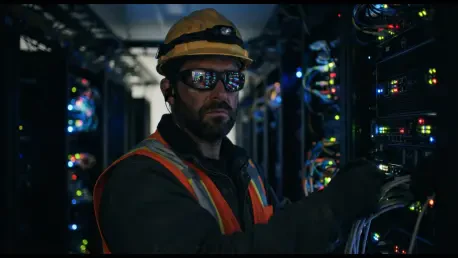

Modern home builders must now compete with the aggressive recruitment tactics of data center contractors who offer immediate, guaranteed apprenticeships to new graduates. This transition marks a profound shift in the American construction landscape as massive capital investments pour into the digital infrastructure sector at an unprecedented rate. While the residential housing market has historically struggled with a chronic shortage of skilled tradespeople since the 2008 recession, the explosive growth of data centers has introduced a fierce level of competition for basic human resources. Investment in these digital fortresses has surged from roughly $15 billion to nearly $50 billion during this current cycle, creating what experts call a siphoning effect. Essential workers, including master electricians, commercial plumbers, and advanced HVAC technicians, are being pulled away from community-based residential projects to support the technological expansion. This migration of labor is not merely a temporary trend but a fundamental reorganization of the construction labor pool.
The Wage Gap: Financial Disparities in Modern Construction
The primary mechanism driving this labor displacement is the significant disparity in compensation packages offered by the tech-backed infrastructure sector compared to traditional residential builders. In 2026, data center projects are frequently offering starting salaries for entry-level trade roles that reach into the six-figure range, a figure that most home builders find impossible to match without passing unsustainable costs to the consumer. For a specialized electrician or HVAC technician, the financial allure of a high-intensity, short-term commercial project often outweighs the perceived stability of local residential contracts. This competition has created a profoundly inflationary environment across the industry. Home builders find it increasingly difficult to retain their long-term trade partners when those individuals can earn thirty to fifty percent more by relocating to a data center hub. The resulting wage pressure is a primary factor in the rising cost of new home construction, as the labor component of a build continues to expand.
Beyond the immediate hourly rate, the recruitment power of tech giants is amplified by the scale and sophistication of their hiring operations. While a local home builder might rely on word-of-mouth or small-scale job postings, companies like Meta and Google leverage global supply chains and massive recruitment agencies to lock in labor years in advance. These tech firms often treat labor as a critical commodity, much like the high-grade steel or cooling units required for their server farms. By offering comprehensive benefits, travel stipends, and signing bonuses, they have effectively established a new ceiling for what skilled labor is worth in the open market. This shift has forced the residential sector to confront a difficult reality where the traditional subcontracting model is failing to provide the consistency needed for large-scale housing developments. Consequently, the housing market is seeing a widening gap between available work and the manpower required to complete it, leading to significant project delays.
Workforce Development: Comparing Training Speed and Quality
To combat the growing shortage, tech corporations have initiated specialized training pipelines designed to bypass traditional vocational routes and place workers on-site as quickly as possible. Programs like America’s Workforce Academy and Meta’s LevelUp initiative utilize five-week intensive cohorts that transition students directly into guaranteed apprenticeships on data center sites. This rapid onboarding model is highly effective at meeting the immediate demand for “boots on the ground” to facilitate rapid infrastructure expansion. However, industry veterans express concern that these accelerated programs may prioritize specialized repetition over the broad, foundational skills typically taught in longer residential programs. A residential electrician needs to understand a wide variety of domestic systems and local codes, whereas a data center worker might focus exclusively on the specific power requirements of server racks. This specialization creates a workforce that is highly efficient in one niche but less versatile in the housing market.
Despite the tension between short-term needs and long-term skill depth, there is an emerging perspective that corporate investment in the trades could eventually provide a net benefit to the entire construction ecosystem. Organizations like the Home Builders Institute have seen increased support from technology leaders who realize that their own employees require homes just as much as their servers require warehouses. In 2026, major players like Google and Nvidia have begun funneling capital into broader vocational training programs, acknowledging that a collapse in the residential building sector would eventually lead to a housing crisis for their own staff. This “lift all boats” philosophy suggests that by funding the expansion of the total labor pool, tech companies can mitigate the siphoning effect they created. If these corporate investments help modernize shop classes and vocational schools at the national level, the industry may eventually see a surplus of workers rather than the current scarcity, benefiting both sectors.
Strategic Resilience: How Residential Builders Are Pivoting
To survive in this hyper-competitive environment, residential builders are being forced to undergo a radical evolution of their business models and operational strategies. Many larger developers are moving toward vertical integration by hiring skilled tradespeople as direct, full-time employees rather than relying on a volatile pool of independent subcontractors. This shift allows builders to maintain better control over their project timelines and overall costs, even if it requires a significantly higher overhead for benefits and payroll taxes. Direct employment provides workers with the kind of stability and long-term career pathing that data center projects, which are often transient in nature, cannot always offer. By focusing on employee retention and internal training, residential firms are attempting to build a loyal workforce that is less likely to be lured away by the next high-paying commercial contract. This structural change is redefining the relationship between builders and the trades.
Smaller volume builders are also finding creative ways to stay relevant by diversifying their portfolios into the remodeling and high-end renovation markets. These projects often require a different set of skills and a level of customer interaction that data center work does not demand, providing a niche for tradespeople who prefer variety and craftsmanship over industrial repetition. Furthermore, the adoption of off-site construction and modular building techniques is accelerating in 2026 as a direct response to the labor shortage. By moving a portion of the building process into a controlled factory environment, residential companies can utilize a less specialized workforce for assembly while reserving their high-skilled trades for final connections on-site. This increased efficiency allows builders to maintain production levels even when their traditional labor pool is being diverted to large-scale infrastructure projects, demonstrating the industry’s ability to adapt through technological innovation.
Structural Reform: The Role of Policy and Vocational Education
A sustainable future for the construction industry requires a fundamental reallocation of educational funding and a shift in how society views vocational careers. Currently, the federal government allocates approximately $50 billion annually to higher education while providing only $1.5 billion for career and technical education. Advocates are calling for a significant policy change to move at least $10 billion into trade programs to support the majority of young people who do not pursue traditional four-year degrees. The “North Carolina model” serves as a primary example of success, where the state legislature integrated residential-specific trade curriculums directly into the public high school system. By capturing interest at the secondary level, the industry can build a pipeline of workers who view the trades as a first-choice career rather than a backup plan. This systemic reform is necessary to ensure that the workforce grows at a pace that can support both the digital and physical needs of the country.
The rise of artificial intelligence has actually strengthened the value proposition of the construction trades for the younger generation. While many white-collar professions face increasing displacement due to automation, most construction roles are classified as having low exposure to replacement by AI. The physical complexity of plumbing, electrical wiring, and framing in unique environments provides a level of job security that is increasingly rare in the digital economy. This realization has become a powerful recruitment tool for Gen Z workers who prioritize financial independence and career longevity over the accumulation of massive student debt. By framing the skilled trades as “essential and un-automatable,” the industry successfully shifted the cultural narrative surrounding vocational work. The ongoing integration of technology into the job site, from augmented reality headsets for layout to automated equipment, further appealed to a tech-savvy generation looking for careers that blended physical labor with advanced digital tools.
Collaborative Growth: The Integration of Digital and Physical Infrastructure
The construction industry successfully navigated the challenges of 2026 by embracing a new era of cross-sector cooperation between technology giants and residential developers. It became clear that the growth of data centers did not have to occur at the expense of the housing market; instead, the two industries learned to share the responsibility of cultivating a robust labor force. Tech companies transitioned from simply siphoning talent to actively funding national apprenticeship standards that benefited the entire building community. This shift was fueled by the realization that economic stability depended on having both the digital infrastructure to process information and the physical housing to sustain the people driving that innovation. Policy changes at the federal level finally balanced the funding gap between academic and vocational education, allowing for a surge in qualified graduates. Ultimately, the industry moved away from a zero-sum competition and toward a unified strategy that prioritized productivity, high-quality training, and long-term career security for every skilled tradesperson.